Sister is the Great Leap Forward for Sonic Youth, the moment that their ambitions went from being grimey NYC no wave scenesters to being skewed soundscape-pop troubadours, the kind of band that would within four years be touring with Nirvana and introducing another world to audiences across North America. There’s nothing on Sister (or much afterward) that really even passes for “pop” in a loose sense. The song structures are chaotic, the shifts are hazy, the guitar work is seemingly influenced more by frenetic free jazz than it is by traditional rock ‘n’ roll mores. Sonic Youth was to rock music what William Burroughs was to literature, which is to say that they cast their chosen medium in a light that was at once gravid with meaning, slick with excitement, and fractured into a rather sinister psychedelic spray. Thurston Moore’s squalling guitar was a post-modern version of Hendrix, breaking down the sound of the guitar into it’s most basic essence and rebuilding it into forms that were only barely recognizable, especially in the anti-septic, wretchedly clean sounds of mainstream rock in the Eighties. Kim Gordon’s drone work outdoes the Velvet Underground, and in 1987 they were really the first group that could lay claim to such an immense effort; “Beauty Lies In The Eye” is on par with something like “Sister Ray”.
Sister is an album obsessed with the ghost of Phillip K Dick, going so far as to title the album as a reference to Dick’s twin sister, who died shortly after being born and whose memory haunted the writer for the entirety of his life. It’s a fitting subject for the music found within; Dick’s writing was often filtered through a psychedelic lens. Flow My Tears The Policeman Said reads like it’s written in the rainbow corners of an LSD trip, and the war between reality and perception is a staple of almost all of his short fiction, much of which was post-humously filmed and turned into recognizable mainstream cinema: Minority Report, Screamers, Bladerunner, The Man In The High Castle, Total Recall, A Scanner Darkly, Next, and others. In terms of writers with Hollywood adaptations, Dick has always been more Burroughs than Grisham, of course; much of his work can be a bit impenetrable, in the same sense that Sonic Youth was impenetrable to a world where “Girls Girls Girls” was a hit single. As a guiding light for a Sonic Youth album, there’s few brighter than Dick.
In retrospect Sister can be seen as a bridge of sorts, between the old scattershot noise-grubbing Sonic Youth and the lusher, dreamier soundscapes they forged on their breakthrough album, Daydream Nation. A track like closer “White Kross” is as noisy and chaotic as anything they played on EVOL or Confusion = Sex, but “Schizophrenia” is deceptively gentle and uplifting. The driving force that made Sister more coherent and “pop” than previous Sonic Youth releases was Steve Shelley’s drum work, which keeps everything grounded with deft, solid drumming. Thus a track like “Tuff Gnarl”, which could have been soft in the middle and dripping from both ends, becomes a rock-solid (if impressively postmodern) song. “Pacific Coast Highway”, an essential Kim Gordon song, looms menacingly while somehow remaining languid and self-aware. The only off-putting moment is the cover of Crime’s “Hotwire My Heart”, which makes for a great standalone cut but jars somewhat as the sole straight-forward pop tune on an album that seems at times to be cut directly from the magnetic field of the Earth.
The album was also the first Sonic Youth record to win the approval of Village Voice music critic Robert Christgau, which was a big deal considering that relations between critic and band were so strained at one point that Thurston Moore would introduce the song “Kill Yr Idols” as “I Killed Christgau With My Big Fucking Dick”. It marks the point where the band ceased being another of Christgau’s “pigfucker” bands (a meant-to-be-derogatory label that also included luminaries such as Big Black and the Butthole Surfers) and became an up-and-coming (soon to be legendary) member of the white-hot alternative rock scene.
First of all, I want you to look carefully at that heading section. Both of the sites I’ve used this year to glean “best of” rankings from – the two largest crowdsourced music ranking sites on the internet – rank OK Computer as literally the greatest album ever recorded. That uncomfortable feeling that’s washing over you? That tiny little intense bit of pain that’s set itself up in the centre of your brain, pulsing with madness and threatening to grow into some sort of blood-soaked brain tsunami? That’s fifty-plus years of music critic bullshit melding with Baby Boomer arrogance to tell you that this can’t possibly be the case. In fact, if you slap that ol’ Boomer lens on your face and look outward, such an idea is more laughable than anything else. Surely these people have forgotten about Pink Floyd, that amalgamated Rolling Stone-fueled smug critic machine cries out. Obviously the Beatles are objectively the greatest band ever and every single album they ever released is in fact the greatest piece of music ever recorded, hallelujah and amen, just as our forefathers and their magically mysterious Beatlemania intended. The Stones! Black Sabbath! Led Zeppelin! Any of these bands our parents grew up with and forced into our heads as collectively better than anything that came after, from 1980 onward; this, that shrill voice claims, is real music.
Increasingly, though, that condescending gate that Boomer mythology has put up across the history of modern popular music – the one that plants itself in around 1982-1984 and lets very little in if it came afterward – has been bereft of a keeper. The internet facilitated a lengthy, often nonsensical conversation about popular music, it’s hierarchy, and it’s relative worth across decades. That, in combination with the fact that the glory days of “alternative rock” are now (somehow) twenty years gone has led to a reevaluation of the music of Generation X and the oldest Millenials with regard to the self-interested myth-making of Boomer publications. The same has happened in other art forms. Cinemaphiles convinced that Citizen Kane was the greatest movie ever made probably feel that same maddening itch and pulse in their heads when it turns out that a number of crowdsourced movie rankings place Eternal Sunshine Of The Spotless Mind in the #1 slot of the best movies ever made (or, failing that, the second-most popular option, The Shawshank Redemption). Changing demographics and the slow die-off of the Boomer generation has flipped the switch on their supposed stranglehold on real music, whatever that happens to be. People don’t read Rolling Stone and Melody Maker and NME like they used to. The gatekeeping paradigm shifted online around the turn of the century with the rest of print media, and so when it comes to popular music the tastemakers are far more likely to read Pitchfork and The Quietus than they are Rolling Stone.
Generational culture wars aside, though, is OK Computer the “greatest album ever made”? An examination of that has to begin with some definitions and explanations, for the pedantic and the curious. When we talk about “the greatest album ever made” we mean “the greatest popular music record released since 1963, when the Beatles crossed the Atlantic and ushered in the modern era of blended pop and art.” While “Greatest Albums Ever” compilations like those found online or in the pages of Rolling Stone feature a few albums made in the 1950s, they’re mainly heavyweight bop albums that are the exception more than the rule. The temporal range of the “Best Ever” lists coincides with the development of the album as an art form. Popular music was, prior to the early 1960s, mainly singles-oriented. We don’t talk about “great Elvis albums” because they were spiritually just compilations of 45s anyway. Singles were important after Beatlemania as well (they still are) but from ’63 onward the album, as a singular piece of art, began to dominate the way people consumed pop music. If this seems Boomer-centric, it is, but it also reflects changes in technology and distribution of physical products that lend themselves well to a Marxist analysis.
In addition to temporal analysis, there is unfortunately a racial filter involved as well. “The Greatest Album” is always something produced in the Global North. The Global South is completely left out of the picture, with the notable exceptions of Fela Kuti and Bob Marley. The music of the West is prioritized; music from eastern or southern Asia is only discussed in Western media when it fits into the pre-approved Western molds. Even within Western popular music there is a stark racial divide. Rolling Stone‘s 500 Best Albums Ever extravaganza features precisely one black artist in the top 10, Marvin Gaye. The crowdsourced efforts do even worse: BestEverAlbums features no black artists in their top 10 and neither does RYM. Tellingly, RYM’s chart has the first black artist coming in at #11 (Miles Davis’ Kind Of Blue), which seems to say We’ll throw you a bone, but don’t think for one second that you really belong here to black American musicians. This, despite the fact that all of the key pillars of modern pop music draw their inspiration at least in part from three predominately black musical movements: the electric blues (from which rock ‘n’ roll sprang, and from which psychedelia gained it’s heft); Motown (soul, R&B, and later funk and hip hop); and jazz. Further, both RYM and BestEverAlbums prominently feature Led Zeppelin, who made their bones on the wholesale piracy of Willie Dixon’s back catalog. As such, any discussion of “The Greatest Album Ever” is immediately compromised by the inherent generational, cultural, and racial biases that are brought to the discourse. This is without even getting into a post-modern understanding of what the “greatest” album even means – to deconstruct the entire process of what determines greatness and near-greatness in an extremely subjective and emotionally-driven form of expression like music would take a lifetime in itself. To talk about it requires one to assume that there are greater overarching meta-narratives, that music is in fact sacred and driven, and that we can determine rankings of recordings on scales whose criteria make sense if you squint a lot and don’t think too much about it.
So, if we frame the discourse with an admittance that we are talking about a narrow spectrum of available music that carries with it unfortunate biases with regard to race, sex, and culture, is OK Computer the greatest album ever made? It becomes, at this point, a matter of comparison: what did the Boomers uphold as the greatest records, and how does OK Computer compare with them. If we look to the crowd again, there is some definite overlap in the top 10 of both RYM and BestEverAlbums. The Beatles show up, of course, with Revolver and Sgt. Pepper’s Lonely Hearts Club Band. Pink Floyd’s Dark Side Of The Moon is there, as befitting an album that spent a legendary 420,000,000 weeks on the Billboard charts. The Velvet Underground & Nico is there, for reasons I went over several weeks ago. Led Zeppelin IV is there, because nothing goes better with a bong load than some Stairway, maaaaaaan. These are the usual suspects when Boomers and Boomer aficionados start listing the best albums ever made. The Beatles provide fey psychedelic weirdness backed with impeccable melodies and song structures that experimented but didn’t break the mold entirely. Pink Floyd crafted epic guitar-driven songs that were at once adventures into space and examinations of the dour nature of the English personality. The Velvet Underground made it okay to be messy and to let a lot of your mental anxiety shine through. Led Zeppelin glamoured listeners with the irresistible call of pure volume. Where does Radiohead fit in with this? Pretty much everywhere.
Right from the beginning, the thick, overdriven strings that open “Airbag” promise something different. It’s as though Loveless were reborn, cured of the opiated languor that permeates that album. The guitars take the experimental leads that people like David Gilmour and Robert Fripp imagined and plays with them, smudging and expanding and blurring until the guitar becomes an alien and interesting instrument all over again. Thom Yorke’s voice hangs haunting and sodden with deep existential dread over the viscous liquid that roils beneath it, summing up the horror and paranoia of modern life in the form of a story about the time an airbag saved his life in a car accident in the mid-1980s. And that’s just the first song. “Paranoid Android” ups the ante significantly. Johnny Greenwood’s guitar figure is unsettling – creepy, even – and Yorke’s vocals only amplify that. Written in four parts, much like John Lennon’s “Happiness Is A Warm Gun”, the song is central to the album’s mixed feelings about human existence and capitalism. Described by Yorke himself as “about the dullest fucking people on Earth”, the song has its roots in the time Yorke found himself in an L.A. bar surrounded by vapid rich assholes high on cocaine and themselves. There’s a sense of disgust with that sort – capitalists, and by extension, capitalism – that runs through much of the album. “Subterranean Homesick Alien” speaks of isolation and the feeling of being alien from one’s own culture; “Let Down” is about the hollowness of corporate-sponsored sentiment and the similarity of pop songs and advertisements. “Electioneering” summons a Chomsky critique of capitalist society, while “Climbing Up The Walls” turns that critique inward, examining the headspace of paranoia and distress. “No Surprises” combines the two, finds the soul-sucking job on par with soul-sucking politics, and whispers about the handshake of carbon monoxide in search of an exit. “Lucky” brings the album back around again, imagining a plane crash to complement the car crash that started the album. “The Tourist” is like a ghost in the wreckage of this suicide and loss of control, imploring the listener to stop rushing through life and take the time to enjoy or at least acknowledge the experiences around them.
Musically, OK Computer is an impressively dense album. The strings that herald the arrival of “Airbag” return in differing forms throughout the album, to greatest effect on “Climbing Up The Walls”. On that track, the theme of internal chaos is mirrored by a backdrop of sixteen violins, each tuned a quarter-note apart from each other and inspired by “Threnody To The Victims Of Hiroshima”; Johnny Greenwood’s orchestral arrangements would, in the 21st Century, be one of the band’s most enduring strengths. Filtered and fiddled keyboards play a large role in the album as well, especially on “Subterranean Homesick Alien”, “Let Down”, and the Beatles-referencing “Karma Police”. Greenwood and Ed O’Brien layer guitar in sinuous, overlapping ways, outdoing David Gilmour on the mournful wail of “Lucky” and drowning out Zeppelin on both “Paranoid Android” and “Electioneering”. There are even post-modern (for the era) flourishes in the form of drum machine programming, dub approximations, and neo-classical arrangements. Few bands in history have ever been able to blend the sacred and the profane in a way that transcends both; none of them have made it sound as utterly seamless or integral to the human experience as Radiohead on OK Computer.
Part of that transcendence comes from the album’s influences, of which the band has been quite forthcoming. The initial inspiration for the sound of OK Computer came from Mile Davis (as seen above) and his 1970 avant-jazz Bitches Brew. Further inspiration came from Elvis Costello and the Beatles, as well as soundtrack composer Ennio Morricone (he of the indelible popular sound of Sergio Leone’s spaghetti westerns) and Krautrock band Can, who were known to use the recording studio as an experimental lab. Another part comes from the surroundings it was recorded in. Like many English rock bands before them, Radiohead chose to record in an old English mansion, St. Catherine’s Court. The acoustics of the place can be heard especially well on “Exit Music (For A Film)”, which was recorded in a stairwell, and “Lucky”, which was recorded in a ballroom in the witching hour. Most of the album was recorded live, with the band unwilling to potentially destroy a good thing through retakes and overdubs; Thom Yorke went with a one-take-and-done approach to his vocals, fearing that he would start to doubt everything if he stood around and thought too much about it.
The greatest album ever recorded, though? I think you can make a strong argument for it – as I’ve laid out above. It out-Floyds Floyd. It doesn’t ride the swampy concerns of a minority artist, like Zeppelin. It paints a more accurate picture of 1997 (and beyond) than the Beatles ever did in 1967. It flows and carries on, without ever coagulating or getting bogged down in disappearing into the band’s own head. Thom Yorke, upon being asked about the critical explosion of goodwill that greeted the release of the album, protested that Radiohead didn’t set out to create art, they just wrote pop songs. The counterpoint to this of course is that the best artists never set out to create Art, with the capital intact and all the pompous weight that is loaded into the word present and accounted for. They set out to replicate what they’re seeing, reading, or hearing in their head, and if they’re good enough people will find some reflection of themselves or their lives in it, and embrace it accordingly. In the neo-liberal, corporate-driven, emotionally artificial and distant world of the Washington Consensus, there is a lot of reflection to be found in OK Computer, lyrically, musically, and spiritually. Many talk about tapping into the zeitgeist. OK Computer actually does it.
Guided By Voices was never supposed to be a full-time thing. Formed in the late 1980s as a real band, it slowly morphed into a revolving door of Dayton, Ohio musicians – basically anyone who would come over and drink with 4th-grade teacher Robert Pollard. 1992’s Propeller caught Pollard by surprise when it found a listener base in the wake of the Alternative Revolution, a base that expanded exponentially with the one-two punch of Bee Thousand and Alien Lanes. Under The Bushes Under The Stars, a 1996 album recorded with Pixies bassist Kim Deal, solidified that base, but by 1997 Pollard was pushing at the boundaries of what was possible with his new found underground rock star status, a status that had finally allowed him to ditch his day job and pursue his high-kicking rock frontman dreams full-time. To this end, he got rid of the 1992-1996 Guided By Voices lineup and hired Cleveland garage band Cobra Verde to be his backing band; the first record of this lineup was Mag Earwhig!, the last great Guided By Voices album.
Mag Earwhig! is at once much more professional sounding than previous Guided By Voices efforts (except perhaps for the “sterile-sounding” REM-aping 1986 EP Forever Since Breakfast) and as a result it can be jarring for a listener who has been going through the band’s ridiculously lengthy discography. The joke of this is encapsulated in the sketch-song “I Am Produced”, which finds Pollard musing on all the prepping and packaging that goes along with bigger recording contracts and studio time. As a “pro-level” GBV record, it’s still messy and filled with a certain willful need to colour outside of the lines; “The Old Grunt”, “Are You Faster?”, “Choking Tara”, “Hollow Cheek”, and the title track are all barely filled-in sketches in the vein of what studded the length of Bee Thousand. At the same time, there are any number of songs that point the way toward the rock-melody-genius three-minute British Invasion style tracks that would comprise the band’s output up until 2004; “Bulldog Skin”, “Not Behind The Fighter Jet”, “Portable Men’s Society”, “Jane Of The Waking Universe”, and the utterly sublime “The Colossus Crawls West” are among the best of Pollard’s compositions, overall, but it is interesting that the best track on Mag Earwhig!, the high-energy “I Am A Tree”, is actually a composition by Cobra Verde’s Doug Gillard.
After, GBV would release a major label debut, Do The Collapse, that was a crushing bore, with few exceptions. They would release some solid albums after that, both before the 2004 breakup and after the 2012 reunion, but none would hold a candle to the classic lineup or to Mag Earwhig!.
In 1997, guys like Todd Rundgren, Billy Joel, and Elton John were the stuff of your parent’s dust-collecting record collection, stuff they’d mostly relegated to buying the “Greatest Hits” compilation of and torturing you with constant replays of “Piano Man” and “Candle In The Wind” (well, not my parents, I grew up under a blues purist). No one gave Ben Folds the memo, though; his second album, Whatever And Ever Amen, drew a direct line from those hoary old ivory-strokers to the contemporary world of ironic folk dudes, ska bands, and second-generation grunge retreads. It’s decidedly uncool, although Folds wisely cuts the painful sentimentality of those old Seventies dudes with some Xer-approved Alternative Era Snark, which can get tiresome in its own right but for nearly all of the album manages to get by just fine. While there are some off moments – the plod of “Selfless, Cold and Composed” and the kitchen-sink clutter of “Steven’s Last Night In Town”, mostly – there are a lot of surprisingly poignant moments, such as the “taking my girlfriend to get an abortion” confessional of “Brick”, the song that launched the rest of Ben Folds’ career.
Released February 25th, 1997 on Kill Rock Stars Records
BestEverAlbums: #149
RYM: #106
Kurt Cobain may have been louder and flashier, but Elliott Smith really was the quintessential Nineties rock star. Haunted, brooding, and darkly melodic, he epitomized the “tortured artist” aesthetic that was popular during the first half of the decade. Raised in an abusive environment in Texas, he moved to Portland, Oregon and channeled his demons into drugs, alcohol, and music. His original band, Heatmiser, wasn’t anything particularly special but his solo releases – 1994’s Roman Candle and 1995’s self-titled LP – captured the imagination of listeners much more. Those solo releases had little to do with what Heatmiser was doing, and in the fall of 1996, shortly before their last album was released, they broke up (fun fact: bassist Sam Coomes would go on to be the frontman for Quasi). Smith’s next release would eclipse both his former band and everything he had recorded up until that point.
Either/Or was first an attempt by Smith to vary the moods on an album. Elliott Smith had been an album that was largely the same from beginning to end: acoustic confessionals about drugs and depression. Either/Or has some of those, of course: “Speed Trials”, “Between The Bars”, and “No Name No. 5” are evidence of that. Songs like “Alameda”, “Ballad Of Big Nothing”, and “Rose Parade”, though, are evidence of something bigger: songs by a guy who proved on this album that he could craft big hooks, emotionally impactful melodies, and arrangements that were built to last. That last item is especially important: Either/Or doesn’t sound like 1997 – there’s no pandering to teen pop, or ska, or post-grunge trends. It could have been released last year, or ten years ago, or today. It’s songs and it’s themes are artistically timeless, even more so now that the waves of the Great American Heroin Addiction have crashed over the shores of seemingly every state in the Union.
Everything that came after – Gus Van Sant’s love of the album, Good Will Hunting, “Miss Misery”, Smith’s two major label albums, and his mysterious death – would cement his legend. Either/Or is the moment that Emily St. John Mandel describes in Station Eleven: a moment that, ever after, would divide Smith’s life into “Before” and “After”. Before Either/Or, he was an up-and-coming songwriter with an acoustic guitar and a monkey on his back. After, he was a bona fide rock star with a following and highly-placed friends. Neither would prevent him from slipping a little further into addiction and depression – or from dying in Los Angeles with twin stab wounds to the chest, a death still shrouded to this day in suspicion and mystery.
One of these days I plan on doing a listicle called “Ten Albums From The 90s That Aren’t As Bad As You Remember” and #1 on that list is Marcy Playground. Also, Bush’s Razorblade Suitcase and Live’s Throwing Copper, but that’s beside the point. Marcy Playground is one of the most criminally overlooked album of the Nineties, but at the same time it’s completely understandable as to why that occurred. The band’s first single, “Sex And Candy” was…well, you know it. Don’t pretend like you don’t. You’ve sung along to it, and I don’t particularly care how old “you” are. You like sex, and you like candy, and you like “Sex And Candy”. Unfortunately, it was 1997, and one hit wonders were par for the course for alternative rock by then. Remember Seven Mary Three? The Nixons? Chumbawumba? Semisonic? Marcy Playground is counted in those ranks, because “Sex And Candy” was huge, the other singles from the album didn’t make much of a dent in the radio, and the follow-up, 1999’s Shapeshifter, was listened to by approximately seven people worldwide.
So why are we marking the anniversary? It’s because Marcy Playground is something of a lost gem. It is a much better album than it has a right to be, and that all comes down to John Wozniak’s winsome songs that feature very dark shadows lurking in the corners. “Poppies” almost feels educational, with lyrics about the British opium trade with China, until you realize that the fate being sealed that he’s talking about is heroin. Heroin also features, implied or explicit, in “Ancient Walls Of Flowers”, “The Vampires Of New York”, and “Opium”. “Gone Crazy”, in context of the other songs, feels somewhat sinister, and “One More Suicide” is pretty much what it says on the tin. “Saint Joe On The School Bus” is about getting bullied mercilessly, and “The Shadow Of Seattle” posits a rainy war on art. The moments of levy stick out all the more for the darkness that shrouds the indie-pop arrangements: “Sherry Fraser” is about old love, “A Cloak Of Elvenkind” is a peaceful little song about Dungeons and Dragons and parental disapproval, and the ubiquitous “Sex And Candy” is a jumble of vaguely sexy non-sentences, capped with a hook that is an inside joke about Wozniak having sex with his girlfriend in her dorm room. The arrangements are tight, the guitars have just the right shade of grunge crunch without being histrionic and overbearing, and the hooks are goddamn barbed.
As I said before, the band would go on to do pretty much nothing in terms of mainstream exposure, although they keep releasing albums for a fanbase that must exist somewhere. Right? There are people out there that listen to Marcy Playground albums? Wozniak isn’t just releasing these albums into the void for no one to listen to, like I do? Who knows. Marcy Playground stands as their legacy, though, an album that will continue to be remembered even if it’s just because “Sex And Candy” is such an iconic Nineties song. There are worse positions for a band to be in.
Friday is the day on /r/music where the mods like to turn off the ability to post YouTube videos in the hopes of the subreddit actually becoming one for music discussion and not, say, where Reddit likes to dump it’s garbage fire taste in music. Ha. Ha ha. Well, they try, that’s the important thing.
If you tuned in yesterday, you’ll get the basic gist: I take a look at the top ten songs posted on /r/music in the last 24 hours and tell you how terrible Reddit’s taste in music is. In much rarer occasions, I’ll tell you where they get it right. Fridays will be fun because of the phenomenon mentioned above: it’s going to be a collection of those songs with the staying power to make it through the discussion posts.
Also, for the record, no I don’t plan on this being an everyday thing, but I would like it to be an everyday I can manage it thing.
Anyway…
June 2nd, 2016 (12:30 PM) to June 3rd, 2016 (12:30 PM)
#1: Mr. Bungle – “Air Conditioned Nightmare”
Reddit manages to kick it off with something weird and cool, courtesy of Mike “Weird and Cool” Patton. Goes through four different changes in tone and structure, each completely different than the one before. In anyone else’s hands, it would be a gigantic mess, but Mike Patton isn’t anyone else.
A
#2: Dinosaur Jr. – “Feel The Pain”
Sirius XMU’s favourite Dinosaur, Jr track is also Reddit’s most commonly posted DJ song. Thankfully it never gets old, although I’ve heard it three times today between the radio and this particular set. Two good tracks in a row, Reddit, maybe Fridays are your thing.
B+
#3: Beck – “Wow”
Ah, the new Beck track. The one that starts off like a generic hip hop beat, or maybe something like what Beyonce might have rejected for her self-titled 2013 album. Then Beck manages to bull through it in a display of sheer Beck-ness. Still, it feels a little empty and it’s not until 2/3 of the way through that Beck lets his freak flag fly in even a limited fashion. Honestly it feels a little like Beck chasing a hit and I’m not sure how I feel about that. Holding out opinions for the album, we’ll see.
B
#4: The Cult – “Love Removal Machine”
The Cult were an Eighties goth band that scored some hits when they decided to be an AC/DC tribute band instead. My mom knew the lead singer in high school at one point, to no one’s surprise he was a dick. Trust Reddit to go ga-ga for generic hard rock because “it has guitars”.
C
#5: A Day To Remember – “Bad Vibrations”
Why do metalcore bands have such fucking awful band names? Why do metalcore bands all recycle the same damn low-end chugging? Why do metalcore bands mistake sung choruses for depth? Why do metalcore bands insist on breakdowns that are cheesier than a Wisconsin hamburger?
Anyway, you can always tell when the pre-teens are posting, because there will be metalcore.
F
#6: The Monkees – “Birth Of An Accidental Hipster”
Okay, show of hands. Who was crying out for a Monkees comeback? Anyone? Put your hand down, dad, Jesus Christ. Wait, this is actually sort of good. I…I kind of like this. Noel Gallagher co-wrote it? I suppose that explains some things.
B+
#7: Portugal. The Man – “Plastic Soldiers”
Who gave the indie kids access to the internet? They managed to find a Portugal. The Man track that isn’t all that great. It’s about as middling a work as you can find from a middling also-ran indie act. You thought you were doing something good, but instead you fucked it all up. Good work, Reddit.
C+
#8: Soundgarden – “Rusty Cage”
The rest of the post title literally reads: “I know this has been posted before, but not for months & I think it’s well worth posting again.” Oh, well, I guess that makes sense except wait IT WAS LITERALLY POSTED YESTERDAY AS THE JOHNNY CASH COVER.
Who are you trying to fool, anyway? We all know where the inspiration to post this came from.
Decent tune though.
B
#9: Link Wray – “Rumble”
Link Wray poked a hole in his speaker cone with a pencil and invented hard rock single-handed. That might be a bit of an exaggeration, but not by much. Reddit of course knows it from its multiple pop cultural appearances, including Tarantino. At least it’s better than just posting the songs from Guitar Hero .
B+
#10: Joywave – “Nice House”
Lyrics are the only really halfway interesting part of this song, the rest is a really generic and straightforward electro-pop song, like what Hot Chip would write if they got really, really boring all of a sudden. The outro is rather nice though.
In the 2000s Animal Collective were the experimental pop band, combining lysergic child-like visions with a wide sonic pallete that drew as much from hip hop and electronic music as it did from their sunny 1960s pop forbears. In the beginning they were inaccessible, the sort of thing that only underground freaks would listen to. Starting with Feels in 2005 they got onto the radar of the booming internet-driven indie-blog world; 2007’s Strawberry Jam upped the ante but it was 2009’s pop-laden Merriweather Post Pavilion that introduced them to a much wider audience. Merriweather Post Pavilion ditched the bizarre noise-cycles that were present even two years previous in favour of big pop, sing-along moments made for indie radio, a concept that would only become a concrete thing in the years that followed. They followed this up with a messy, jittery, hyperkinetic album (Centipede Hz) that divided their fanbase and was nowhere near as well-received as their previous albums.
Painting With, then, becomes the indicator for the direction that the band is going in. That direction is clearly mainstream pop acceptance at the expense of everything that made the group so vital and alive just ten years ago. What’s presented on this album is a muted Animal Collective, reliant on using big burbling synth notes, as though they were making either straightforward hip hop or EDM within their existing milieu. Much of it feels as though they sat down and decided to make an even more accessible Merriweather Post Pavilion, something that would sound great in dorm rooms or stadiums and less so in the bedrooms of the freaks of the nation. It feels deliberate and mercenary, two things you could never previously accuse the band of being. Part of it is likely the wider success of Noah Lennox’s Panda Bear project; part of it is likely the sharply divided response to Centipede Hz. The group took a risk on that album and it didn’t pay off, and so it feels on Painting With that the band has decided never to take such a risk again. Painting With, then, is the sound of Animal Collective playing it safe, and as such it’s a real downer.
Wrestling is a sport (sorry, “sports entertainment”) that has elicited a rather divided reaction over the past few decades. To some it’s a tiresome recreation of patriarchal gender roles, emphasizing hyper-masculinity through a series of half-cocked storylines that repeat the same simplistic hero-villain duality over and over again. To others – and John Darnielle is in this particular listing – it’s a pure distillation of justice and morality, set up for ease of viewing and digestion. In many ways Beat The Champ is the aural companion piece to Mickey Rourke’s 2009 film The Wrestler; both focus on the grit and loneliness of being a pro wrestler. These are not the pro wrestlers of the WWE; they are the lonely men that wander the roads between the cities, going from one match in a packed gymnasium to the next, getting television coverage where they can, unknown outside of their own home regions. These are men for whom turning the heel means their career is winding down, men for whom death is always snipping at their heels. When one such character is murdered near San Juan, it is exactly as much as we expect; a life of simulated violence only leads to the real thing in the end. Still, there’s a glimmer of dawn on that deserted road: love, justice, and the raw triumph of the moment are always lingering, like the carrot in the midst of the path.
#19: U.S. Girls – Half Free
Meg Remy emigrated to Canada after toiling in the small noise labels of America for quite a while. Since then, her career has taken an upward trajectory, culminating (so far) in Half Free, which Remy explicitly mentioned was a collection of character studies in the vein of Bruce Springsteen or John Cassavettes. The characters of Half Free are far more Darkness On The Edge Of Town than they are Born To Run. These are women whom life has taken more than a few swings at, women that are on the desperate bleeding edge between life and death. A husband is revealed to have slept with all of his wife’s sisters before settling with her; another dies in a valley in Iraq and the grief of his war-widow wife is palpable. There are women who stand up and say “enough is enough” and leave their philandering and/or abusive men. It’s touched off with a lengthy slab of high-contrast Italo-Disco that stands up as a screed against the dictates of the religion of beauty. It’s a deeply feminist record, and one in which pop tropes and messy noise compositions stand together hand in hand.
#18: Ought – Sun Coming Down
The poppiest band on Constellation Records is really only marginally accessible, as you might imagine. Ought take the ideas and the sounds of early 80s post-punk and run with them, mutating them until they become something vital and alive once again. This is the relentless motorik energy of The Feelies and the skewed tilt of the Talking Heads melded with cut-up riffs from the DIY emo scene of the mid 90s, delivered with a view towards the desperation of modernity. In the hands of Ought, that desperation is surrendered to and, in that surrender, is shown to be a blissful, clarifying escape.
#17: Dr. Dre – Compton: A Soundtrack
The Great Vaporwave Album of Hip Hop – the Chinese Democracy of rap, if you will – was Detox, the supposed third album by the kingpin producer of the West Coast, Andre “Dr. Dre” Young. It was revealed this year that Dre has put Detox to bed permanently, unable to come up with anything that would truly live up to the hype. Instead, we got Compton, inspired by the N.W.A. biopic Straight Outta Compton and packaged with the eye of a man who has been watching his city change from idealistic suburb to gang-ridden warzone and back again since the early 80s. The vision and sound presented here are only partially Dre, however. Dre, whose discoveries have included Eminem, 50 Cent, and The Game, found in Kendrick Lamar a talent that would take over; if Compton bears a resemblance to To Pimp A Butterfly, it’s because Lamar has stamped his features indelibly on both. Anderson.Paak takes the Bilal role here, wrapping the retro-facing jazz, soul, and funk slices in warm buttery vocals; the songs become an introduction for every aspiring rapper that Dre has been mentoring over the past few years. It’s a widescreen, cinematic view of Dre, Dre’s city, and the West Coast in general.
#16: Young Fathers – White Men Are Black Men Too
The Edinburgh hip hop group declared that White Men Are Black Men Too, the follow up to their 2014 Mercury Prize-winning debut Dead, would “break them out of the ghetto”. While the album still revolves around a hard centre of hip hop, the songs play with that form until it is at times unrecognizable. White Men reinterprets British pop and distills key elements out of it, then adds in influences from the continent. If calling Young Fathers “hip hop” makes no sense to you, it’s because the group has increasingly less connection to the American sense of the genre. Instead, they choose to move forward, bringing in trip hop, krautrock, British electronic traditions, and avant art-pop to leaven the aggressive vocals and focus on beats that tethers them, however tenuously, to the hip hop tradition. This is Euro-rap, in a sense; bristling with ambition and aggression, but insistent that art should mean something, and that this meaning can take on a life in and of itself.
#15: Earl Sweatshirt – I Don’t Like Shit, I Don’t Go Outside
Earl locked himself in his basement so you don’t have to. He details the gory, gritty details of his descent into being a young, cynical curmudgeon so that you can walk outside, feel the sun on your neck, and be thankful for your existence. When OFWGKTA leader Tyler, The Creator started tweeting earlier this year about “people” whose attitudes brought him down and that life was great, you don’t need to do so many drugs, stop being so depressed all the time, etc. it was clear that Earl was who he was talking about. The fact that Tyler’s album was a bomb and Earl’s was not is telling about who should be proferring advice to whom in the rap game.
#14: Courtney Barnett – Sometimes I Just Sit And Think, And Sometimes I Just Sit
Melbourne indie phenom Courtney Barnett caused a lot of heads to turn with her twin EPs, packaged together last year as A Sea of Split Peas. Her debut magnifies what made those two EPs work. Barnett’s eye for detail exceeds pretty much anyone else out there whose name isn’t Dennis Coles, and she uses it to weave quotidian stories that cross class and gender boundaries. These are universalist themes: embarassment, ennui, confusion, creeping depression. The subjects are light-hearted for the most part – a girl who nearly drowns at the public pool trying to impress someone, a guy who skips off work to watch the city from above and gets mistaken for a jumper, a person who can’t sleep picking out all the mundane parts of her room – but there’s a real existential weight that drags at them. There’s real life going on here, in all of it’s ragged glory, and Courtney Barnett is the person to bring it all to the light.
#13: Girl Band – Holding Hands With Jamie
Girl Band is not a post-punk band. Instead, the Irish quartet take the sounds of post-punk and deconstruct them. “Deconstruct” is sort of a misnomer; what they really do is smash them with a hammer, melt them with a blowtorch, and weld them back together in amusing and vaguely horrifying shapes. Their lyrics are bizarre, cut-and-paste, and obsessed with food, in perfect keeping with the sound of the album. Unlike most blasphemous creations, the misshapen, mutated sounds on display here don’t ever croak out a hair-raising “kill me”; instead, they swarm for your jugular and don’t let up until they’ve rinsed your bones clean of flesh. If that sounds like a fun experience, it’s because it is.
#12: Drake – If You’re Reading This, It’s Too Late
If You’re Reading This dropped like an atom bomb: completely by surprise and with devastating force. Coming out of nowhere (and a rumoured record label tiff with Birdman and Cash Money Records), it was originally meant to be a free mixtape. At the last minute, Drake decided to release it as an actual album that you had to pay for – and made millions in the process. The entirety of the rest of Drake’s year stemmed from this: the Meek Mill beef, the wild success of his diss track, the frenzy around “Hotline Bling”, and the even-more-hyped anticipation for the forthcoming Views From The Six. And why not? The record is a study in modern beatcraft: spare, menacing, and throbbing with that 808 bass. Drake’s delivery is on point, and his use of ear worms as hooks makes for an album you’ll be humming forever. If this was, as rumoured, the cutting-room floor of the Views sessions, then the future album will be a monolith.
#11: Vince Staples – Summertime ’06
In the summer of 2006 Vince Staples was 13 and being introduced to life in the crime-ridden streets of Long Beach, CA. Summertime ’06, his debut, is an attempt to capture the peaks and valleys of that time of his life, and it cuts deeply. Drug taking, drug selling, gun play, the mercurial interplay of love and casual sex: none of it is shied away from, and Vince Staples keeps a duality of magic and regret in balance for the duration. The production is handled expertly, the bulk of it by No ID and Clams Casino. The Clams Casino tracks are among the best tracks he’s ever had a hand in, especially on the nauseous “Norf Norf”. Summertime ’06 transformed Vince Staples from being merely another OFWGKTA associate to being one of the biggest emerging stars in the rap game.
#10: Viet Cong – Viet Cong
From the ashes of tragedy, a pheonix rises. Women were a Calgary band that garnered a great deal of good press for being hard-edged experimenters with indie rock sounds. When Chris Reimer, Women’s guitarist, died, half the band went on to form Viet Cong with members of Lab Coast. Viet Cong, their debut, fuses post-punk sensibilities with aspects of electronic, lo-fi, and noise to create an art rock that is specifically their own. The tracks on the record are a delicate balance between constructed hook-oriented melodies and messy, coloured-outside-the-lines noise worship. Jangly R.E.M.-indebted 12 string guitars line up next to forceful, droning keyboards and relentless drum patterns; it’s a fusion of man and machine that points toward the future even as it keeps one foot entrenched in the recent past.
#09: Grimes – Art Angels
The effort to follow up Visions, her 4AD breakthrough, has been painful. It’s only been three years, but in that short time the Montreal singer has already recorded and scrapped an entire album, leaving only the enigmatic single “REALiTi” as proof that it had ever even existed. The reasons were probably numerous, but the most obvious one is that the scrapped album featured production work by other people, and Claire Boucher is not the sort of artist to let other people do her speaking for her. Art Angels instead features songs and production by the artist herself, a package of visual and aural media that outlines the particular, peculiar vision that is Boucher’s very own. This is pop that isn’t afraid to be pop, filtered through the lens of someone for whom pop means something different from the way the rest of us use the word. This is an album where “high concept” and “ridiculously catchy” can exist side by side without it ever being considered strange, where the cheerleader-esque vocals on “Kill V Maim” can seem perfectly right, rather than a Gwen Stefani-style effort to seem hip. This is, in short, pop as it should be: willing to move forward, disdaining the safe path in favour of making people think and dance at the same time.
#08: Titus Andronicus – The Most Lamentable Tragedy
Patrick Stickles is a weird dude. The New Jersey punk frontman started off as the most literate Shakespeare nerd in the indie punk world, expanded on this with a sprawling concept album that merged the U.S. Civil War with modern post-crash New Jersey, and then retreated into the small and mundane – into “Local Business”. That last album, Local Business, held odd allusions to despair, depression, and eating disorders; The Most Lamentable Tragedy expands on these themes to the extent that the listener becomes uncomfortably aware that Stickles is dealing with his own problems. In lesser hands this would be a slog, but Stickles and his band make the crushing grind of clinical depression and its resultant branching symptoms seem like the most invigorating thing on Earth. Returning to the sprawling form that made The Monitor such a messy delight, the band burns through jagged power-pop, lengthy drone-rock, burningly intimate ballads, and, in “Dimed Out”, the sharpest blast of punk rock to grace the year. It’s a triumph, all the more so because of the obviously painful circumstances that gave birth to it.
#07: Godspeed You! Black Emperor – Asunder, Sweet And Other Distress
The pillar of the entire post-rock genre have returned, proving that the surprise strength of Polaris Prize-winning album ‘Allelujah! Don’t Bend, Ascend was not a fluke. Asunder finds them paring down their sound to its essentials, cutting the fat that mired them originally in the swamp of 2002’s Yanqui U.X.O. Godspeed in 2015 is a band that has more to do with Black Sabbath than with the avant-garde; every movement, through guitars, strings, or pure noise, is built to evoke a cacophonous drone of doom that sums up all of the existential dread that weighs down the West as we move further into the 21st Century. Godspeed have lost the train noises and the warnings about solicitors in the parking lot, but they have kept all of the apocalyptic fury that powered their best work.
#06: Destroyer – Poison Season
Kaputt brought Vancouver’s Dan Bejar into the limelight, but it was the very last thing he wanted to happen. Tellingly, he dropped the exploration of yacht rock and lite disco that informed his world-weary work on Kaputt in favour of musical snapshots of life in New York City. Poison Season offers the haze of the crowded streets, the sultry jazz of the night, and especially the wailing heartland saxophones of vintage Bruce Springsteen. Not just any Bruce, though; Poison Season channels the Boss as he was on The Wild, The Innocent, and the E Street Shuffle. These are songs that aren’t afraid to get lengthy, to shift gears, to fall in love with themselves as much as they’ve fallen in love with their subject matter. This is Bejar at his best, poetic and mystical in as much as he is self-deprecating and uncomfortable with himself and his surroundings.
#05: Sleater-Kinney – No Cities To Love
Rock n Roll comebacks are a tricky thing. While any band that’s ever tasted success tries to come back after a decade or so of being apart to try to cash in on their old fame with new albums, none of them ever manage to make it work like they did before. Black Sabbath tried to recapture the magic with 13 but the only people listening were curmudgeonly “modern rock” stations that were trying to freeze the clock at 2001. Any band that ever lived through the Eighties never made it back. Soundgarden and Alice In Chains have tried to muddle along as though their respective hiatuses never happened, but they’ve never sounded the same since. There’s usually a story – some pheonix-like rise from the ashes of hitting rock bottom – and that story is supposed to galvanize their fanbase into buying the album and pretending that it’s as good as anything they’ve ever heard before. A lot of people are good at that pretense.
Sleater-Kinney, though, don’t have much of a story. Or, rather, perhaps they have the best story. They were sitting around with Fred Armisen watching advance screenings of Portlandia episodes when they decided that it might be fun to play live again. They’d been out of commission since 2005 and The Woods, an album that was commonly thought of as the best possible record to bow out on – go out on top, after all. The ten years between The Woods and No Cities To Love are so chock-full of media projects of various stripes that by all rights it should have been the story of any other band: they should have lost their way, forgotten what it meant to sound like Sleater-Kinney, and turned out a half-baked excuse to tour, like any other band stemming from the 1990s.
No Cities To Love is not that album. It is, simply put, the eighth Sleater-Kinney album. It sounds as though there never was an intervening period of time between the two. The guitar lines are still as knotted and imposingly complex as they ever were, the vocals still as impassioned, topical, and liberating. If Sleater-Kinney were the pillars of the riot grrl movement in the mid-1990s, it’s telling that they’re still a pillar as such. There is just as much room for them to carry the standard for righteous feminism in 2015 as their was in 1995, and they carry it as though it never left their fingers. Unlike their contemporaries, Sleater-Kinney still sounds exactly like Sleater-Kinney, and it’s a fucking rush to hear it.
#04: Sufjan Stevens – Carrie & Lowell
Sufjan Stevens is best known for his massive pop gestures. Albums like Illinoise or The Age of Adz married blissful pop melodies to orchestral symphonies of folk instrumentation and thereby made his bones. Carrie & Lowell, by contrast, sounds more like 2004’s Seven Swans, an acoustic collection released before either of those aforementioned albums. This is Sufjan Stevens stripped down to his elements – guitar, voice, maybe some piano here and there for effect. Despite this, he manages to fill the sonic room just as well as he does when he’s piling on hundreds of voices and crafting shaky little symphonies to John Wayne Gacy. The songs sound gigantic, and a lot of that has to do with the way he’s learned to use his voice over the past decade.
The origins of Carrie & Lowell stem from the 2012 death of Sufjan’s mother, the titular Carrie. Life with Carrie was difficult as she was both a paranoid schizophrenic and addicted to drugs and alcohol. After Carrie left her family, Sufjan only saw her on vacation with his new stepfather, the titular Lowell – who also manages the Asthmatic Kitty record label that Sufjan has recorded for since the beginning of his career. Carrie & Lowell is a reminiscence of sorts of those times, and as such it performs two functions. First, it allows Sufjan to grieve, by committing all of the good and bad parts of his memories to song. Secondly, it’s consistent referencing to Oregon makes it so that it can be said that Carrie & Lowell is the third in Sufjan’s half-joking ambition to make an album for each of the 50 states (Michigan and Illinois being the first two).
Carrie & Lowell is an album about grief and death, and the hope for rebirth that can spring from them. It runs the gamut from bleak to hopeful, and it encompasses Sufjan’s faith in a way that doesn’t feel overt or forced. It’s a spiritual album by a spiritual man that doesn’t shove its spirituality down your throat – a rare item indeed in these times.
#03: Father John Misty – I Love You, Honeybear
Josh Tillman was originally a member of Seattle neo-folkies Fleet Foxes. When that project went on apparently indefinite hiatus he tried his hand at solo albums. When those solo albums went nowhere, he created the character of Father John Misty, a lothario and a “ladies man” whose mixture of self-aggrandizement and self-loathing made him a compelling, sarcastic, hilarious character on Fear Fun, the character’s debut. There’s only so far you can go with a character like that, though, so when it came time to record a follow-up it was a matter of anything goes.
Character study or not, all things flow from the author. Given Tillman’s subsequent marriage, it is unsurprising that I Love You, Honeybear is an album at once about the fear and uncertainty stemming from one night stands and casual relationship and the surprising stability and comfort of a more lasting relationship. This is an album where a girl almost dies in his bathtub, where he can’t perform for the most annoying girl he’s ever met, where he stumbles in wasted at seven in the morning screaming that he’s going to get some girl pregnant. That this is also an album where two lovers watch the economic apocalypse occur, where Tillman yearns to actually talk to his lover and not just on a phone or tablet, and where he outlines how he met his wife and what he thinks their future holds, cannot be overlooked.
Tillman melds the best parts of the singer-songwriter tradition to create a vision that is, at its core, scruffy folk-pop, but a scruffy folk-pop that sounds fully realized and artistically sound. Strings, pianos, and guitars are everywhere, and yet never does one voice seem to overpower any other, even Tillman’s own. It is worth mentioning that the best part of “Chateau Lobby #4 (In C For Two Virgins)” is not Tillman’s impassioned account of giving in and taking the plunge, but the mariachi horns that burst out near the end of the song, a brass orgasm that feels more satisfying than any other musical moment this year.
#02: Deafheaven – New Bermuda
Black metal was long ago relegated to the extremes of even an extreme musical movement like metal. Rather than clearly defined riffs and brutal, gorilla-like vocals, it preferred to blur everything together, approaching shoegaze more than Slayer. It was a movement that was staunchly anti-commercial, trying to be as edgy as possible while conjuring up sounds that eerily approximated the howl of the Norwegian winter.
The second wave of black metal involved the Americans, who adopted the sound of black metal – blurring riffs, blastbeats, howling vocals – while ditching much of the immature, pretentious Satanism that infested the Norwegian bands. Deafheaven belongs to a movement that is beyond even this second wave – a movement often decried as not being pure enough by black metal purists. This includes Liturgy – the ultimate in Brooklyn hipster appropriations of musical styles – and Deafheaven.
Sunbather, Deafheaven’s breakthrough album, was a howling merger between black metal, noise punk, and shoegaze, a metallic meeting of genres that absconded with traditional metal imagery altogether in favour of class struggle, alienation, and isolation. New Bermuda carries on in this vein, albeit in a bleaker way. New Bermuda is, at its core, an album concerned with the abanonment of joy. Nothing feels good anymore. Work is drudgery, and the life that comes after it has become drudgery as well. Hobbies barely stave off boredom. Sex doesn’t happen anymore. Life is intolerable, inescapable, and the only way out is through the bliss of death.
At the same time, New Bermuda musically invokes a chilling, majestic form of joy all its own. The black metal core is still there, but there are also more straightforward nods to traditional heavy metal structures, drone-noise, and hazy dream pop moments. It is as surreal as it is bleak, and it moves New Bermuda from being unrelentingly bleak to be relatably so. It’s the sort of depressing montage of images that can avoid being overwhelming by resonating with nearly everyone who listens to it. This is life, warts and all, dressed up in the best cross-cultural promotion of heavy metal styles heard in decades.
#01: Kendrick Lamar – To Pimp A Butterfly
2015 was the year the scab of racial relations in America broke open again, spilling centuries-old pus from coast to squalid coast. It began before the year, with the Trayvon Martin tragedy, but it picked up steam with a dizzying series of shootings of black men by the police. Ferguson, loose cigarettes, and the argument of whether being young, black, and male in America was a de facto death sentence became household talking points in a country increasingly divided along class and racial lines. This was the year of Black Lives Matter, a protest group born out of racial protests and the target of a new young conservative movement that decried social justice, racial justice, and the idea that being white and male gave you privilige at all.
Into this uncertain and divided year came Kendrick Lamar once again, following up the hip hop masterpiece of good kid m.A.A.d. city, an album that examined youth, gangbanging, young love, and alcoholism. From the start To Pimp A Butterfly is completely different, although no less masterful than its predecessor. Beginning with the sample of Boris Gardiner’s “Every Nigger Is A Star”, Kendrick throws racism and racial identity in the face of the listener. The song was the title track to a Jamaican movie from the early 1970s, part of the early attempt to reclaim the racial slur from white racists and encourage black pride across the world. That the world the sample is reborn into is as starkly divided as the one the original was created in is telling, and likely not an accident. This is an album that considers racism and stardom in equal measures, conflating the two in a myriad of ways. “Wesley’s Theory” examines the problem with black men becoming famous and then losing all of their money, having been pimped out by the media industry; “King Kunta” talked about escaping the cycle of poverty and what losses that entails; “Institutionalized” discussed the corruption of wealth and the hardening of the soul that the pursuit of it produced; “These Walls” seeks solace in the allure of sex but can’t escape the circle of violence and retribution; “u” and “i” are the mirror images of each other, showing the duality of self-disgust and self-confidence, self-hatred and self-love; “Alright” became the Black Lives Matter anthem; “Momma” and “Hood Politics” are about being true to himself as an artist and a performer; “How Much A Dollar Cost” has him meeting God disguised as a beggar in South Africa (it was also President Obama’s favourite song of 2015); “Complexion” and “The Blacker The Berry” tackle respectibility politics and the problem of racialized self-hatred; “You Ain’t Gotta Lie” discusses the problem of returning home after finding any sort of fame, especially if there’s a racial element involved.
At the same time as it opens up discussion of the issues, it changes the dynamic in hip hop completely. One of the biggest complaints about the album from hip hop heads was that there weren’t any “bangers” on the album. That is to say, there weren’t any traditional trunk-rattling hip hop anthems (although this is debatable depending on how far you stretch the definition). Instead, Kendrick abandoned traditional “beatcraft” for a swampy mix of funk, soul, and jazz – traditional forms of black music, in other words. The Flying Lotus crew, especially Thundercat, provided a lot of the mixture of bass and jazz freakouts; George Clinton guested in spots and brought the funk; Bilal stepped out of his road up from tragic obscurity to slather his soulful voice over everything. It wasn’t hip hop like the radio was blasting, but it was the first album in a long while to span the traverse of black music and amalgamate them into something greater than merely the sum of its parts.
That’s not even getting into the running theme of the album. On first blush, a lot of people found the title ridiculous, and on the surface it is. “To Pimp A Butterfly” – it sounds cliche and kind of cringeworthy. When Kendrick reveals the real source of the title – in a poem he reads to a cut-and-paste incarnation of the late Tupac Shakur at the end of the album – everything becomes several grades clearer, and the title ascends from the ridiculous to the profound. Kendrick is examining the pimping of black talent – his own and others – by not just the hostile system profiting off of it, but by the artists themselves, whose dual nature and life in the institutionalizing ghetto requires them to survive by doing it to themselves. By pimping that butterfly.
In the end this was basically the consensus pick. Unless you really felt very passionately about a single album, To Pimp A Butterfly was the Album Of The Year. It’s rare these days to find an album like that, or one that elicits such strong reactions on both sides of its divisions. It’s one of those rare combinations of albums and years – The Beatles and 1968, Nevermind The Bollocks and 1977, Nevermind and 1991 – that signals a change in the tone, and furthers an established art form in new and exciting ways for the mainstream. It’s an album that will be talked about for a very long time.
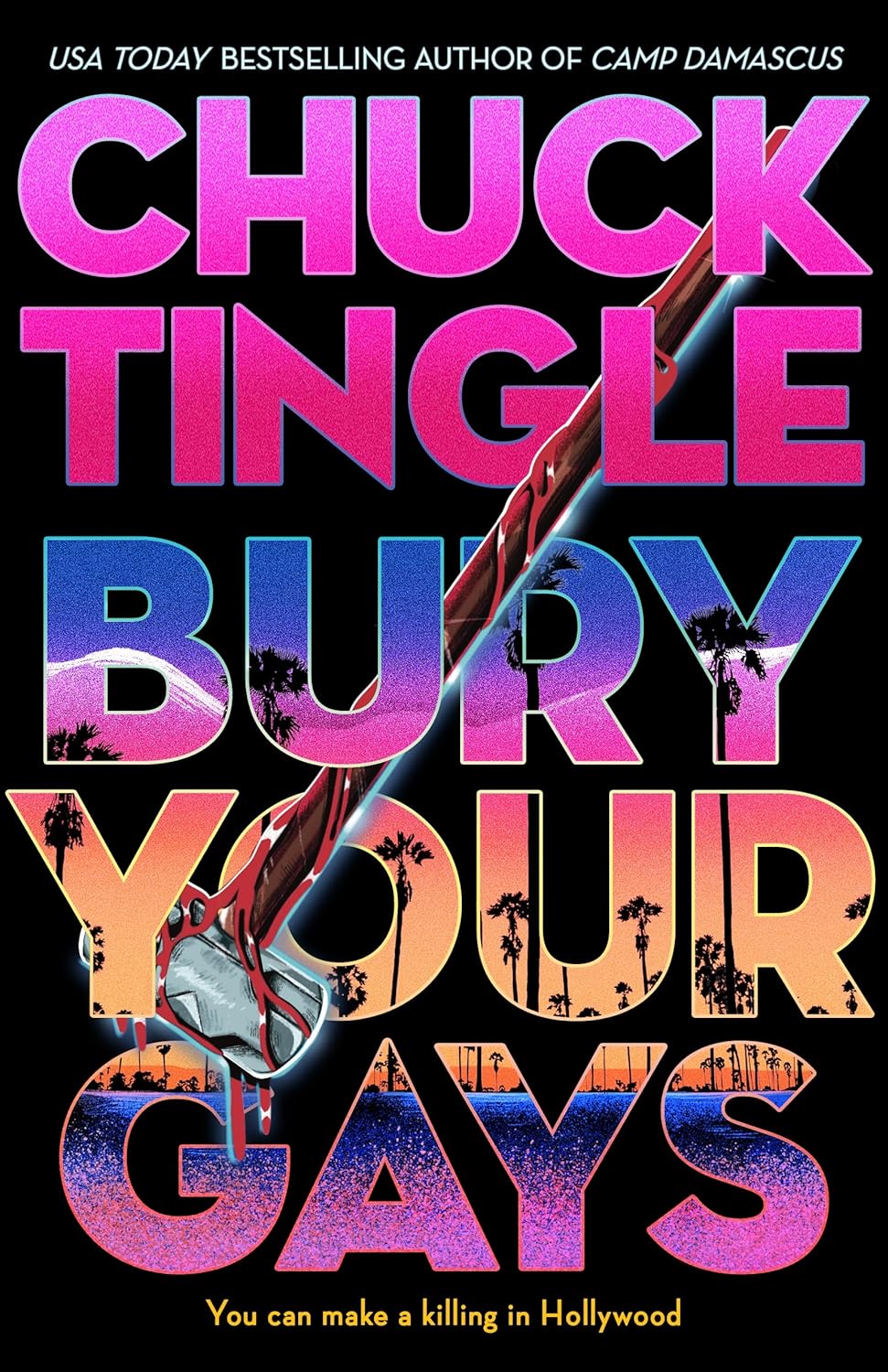
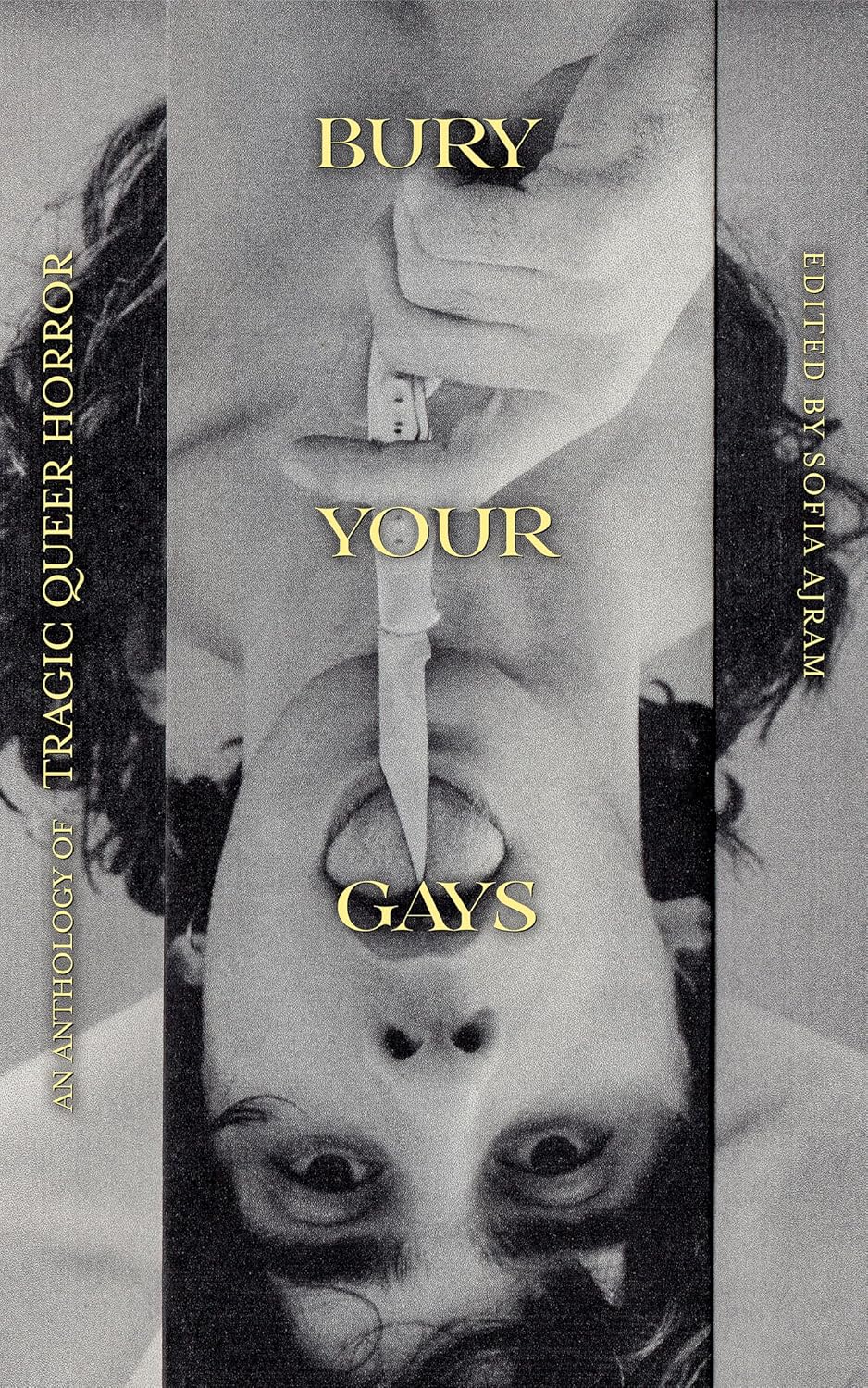
The instant USA Today bestseller by Chuck Tingle about what it takes to succeed in a world that wants you dead.
“Brilliantly bloody, wildly fun, and extremely scary, Bury Your Gays brings a sledgehammer down on tired tropes and makes a masterpiece of their guts.”―Rachel Harrison, national bestselling author of Black Sheep
Misha knows that chasing success in Hollywood can be hell.
But finally, after years of trying to make it, his big moment is here: an Oscar nomination. And the executives at the studio for his long-running streaming series know just the thing to kick his career to the next level: kill off the gay characters, “for the algorithm,” in the upcoming season finale.
Misha refuses, but he soon realizes that he’s just put a target on his back. And what’s worse, monsters from his horror movie days are stalking him and his friends through the hills above Los Angeles.
Haunted by his past, Misha must risk his entire future―before the horrors from the silver screen find a way to bury him for good.
One of the Best Horror Books of 2024 by Esquire!
One of the Best Books of Summer 2024 by Paste, HuffPost, Esquire, and Publishers Weekly!
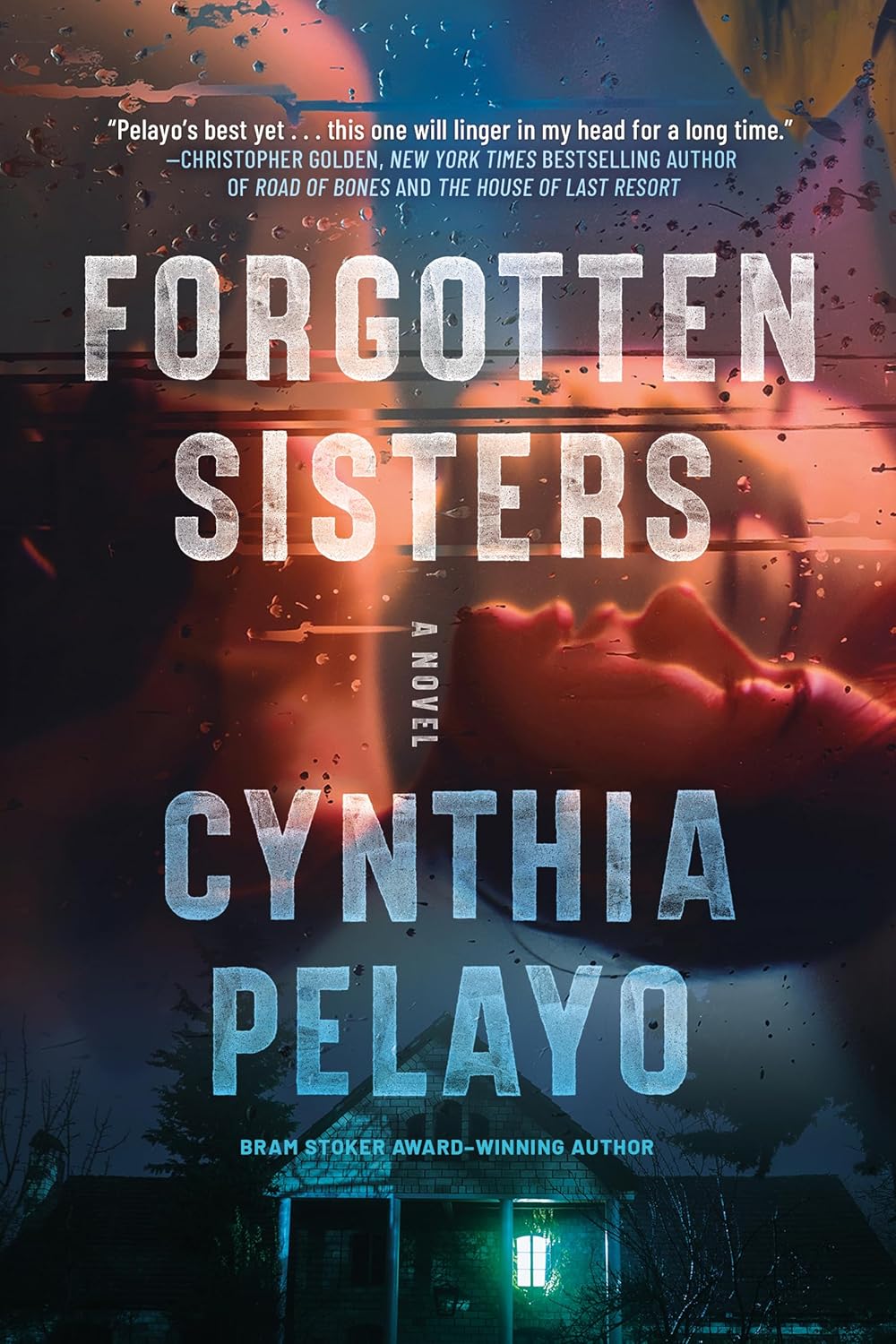
Forgotten Sisters
Forgotten Sisters
Cynthia Pelayo (Thomas & Mercer)
A city’s haunted history and fairy-tale horrors converge for two women in an addictive novel of psychological suspense by a multiple Bram Stoker Award–nominated author.
Sisters Anna and Jennie live in a historic bungalow on the Chicago River. They’re tethered to a disquieting past, and with nowhere else to go, nothing can part them from their family home. Not the maddening creaks and disembodied voices that rattle the old walls. Not the inexplicable drownings in the area, or the increasing number of bodies that float by Anna’s window.
To stave off loneliness, Anna has a podcast, spinning ghostly tales of Chicago’s tragic history. But when Anna captures the attention of an ardent male listener, she awakens to the possibilities of a world outside.
As their relationship grows, so do Jennie’s fears. More and more people are going missing in the river. And then two detectives come calling.
They’re looking for a link between the mysteries of the river and what’s housed on the bank. Even Anna and Jennie don’t understand how dreadful it is―and still can be―when the truth about their unsettled lives begins to surface.
The instant USA Today bestseller from CJ Leede, author of Maeve Fly―a scorching and sweeping new novel about the end of the world as we know it.
One of Esquire and Vulture’s Best Horror Books of 2024 • A GoodReads and Publishers Weekly Editors’ Pick • An Indie Next Pick!
“A blistering, feverish ride through a uniquely American apocalypse.”―Chuck Wendig, New York Times bestselling author
A virus is spreading across America, transforming the infected and making them feral with lust.
Sophie, a good Catholic girl, must traverse the hellscape of the midwest to try to find her family while the world around her burns. Along the way she discovers there are far worse fates than dying a virgin…
“I’ve loved Maggie Thrash’s work for years, and Rainbow Black is going to set so many new hearts aflame—murder, intrigue, queer love, dark humor AND satanic panic? Welcome to the Maggie Thrash Fan Club, world!”—Emma Straub, New York Times bestselling author of This Time Tomorrow
For readers of Donna Tartt and Ottessa Moshfegh comes a brilliant, deliriously entertaining novel from the acclaimed author of Honor Girl. Rainbow Black is part murder mystery, part gay international fugitive love story—set against the ’90s Satanic Panic and spanning 20 years in the life of a young woman pulled into its undertow.
Lacey Bond is a 13-year-old girl in New Hampshire growing up in the tranquility of her hippie parents’ rural daycare center.
Then the Satanic Panic hits. It’s the summer of 1990 when Lacey ’s parents are handcuffed, flung into the county jail, and faced with a torrent of jaw-dropping accusations as part of a mass hysteria sweeping the nation. When a horrific murder brings Lacey to the breaking point, she makes a ruthless choice that will haunt her for decades.
As an adult, Lacey mimes a normal life as the law clerk of an illustrious judge. She has a beautiful girlfriend, a measure of security, and the world has mostly forgotten about her. But after a tiny misstep spirals into an uncontrolled legal disaster, the hysteria threatens to begin all over again.
Rainbow Black is an addictive, searing, high-octane triumph, an imaginative tour de force about one woman’s tireless desire to be free.
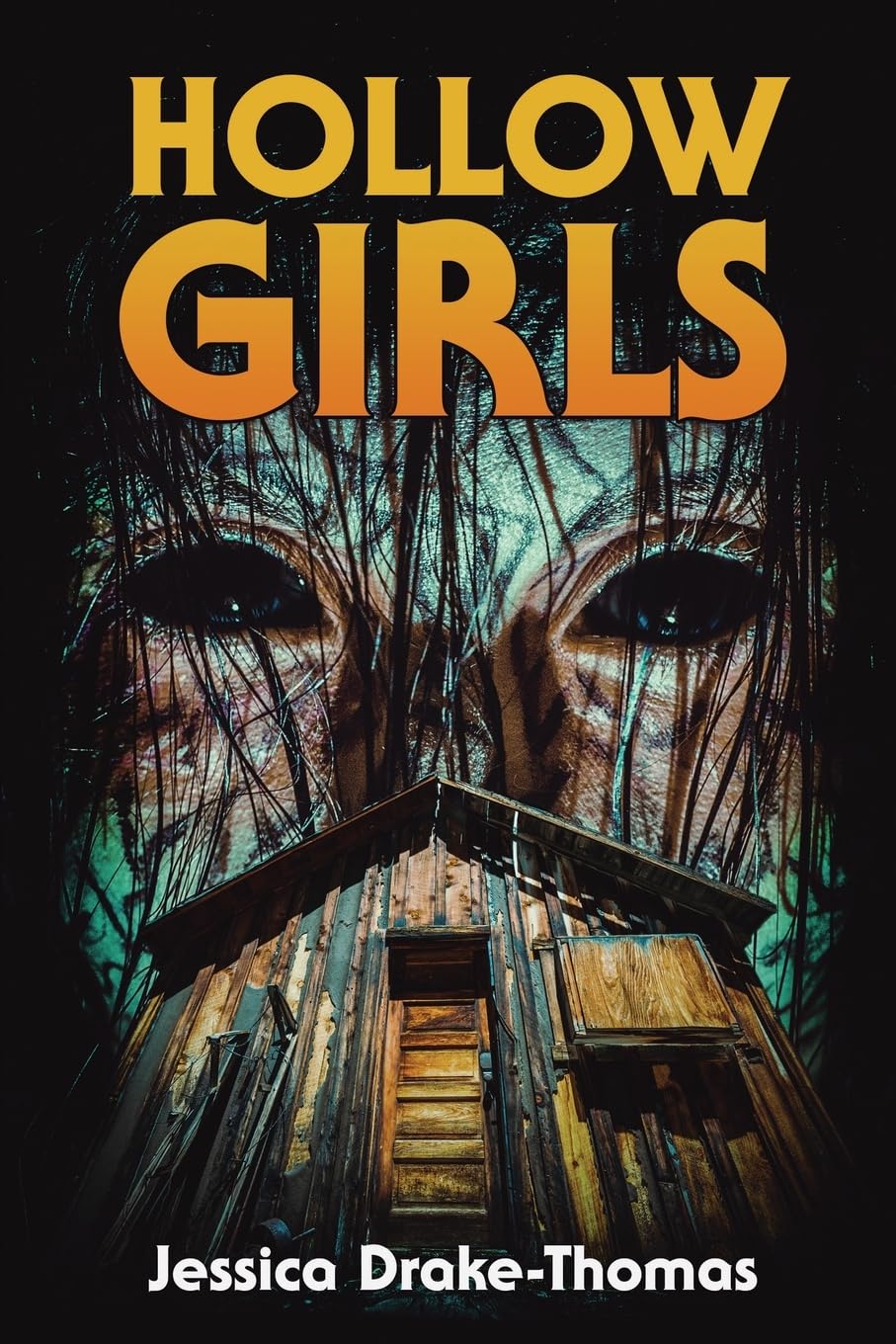
Twenty four years ago, Olive and Stacia went into the woods. Only Olive returned, with no memory of what happened. Now, Olive’s father has vanished, leaving behind research which indicates that he has found out what lives in the woods.
It wakes up every twelve years, taking only children. It has been doing so for at least two hundred years. And it is waking again.
Forced to return to her hometown, Olive finds her memories returning.
What she remembers from the days leading up to Stacia’s disappearance is magical, almost impossible to believe, but she knows that she must return to the woods–to face what lurks there, to save her father, and to find out what happened to Stacia.
“Beautiful, poetic, and gutting. Hollow Girls is a captivating novel that will lure you deep into the woods where magic and darkness entwine. There is so much heart to this story of friendship and blood where oaths and secrets continue to unravel until the very last page. Bring an offering to the Fae, and come along on this memorable journey.”
–Sara Tantlinger, Bram Stoker Award-winning author of The Devil’s Dreamland.
Winnie Campbell is sixteen and a burgeoning serial killer. Her father blames her for her mother’s death, dotes on her little sister, and executes increasingly cruel punishments meant to humiliate Winnie. As the punishments morph into torture, she begins fantasizing about regaining some semblance of power, eventually working through her rage by killing small animals.
When her violent games escalate and she accidentally kills an infant while babysitting, Winnie gets a taste of a power she doesn’t want to let go of. Her obsession with killing grows, and so does her fascination for Leigh, a girl that reminds her of her younger self.
Winnie wants to kill. She wants to die. She wants to be someone other than herself. And killing Leigh, a symbolic suicide, could be the key to her metamorphosis.
“A shocking and utterly harrowing examination of the creation of a murderer. Although Crushing Snails excels in many areas, this novel is perhaps most skillful at effectively illustrating the very human compulsion for violence and depravity. Murray’s excellent novel showcases the very human possibility of carnage—the horrifying prospect of brutality—when curiosity is sated and when we finally surrender to our most feral desires.”—Eric LaRocca, author of Things Have Gotten Worse Since We Last Spoke
“Masterfully executed and chilling to the core, Crushing Snails is a terrifying look into the darkest depths of the human mind and the ways in which monsters are formed. With the intensity level set to high, Murray draws you into complicity as you witness one girl’s spiral into obsession and depravity, culminating in a horrifying conclusion you’ll never forget.”—Kelsea Yu, Shirley Jackson Award-nominated author of Bound Feet
“A nightmare of power and control, or perhaps even something more wayward. Crushing Snails is provocative and demanding, spiraling and unapologetic. Emma Murray is an exciting emerging voice in horror challenging what is normal and what is safe.”—Cynthia Pelayo, Bram Stoker Award-winning author of Crime Scene
“Sick, twisted, and compulsively readable—Emma E. Murray’s Crushing Snails is a coming-of-age story that goes to dark and darker places, leaving me constantly hanging between two modes of thought: one-more-chapter and holy-fucking-shit.”—Carson Winter, author of The Psychographist
A woman checks herself into an insane asylum to solve the mystery of her sister’s murder, only to lose her memory and maybe her mind.
From the subversive voice behind The Phlebotomist comes a story that combines the uncanny atmosphere of Don’t Worry Darling with the narrative twists of The Last House on Needless Street
What would guilt make you do?
Hadleigh Keene died on the road leading away from Hollyhock Asylum. The reasons are unknown. Her sister Morgan blames herself. A year later with the case still unsolved, Morgan creates a false identity, that of a troubled housewife named Charlotte Turner, and goes inside.
Morgan quickly discovers that Hollyhock is… not right. She is shaken by the hospital’s peculiar routines and is soon beset by strange episodes. All the while, the persona of Charlotte takes on a life of its own, becoming stronger with each passing day. As her identity begins unraveling, Morgan finds herself tracing Hadleigh’s footsteps and peering into the places they lead.
The terrifying reality of The Redemption of Morgan Bright unfolds over the course of chapters told from the points of view of both Charlotte and Morgan, police interviews, and text messages.
Once there were four Lasco siblings banded together against a world that failed to protect them. But on a hellish night that marked the end of their childhood, eldest brother Shawn died violently after being dragged behind closed doors. Though the official finding was accidental death, Nathan Lasco knows better, and has never forgiven their mother, Stella.
Now two decades later, Stella promises to finally reveal the truth of what happened on The Day of the Door. Accompanied by a paranormal investigative team, the Lasco family comes together one final time, but no one is prepared for the revelations waiting for them on the third floor.
The final installment in the most lauded trilogy in the history of horror novels picks up four years after Don’t Fear the Reaper as Jade returns to Proofrock, Idaho, to build a life after the years of sacrifice—only to find the Lake Witch is waiting for her in New York Times bestselling author Stephen Graham Jones’s finale.
It’s been four years in prison since Jade Daniels last saw her hometown of Proofrock, Idaho, the day she took the fall, protecting her friend Letha and her family from incrimination. Since then, her reputation, and the town, have changed dramatically. There’s a lot of unfinished business in Proofrock, from serial killer cultists to the rich trying to buy Western authenticity. But there’s one aspect of Proofrock no one wants to confront…until Jade comes back to town. The curse of the Lake Witch is waiting, and now is the time for the final stand.
New York Times bestselling author Stephen Graham Jones has crafted an epic horror trilogy of generational trauma from the Indigenous to the townies rooted in the mountains of Idaho. It is a story of the American west written in blood.
“Simply put—and I do not say this lightly—Incidents Around the House is the most purely effective horror novel I have ever read.”—Neil McRobert, Esquire (Best Horror Books of 2024, So Far)
A chilling horror novel about a haunting, told from the perspective of a young girl whose troubled family is targeted by an entity she calls “Other Mommy,” from the New York Times bestselling author of Bird Box
“This book isthe monster that lives inside your closet.”—Grady Hendrix, New York Times bestselling author of How to Sell a Haunted House
To eight-year-old Bela, her family is her world. There’s Mommy, Daddo, and Grandma Ruth. But there is also Other Mommy, a malevolent entity who asks her every day: “Can I go inside your heart?”
When horrifying incidents around the house signal that Other Mommy is growing tired of asking Bela the question over and over, Bela understands that unless she says yes, her family will soon pay.
Other Mommy is getting restless, stronger, bolder. Only the bonds of family can keep Bela safe, but other incidents show cracks in her parents’ marriage. The safety Bela relies on is about to unravel.
But Other Mommy needs an answer.
Incidents Around the House is a chilling, wholly unique tale of true horror about a family as haunted as their home.
A chilling twist on the “cursed film” genre from the bestselling author of The Pallbearers Club and The Cabin at the End of the World.
In June 1993, a group of young guerilla filmmakers spent four weeks making Horror Movie, a notorious, disturbing, art-house horror flick.
The weird part? Only three of the film’s scenes were ever released to the public, but Horror Movie has nevertheless grown a rabid fanbase. Three decades later, Hollywood is pushing for a big budget reboot.
The man who played “The Thin Kid” is the only surviving cast member. He remembers all too well the secrets buried within the original screenplay, the bizarre events of the filming, and the dangerous crossed lines on set that resulted in tragedy. As memories flood back in, the boundaries between reality and film, past and present start to blur. But he’s going to help remake the film, even if it means navigating a world of cynical producers, egomaniacal directors, and surreal fan conventions—demons of the past be damned.
But at what cost?
Horror Movie is an obsessive, psychologically chilling, and suspenseful feat of storytelling genius that builds inexorably to an unforgettable, mind-bending conclusion.
A visceral and heartbreaking work of gothic horror about small town mysteries, local folklore and the things we leave behind when we’re gone, from the Bram Stoker Award winning author of Queen of Teeth.
What really happened to Cabrina Brite?
Ivory’s life changes irrevocably when she discovers the body of Cabrina Brite on the sands of Cape Morning, along with a mysterious poem. How did she die, and why does it seem she was trying to swim to Ghost Cat Island, the center of so many local mysteries?
Desperate to uncover the answers surrounding Cabrina’s death, and haunted by her discovery, Ivory begins to see the pale ghost of Cabrina, only to shake it off as a mere hallucination. But Ivory is not alone. Cabrina’s closest friends have also seen a similar apparition, and as they toy with occult possibilities, they begin to unravel the truth behind Cabrina’s death.
Because Cape Morning isn’t a ghost town, but a town filled with ghosts, and Ivory is about to discover just what happens when you let one in.
From New York Times bestselling and Hugo Award-winning author T. Kingfisher comes A Sorceress Comes to Call―a dark reimagining of the Brothers Grimm’s “The Goose Girl,” rife with secrets, murder, and forbidden magic.
*The hardcover edition features a foil stamp on the casing and custom endpapers illustrated by the author.*
Cordelia knows her mother is . . . unusual. Their house doesn’t have any doors between rooms―there are no secrets in this house―and her mother doesn’t allow Cordelia to have a single friend. Unless you count Falada, her mother’s beautiful white horse. The only time Cordelia feels truly free is on her daily rides with him.
But more than simple eccentricity sets her mother apart. Other mothers don’t force their daughters to be silent and motionless for hours, sometimes days, on end. Other mothers aren’t evil sorcerers.
When her mother unexpectedly moves them into the manor home of a wealthy older Squire and his kind but keen-eyed sister, Hester, Cordelia knows this welcoming pair are to be her mother’s next victims. But Cordelia feels at home for the very first time among these people, and as her mother’s plans darken, she must decide how to face the woman who raised her to save the people who have become like family.
Embark on a darkly humorous journey of reality TV meets the macabre. On the set of The Groom, a group of women must compete for the heart of Midwestern bachelor Tristan by spending a week in a haunted house. Divorcee Linda, resigned to her role as the show’s underdog, finds her resolve cracking when she begins to fall for fellow castmate Charity. Meanwhile, Sabrina, groomed by her witchy mother to deliver their family from poverty by marrying a rich man, sees winning the competition as her predestined path.
But after a shocking demise, the game takes a sinister turn. As the remaining contestants grapple with their desires for love and survival, they uncover dark secrets within and without the house’s walls. Trapped in a twisted new competition, they must confront their own demons or face elimination.
Sixty-three-year-old Los Angeles stoner, Hank Wallace, is just trying to get by and get high when he takes a gig distributing ads for a local company. But the job quickly turns into more than it seems. Hank begins hearing voices and experiencing strange visions while passing out the ads. Before he knows it, he’s fallen prey to his employer, a demon from another world.
Possessed by the demon, Hank absorbs nightmares from others living in his corner of LA. He becomes a conduit that feeds anxiety and dread to the demon. The nightmares pour in, but they aren’t enough. The demon requires more sustenance than the nightmares provide.
And the demon is in luck. Hank learns that his estranged sister, Carla, his only living relative, is terminally ill with cancer. He has steered clear of close relationships with family for decades, but he cannot avoid it any longer. The demon insists. Carla and her family’s grief is a siren’s call.
Hank drives to Sacramento bearing an invisible gift. The demon can erase their grief, but at what cost? Unless Hank can get his head together and snap out of it, the demon will consume every last one of them.
From New York Times bestselling horror writer Stephen Graham Jones comes a classic slasher story with a twist—perfect for fans of Adam Cesareand Grady Hendrix.
1989, Lamesa, Texas. A small west Texas town driven by oil and cotton—and a place where everyone knows everyone else’s business. So it goes for Tolly Driver, a good kid with more potential than application, seventeen, and about to be cursed to kill for revenge. Here Stephen Graham Jones explores the Texas he grew up in, and shared sense of unfairness of being on the outside through the slasher horror Jones loves, but from the perspective of the killer, Tolly, writing his own autobiography. Find yourself rooting for a killer in this summer teen movie of a novel gone full blood-curdling tragic.
In this “stunningly visceral” (New York Times Book Review) novel, a group of young men seek vengeance after one of their mothers is murdered in a Puerto Rican slum; STAND BY ME with a haunted, obsidian-dark heart.
One of B&N’s Best Horror Books of the Year
For childhood friends Gabe, Xavier, Tavo, Paul, and Bimbo, death has always been close. Hurricanes. Car accidents. Gang violence. Suicide. Estamos rodeados de fantasmas was Gabe’s grandmother’s refrain. We are surrounded by ghosts. But this time is different. Bimbo’s mom has been shot dead. We’re gonna kill the guys who killed her Bimbo swears. And they all agree.
Feral with grief, Bimbo has become unrecognizable, taking no prisoners in his search for names. Soon, they learn Maria was gunned down by guys working for the drug kingpin of Puerto Rico. No one has ever gone up against him and survived. As the boys strategize, a storm gathers far from the coast. Hurricanes are known to carry evil spirits in their currents and bring them ashore, spirits which impose their own order.
Blurring the boundaries between myth, mysticism, and the grim realities of our world, House of Bone and Rain is a harrowing coming of age story; a doomed tale of devotion, the afterlife of violence, and what rolls in on the tide.
From Gretchen Felker-Martin, the acclaimed author of Manhunt, comes a vicious new novel about a group of teens who must stay true to themselves while in a conversion camp from hell.
“A soaring, boundless ode to queer survival. It’s flat-out mesmerizing.”―Paul Tremblay, author of The Pallbearers Club
Something evil is buried deep in the desert. It wants your body. It wears your skin.
In the summer of 1995, seven queer kids abandoned by their parents at a remote conversion camp came face to face with it. They survived―but at Camp Resolution, everybody leaves a different person.
Sixteen years later, only the scarred and broken survivors of that terrible summer can put an end to the horror before it’s too late.
The fate of the world depends on it.
“Tense and frighteningly visceral, Cuckoo is a masterwork of body horror thrumming with high octane viciousness.” ―Eric LaRocca, author of Things Have Gotten Worse Since We Last Spoke
A woman builds her lover from carefully scavenged pieces and parts. A young girl is groomed for madness by one who loves her most. A neurodivergent boy organizes his life, and loss, by the ticking of a clock. And love can be the most splendid and destructive force in the entire world.
Love is a Crematorium and Other Tales is a collection of seventeen stories that are both bleak and beautiful, devastating and sweet. Enter the crematorium to experience grief, starlit nights, and gorgeous tragedy that make our souls burn from the inside out.
One of Paste Magazine’s “Most Anticipated Horror Books of 2024”
It’s about to get very dark.
Bram Stoker Award-winning author Laird Barron returns to the dark and dreadful with his fifth horror collection, which weaves sixteen weird tales into a mosaic of the bloody and the macabre.
It is in the darkest moments, during the loss of hope, that the language of crows is most clearly heard. The words are as menacing as piercing beaks, the events as perilous as a sea of black feathers. The corvid tongue spreads diabolical thoughts and devious visions.
Legend has it that crows prophesize offenses of the worst kind, their harsh tones are harbingers of horror. Collectively, crows are a murder, and they call out orders about their own name. The Language of Crows and other stories contains dark fairy tales, historical horror, and psychological horror in voices of the violent and the violated. It is a collection of witches’ spells, monsters’ murmurs, and voices within one’s head.
A brand-new collection of four intense, claustrophobic and terrifying horror tales from the Bram Stoker Award®-nominated and Splatterpunk Award-winning author of Things Have Gotten Worse Since We Last Spoke.
THIS SKIN WAS ONCE MINE
When her father dies under mysterious circumstances, Jillian Finch finds herself grieving the man she idolized while struggling to feel comfortable in the childhood home she was sent away from nearly twenty years ago. Then Jillian discovers a dark secret that will threaten to undo everything she has ever known about her father.
SEEDLING
A young man’s father calls him early in the morning to say that his mother has passed away. He arrives home to find his mother’s body still in the house. Struggling to process what has happened he notices a small black wound appear on his wrist. Then he discovers his father is cursed with the same affliction.
ALL THE PARTS OF YOU THAT WON’T EASILY BURN
Enoch Leadbetter goes to buy a knife for his husband to use at a forthcoming dinner party. He encounters a strange shopkeeper who draws him into an intoxicating new obsession and sets him on a path towards mutilation and destruction…
PRICKLE
Two old men revive a cruel game with devastating consequences…
From legendary storyteller and master of short fiction Stephen King comes an extraordinary new collection of twelve short stories, many never-before-published, and some of his best EVER.
“You like it darker? Fine, so do I,” writes Stephen King in the afterword to this magnificent new collection of twelve stories that delve into the darker part of life—both metaphorical and literal. King has, for half a century, been a master of the form, and these stories, about fate, mortality, luck, and the folds in reality where anything can happen, are as rich and riveting as his novels, both weighty in theme and a huge pleasure to read. King writes to feel “the exhilaration of leaving ordinary day-to-day life behind,” and in You Like It Darker, readers will feel that exhilaration too, again and again.
“Two Talented Bastids” explores the long-hidden secret of how the eponymous gentlemen got their skills. In “Danny Coughlin’s Bad Dream,” a brief and unprecedented psychic flash upends dozens of lives, Danny’s most catastrophically. In “Rattlesnakes,” a sequel to Cujo, a grieving widower travels to Florida for respite and instead receives an unexpected inheritance—with major strings attached. In “The Dreamers,” a taciturn Vietnam vet answers a job ad and learns that there are some corners of the universe best left unexplored. “The Answer Man” asks if prescience is good luck or bad and reminds us that a life marked by unbearable tragedy can still be meaningful.
King’s ability to surprise, amaze, and bring us both terror and solace remains unsurpassed. Each of these stories holds its own thrills, joys, and mysteries; each feels iconic. You like it darker? You got it.
A young queer man finds love at a magical clothing shop-and the courage to stand up to the homophobic cops. A witch who makes custom nightmares wonders why all her victims are connected to the Black Panthers-and who she’s really working for. A soon-to-be father encounters a mysterious hitchhiker who tries pulling him back to the days of his violent past. A brand-new vampire, freshly hired at the blood bank, delights in her heightened sexual desire and superhuman strength.
Cynthia Gómez’s debut collection is a magic-soaked love letter to Oakland, brimming with feminist rage. Its twelve stories center ordinary people-Latine, queer, working class-as they wield supernatural powers against oppression, loneliness, and dread.
Christi Nogle has established herself as a modern Ray Bradbury, this collection adds fantasy, slipstream, and fabulism to her canon.
One Eye Opened in That Other Place collects Christi Nogle’s best weird and fantastical stories. The collection focuses on liminal spaces and the borders between places and states of mind. Though you might not find a traditional portal fantasy here, you will travel across thresholds and arrive at other places and times that are by turns disquieting, terrifying, and wonderful. Get up close with the local flora and fauna, peruse the weird art exhibits and special shows, and consider taking a dip in the mossy, snail-filled tank of water. Make sure to bring your special glasses
This new collection will appeal to readers of Jeff VanderMeer, Charles Wilkinson, Steve Rasnic Tem, M. Rickert, Lynda E. Rucker and Stephen King’s novel Lisey’s Story.
The Shirley Jackson Award-nominated author returns with a new collection of literary horror and weird fiction that glitters with startling prose and tortured souls.
Invaginies is an invasion, it is a perception that is bodily and transcendent creating holes, paths, or pockets of alternate truth-and not always voluntary–enlightenment.
Every line sings and strikes like grotesque poetry of the possessed. With 17 disturbing tales exploring plagues, possessions, gender & corruption, set in apocalyptic eras not much unlike our own, Joe Koch brings the terrors of a postmodern world into vivid focus.
Haunting and beautiful, Koch takes their place among the great names of the weird like Brian Evenson, exploring the queer perspective in horror as Billy Martin and Clive Barker, and contemporary rising voice, Eric LaRocca.
Literary prose meets the grotesque in this collection of stories to galvanize lovers of horror and weird fiction. With a growing cult audience, this collection is sure to shoot to the top of readers’ tbr piles.
At a Halloween party in 1999, a writer slept with the devil. She sees him again and again throughout her life and she writes stories for him about things that are both impossible and true.
Lima lures readers into surreal pockets of the United States and Brazil where they’ll find bite-size Americans in vending machines and the ghosts of people who are not dead. Once there, she speaks to modern Brazilian-American immigrant experiences–of ambition, fear, longing, and belonging―and reveals the porousness of storytelling and of the places we call home.
With humor, an exquisite imagination, and a voice praised as “singular and wise and fresh” (Cathy Park Hong), Lima joins the literary lineage of Bulgakov and Lispector and the company of writers today like Ted Chiang, Carmen Maria Machado, and Nana Kwame Adjei-Brenyah.
Craft: Stories I Wrote for the Devil includes: “Rapture,” “Ghost Story,” “Tropicália,” “Antropógaga,” “Idle Hands,” “Rent,” “Porcelain,” “Heaven, Hell, and Purgatory,” and “Hasselblad.”
A great next read for fans of Carmen Maria Machado’s Her Body and Other Parties and V. E. Schwab’s The Invisible Life of Addie LaRue.
Recommended reading by Chicago Review of Books, Electric Literature, The Kenyon Review, and more!
Zip up your human suit and set sail, imbibing every perspective you can
in order to perfect the persona.
Push to the outer edges. Document your travels, and forget to return.
There will be a test.
Learn what it means to be human.
Forget what it means to be human.
Learn what it means to be human.
Forget what it means to be human.
Do not panic.
BRAVE NEW WEIRD: The Best New Weird Horror, Volume Two encompasses the finest Weird speculative fiction published in (roughly) 2023. Edited by Alex Woodroe.
Table of contents:
Nelly Geraldine García-Rosas – Lullaby for the Unseen
Thomas Ha – In That Crumbling Home
Hussani Abdulrahim – The Library Virus
Patrick Malka – Show Me
Eirik Gumeny – A Balanced Breakfast
David Simmons – Food is Poison
Premee Mohamed – Quietus
Perfect Kiss Strickoll – punctum (o baked alaska for you i am a former american)
LC von Hessen – Transmasc of the Red Death
Simone le Roux – The Man Outside
KS Walker – River Bargain Baby
M.M. Olivas – The Prince of Oakland
Amitha Jagannath Knight – My Mother, The Exoskeleton
Rachael K. Jones – The Sound of Children Screaming
Judith Shadford – Endless Yearning
Daniel DeRock – Guest Opinion: We must take action regarding the [REDACTED] High School janitor
Geneve Flynn – A Box of Hair and Nail
Anemone Moss – Everything You Dump Here Ends Up in the Ocean
Karlo Yeager Rodríguez – Up In the Hills, She Dreams of Her Daughter Deep In the Ground
If books have no power, why are they trying so hard to keep them from people?
4,240 unique book titles were targeted for censorship or banning in 2023 alone.
Shadows in the Stacks was published to raise funds for the Books Unbanned Initiative through the Library Foundation SD. All proceeds from sales go to the Library Foundation SD.
This collection of terrifying tales was edited by Vincent V. Cava, James Sabata, and Jared Sage, with a foreword by Laurel Hightower, and features all-new stories from…
Kevin David AndersonZachary AshfordS.A. BradleyBridget D. BraveKel ByronVincent V. CavaClay McLeod ChapmanRebecca CuthbertAlexis DuBonJamie FlanaganDouglas FordEvelyn FreelingAi JiangLucy LeitnerJonathan MaberryJ.A.W. McCarthyTim McGregorJohn PalisanoJames SabataWilliam SterlingAlvaro Zinos-Amaro
Each limb tells a story. Every organ shares a secret.
A woman saves the leg of her dead child. A man leaps from soul to soul, trying to find a pure heart. Uteri wander, skin peels back, and human bodies liquify all over this world.
Slice into the anatomy of this collection to discover all the unseen horrors the human body can deliver.
Brand new stories from Alex Wolfgang, Ai Jiang, Mary Rajotte, Julie Sevens, Christopher O’Halloran, Sasha Brown, Bridget D. Brave, Taylor Ketterer, Demi-Louise Blackburn, Lindsey Ragsdale, Emma E. Murray, Johnathon Heart, P.L. McMillan, Rachel Searcey, Bryan Young, Kai Delmas, and David Worn, with a foreword from Paula D. Ashe.
Bury Your Gays: An Anthology Of Tragic Queer Horror
Bury Your Gays: An Anthology Of Tragic Queer Horror
Ghoulish Books
A manifestation of ecstasy, heartache, horror and suffering rendered in feverish lyrical prose. Inside are sixteen new stories by some of the genre’s most visionary queer writers. Young lovers find themselves deliriously lost in an expanding garden labyrinth. The porter of a sentient hotel is haunted within a liminal time loop. A soldier and his abusive commanding officer escape a war in the trenches but discover themselves in an even greater nightmare. Parasites chase each other across time-space in hungry desperation to never be apart. A graduate student with violent tendencies falls into step with a seemingly walking corpse. Featuring stories from Cassandra Khaw, Joe Koch, Gretchen Felker-Martin, Robbie Banfitch, August Clarke, Son M., Jonathan Louis Duckworth, M.V. Pine, Ed Kurtz, LC Von Hessen, Matteo L. Cerilli, November Rush, Meredith Rose, Charlene Adhiambo, Violet, and Thomas Kearnes.
It’s the question asked of any story about a haunting: why didn’t you just leave? But if accounts of people who have stayed in haunted houses are any indication … it’s never that simple.
In this book, you’ll find twenty-two all-new stories about the reasons people don’t leave scary situations-parents who stay in haunted houses to protect their children, convicts who literally can’t leave their prison, retail workers who need a paycheck even if it’s from a haunted workplace, trauma survivors suffering from agoraphobia, and more.
Featuring Shauntae Ball, I.S. Belle, Die Booth, Max Booth III, Christa Carmen, Raquel Castro, Alberto Chimal, Gabe Converse, Lyndsey Croal, Victoria Dalpe, Alexis DuBon, Corey Farrenkopf, Cassandra Khaw, Joe Koch, E.M. Linden, Steve Loiaconi, R. Diego Martinez, J.A.W. McCarthy, Suzan Palumbo, Tonia Ransom, Rhiannon Rasmussen, and Eden Royce. With illustrations by Luke Spooner, Yves Tourigny, and Yornelys Zambrano.
We Mostly Come Out At Night: 15 Queer Tales of Monsters, Angels & Other Creatures
We Mostly Come Out At Night: 15 Queer Tales of Monsters, Angels & Other Creatures
Running Press Kids
An empowering cross-genre YA anthology that explores what it means to be a monster, exclusively highlighting trans and queer authors who offer new tales and perspectives on classic monster stories and tropes.
Be not afraid! These monsters, creatures, and beasties are not what they appear. We Mostly Come Out at Night is a YA anthology that reclaims the monstrous for the LGBTQA+ community while exploring how there is freedom and power in embracing the things that make you stand out. Each story centers on both original and familiar monsters and creatures—including Mothman, Carabosse, a girl with thirteen shadows, a living house, werebeasts, gorgons, sirens, angels, and many others—and their stories of love, self-acceptance, resilience, and empowerment. This collection is a bold, transformative celebration of queerness and the creatures that (mostly) go bump in the night.
Contributors include editor Rob Costello, Kalynn Bayron, David Bowles, Shae Carys, Rob Costello, H.E. Edgmon, Michael Thomas Ford, Val Howlett, Brittany Johnson, Naomi Kanakia, Claire Kann, Jonathan Lenore Kastin, Sarah Maxfield, Sam J. Miller, Alexandra Villasante, and Merc Fenn Wolfmoor.
The Black Girl Survives In This One: Horror Stories
The Black Girl Survives In This One: Horror Stories
Flatiron Books
Be warned, dear reader: The Black girls survive in this one.
Celebrating a new generation of bestselling and acclaimed Black writers, The Black Girl Survives in This One makes space for Black girls in horror. Fifteen chilling and thought-provoking stories place Black girls front and center as heroes and survivors who slay monsters, battle spirits, and face down death. Prepare to be terrified and left breathless by the pieces in this anthology.
The bestselling and acclaimed authors include Erin E. Adams, Monica Brashears, Charlotte Nicole Davis, Desiree S. Evans, Saraciea J. Fennell, Zakiya Dalila Harris, Daka Hermon, Justina Ireland, L.L. McKinney, Brittney Morris, Maika & Maritza Moulite, Eden Royce, and Vincent Tirado. The foreword is by Tananarive Due.
Howls From The Scene Of The Crime: A Crime Horror Anthology
Howls From The Scene Of The Crime: A Crime Horror Anthology
Howl Society Press
A death row cell that recounts the dark stories of its inmates. An informant who consumes shards of crystallized skulls to see the past. A world where to speak of the dead is a violation of an unjust society’s rules. Heists, drugs, cults, detectives, murder, monsters, revenge.
Commit yourself to Howls from the Scene of the Crime, an anthology of crime horror laced with blood, secrets, and occult compulsions from some of the best established and emerging horror authors writing today. Featuring a foreword by Bram Stoker Award(R) winning crime horror author, Cynthia Pelayo.
Beyond The Bounds Of Infinity: An Anthology of Diverse Horror
Raw Dog Screaming Press
Welcome to a world of horror viewed through a kaleidoscope lens. Embark on a journey to untangle the writhing tendrils of human terror in a dimension where the possible and impossible blend-an unstable realm where comfort can be found in the coldest pits, and dark gods feast upon the sweetest suffering-where infernal sounds birth silent letters that drift along midnight shores and the unexplained lurks beneath crumbling urban structures. Step over the edge of what you think you know, and find yourself…Beyond the Bounds of Infinity!
Featuring stories by L. Marie Wood, S.A. Cosby, Jessica McHugh, and Mary SanGiovanni-alongside newer voices like Cassius Kilroy, Jessica L. Sparrow, and Vicky Velvet-Beyond the Bounds of Infinity offers a collection of weird fiction and cosmic horror stories that are diverse down to the cellular level. From Taíno folk horror to the horror of identity in a world that just doesn’t understand, from cozy to apocalyptic, and everything in between, let these authors show you what fear really is, and what it means to them.