California X’s self-titled debut was the best Dinosaur Jr. album recorded by a band that wasn’t Dinosaur Jr., who were incidentally also making great Dinosaur Jr. albums at the time. It’s a great basis for a one-off album, but you can’t do that twice; Yuck tried it, and look where it got them. On their second album, then, California X try that whole “growth” thing, with middling results. They’ve added a second guitarist and seem to have developed a love for doom metal, or maybe just reappropriated Black Sabbath. The heaviness of the guitar work here is appreciated but it’s also oppressive, more suffocating than joyous. When it works, it works well, as on the two-part “Blackrazor” epic, where plodding doom rock bleeds into a kick-ass up-BPM track full of tossed-off Iron Maiden guitar melodies. When it doesn’t, like on “Hadley, MA” or the attempt at capturing magic twice that is “Summer Wall”, it meanders badly. Coupled with the fact that the production over-emphasizes the low end at the expense of clarity and this is a sophomore album that takes the band in a slightly new direction, but doesn’t really do them any favours.
The National are a band that filter the mischances of love through a thick layer of whiskey in an upscale Soho bar. Transplanted from Cincinnati at the end of the 1990s, the band members came to New York mostly to chase the dot-com boom that was still a viable way to make good money as a designer. In between their regular jobs, they had regular lives filled with regular human relationships – meaning there was light and darkness in equal measures, love and infidelity, lust and long walks on the arc-sodium-glittered city streets late at night. Even after they found enough success to quit their jobs and pursue their music full-time, this basic conceit never changed. They are a band obsessed with the deep problems of stable people: growing old, losing the wild days of youth, finding and losing love, getting too drunk too often and wondering where your life is headed. This is the same territory mined by Tom Waits, but the National play it straight, avoiding the gutter and crafting lush, graceful creations instead of pushing the envelope. They’re also a perfect example of a band’s struggles along the way to success. When they put out their first album, way back at the end of the dot-com bubble, they thought that it was their ticket to stardom. When they began playing strings of shows to audiences that ranged from little to none, they realized that success in music, especially in the age of p2p software and the share-everything culture of the internet, is a product of luck, talent, and heaps of hard work. They possessed all three in spades; by the time Trouble Will Find Me was released in 2013, debuted in the top five of the Billboard 200 was old hat. The path between, however, is one of the greatest success stories in modern indie rock.
THE NATIONAL (2001)
★★★
After two years of individually playing free shows at the Luna Lounge on the Lower East Side, The National put together a debut album that was partially indebted to the country-tinged pop of Wilco and the Jayhawks, but also very much a beacon for where the band would go throughout the first decade of the 21st Century. Matt Berninger sang like an on-tune Tom Waits, spinning sodden tales of love and lust through the whiskey-soaked lens of reclaimed Americana. Some at the time dismissed them derisvely as being a bar band; what they should have recognized was that the band simply played songs that seemed most at home in the hopeless crush of a neighbourhood bar. Songs like “Cold Girl Fever” and “American Mary” are unmistakably The National; “29 Years” was reused later on Boxer‘s “Slow Show”. Before they made the album they’d never played live together as a unit; they told Drowned In Sound that the album was the sound of them making introductions to each other. Afterwards they went out on tour with stars in their eyes; thinking that they’d earned the right to play out their dreams on tour, they played to very small crowds throughout the U.S., including one show in Orange County that was attended by precisely no one but the venue’s staff.
SAD SONGS FOR DIRTY LOVERS (2003)
★★★☆
Sad Songs For Dirty Lovers would be the first band with multi-instrumentalist Bryce Dessner and producer Peter Katis, and would have the overall bones of the sound that they would perfect on their subsequent four LPs. After the Wilco-studded bar-country of their debut, the band expanded their horizons into what they termed “a pastiche of…different genres”. Their second album remains their most experimental, featuring codas that go on for whole fifths of songs, synth moments, and some rather intense hard rock moments from Matt Berninger, who would never after go as hard as he did on “Slipping Husband” or “Available”. While they stuck primarily to the country-rock forms of their first album, indie folkists Red House Painters and then-critical darlings The Shins are other apparent influences throughout. Lyrically the album is exactly as advertised on the tin: Berninger spins sad stories of infidelity and relationship holding patterns. “Slipping Husband” relates a man getting lost in himself, dreaming of an important life he feels he should have had while his wife gets lonely and finds comfort outside their marriage. “Murder Me Rachael” is an exercise in self-castigation (or maybe admittance of violence) after seeing a lover with someone else. “Available” wakes up the morning after and wonders if it’s been used. “Trophy Wife” and “Cardinal Eyes” share a similar sentiment, about sleeping with the wild wives of unknown men. Unlike later albums, however, when the band slows down here they tend to wander off into boredom, especially on “90-Mile Water Wall”, “Thirsty”, and “Patterns of Fairytales”. Still, there was enough strong tracks on the album to make the critics sit up and take notice; Uncut and the Chicago Tribune would place it in their year-end lists and Hipster Bible Pitchfork reviewed it favourably. More importantly, people were turning out to shows, particularly in France where the band was picking up a following.
CHERRY TREE (EP) (2004)
★★★
Cherry Tree is the point the band credits as their turning point, the moment where their sound as The National came together. Certainly the first three songs – “Wasp Nest”, “All Dolled-Up In Straps”, and “All The Wine” (which would be recast on Alligator) are all top-notch indications of the glory that would be due the band by the next year. “Cherry Tree” and “About Today” both outlast their welcome by a wide margin, however, and “Reasonable Man (I Don’t Mind)” gets over that only by liberal usage of violinist Padma Newsome. The live version of “Murder Me Rachael” is nice enough but largely unessential. While the actual EP is so-so, it did get them a spot on tour with The Walkmen, who were riding on the success of “The Rat”; the tour would also see them signed to UK tastemakers Beggars Banquet, who would release their breakthrough follow-up.
ALLIGATOR (2005)
★★★★
The band’s first album for Beggars Banquet is their breakthrough, and it’s a major leap forward for them. It’s on Alligator that you can hear The National, as they were meant to be: slow-burning songs that verge on being hymns at times, drum-driven, mournful tracks about doomed relationships, exhausting materialism, and the propulsive power of love. Matt Berninger’s lyrics fall flat here and there, but they still display a certain sort of power, the kind of feeling you get on the city streets after the bars let out and you realize that you’ve grown tired of the hard pavement and the harder hearts of the yearning couples that surround you. They are very much lonely songs; “Well, whatever you do, listen, you better wait for me / No, I wouldn’t go out alone into America” he sings on “Karen”, before collapsing and saying “Karen, put me in a chair, fuck me and make me a drink, I’ve lost direction and I’m past my peak”. “Val Jester” warns that “you should have looked after her better / you should have looked after her more / you should have locked the door”, while he murmurs “Break my arms around the one I love and be forgiven by the time my lover comes” on “Daughters of the Soho Riots”. “Abel” and “Mr. November” are the most uptempo tracks on the album; “Abel” questions its writer’s sanity, while “Mr. November” was originally written for John Kerry and became an anthem for Barack Obama’s initial 2008 Presidential run. A lot of the anxiety and loneliness on the album stems from the band’s changing fortunes; they quit their jobs to focus on writing, recording, and touring behind the album, and the free-fall that they found themselves in drove them into a sort of paranoid state. By the time the next album would arrive, that anxiety would pay off huge dividends.
BOXER (2007)
★★★★★
Boxer is where it all comes together – this is The National, and it’s the sound they would spend the subsequent two albums perfecting. To be truthful, their sound arrives perfect to begin with; there isn’t a mediocre song on here, and more than a few people have suggested that it is at the very least among the best albums of the 2000s and quite possibly among the greatest albums ever released. The band’s newfound mastery of it’s particularly soaring form of indie rock is evident from the beginning: the dual-time-signature piano measure that opens “Fake Empire” leads slowly into an orgasmic drum sequence and a post-coital coda whose swirling instrumentation can be best described as utopian. “Mistaken For Strangers” was the band’s strongest uptempo number to date, and was used in any number of pop-cultural moments (including an advertising campaign for the UK version of Skins). The string arrangments found throughout (especially at the end of “Brainy” and “Squalor Victoria”) add a baroque nature to the songs that counterbalances the mournful baritone Berninger brings to his usual tales of fading or faded love. There’s a sense that youth is slipping away through the album. “Guest Room” is my favourite for this: “We miss being ruffians, going wild and bright / In the corners of front yards, getting in and out of cars / We miss being deviants”. “Green Gloves” has another moment like this: “Falling out of touch with all my / friends are somewhere getting wasted / Hope they’re staying glued together / I have arms for them”. Sufjan Stevens shows up in two places – “Racing Like A Pro” and one of the album’s lesser-referenced highlights, “Ada”. One thing that’s always stood out to me about Boxer – and to a somewhat lesser extent about their two following albums – is how much of a drummer’s record this is. The drums are light and quick, but they hit hard and carry more of the songs than is typical with indie rock. They form a snappy undercurrent that sets the album – and the band – apart from their contemporaries just as much as Berninger’s baritone does.
Boxer is also my wife’s favourite album, full disclosure.
THE VIRGINIA EP (2008)
★★★☆
An odds-n-sods collection comprised of B-sides, demos, and live tracks, The Virginia EP is better than it really has a right to be. The Boxer sessions were obviously a hotbed of great songs, since “You’ve Done It Again, Virginia”, “Santa Clara”, “Blank Slate”, and “Without Permission” are all winners. The demos are decent, if rather lo-fi and half-finished, but the live tracks are another real strength of this EP. The Daytrotter Session of “Lucky You” adds some reverb to the original arrangement that breathes new life into it and reminds people who got on circa Boxer that The National existed well before Alligator. The cover of Bruce Springsteen’s “Mansion On The Hill” seems tailor-made for the band as well, and they acquit themselves well in their live version of it. Most mop-up compilations are unessential and The Virginia EP is no different, but it’s a trifle better than most.
HIGH VIOLET (2010)
★★★★★
From Beggars Banquet to Beggars Group, courtesy of new label 4AD, and from critical acclaim to commercial success: the backstory of High Violet is the story of a band in motion. Boxer capitalized on the curiosity brought about by Alligator to debut on Billboard at #68. High Violet had the pure goodwill generated by Boxer to jump off of, and it debuted at #3. The album would create a huge amount of critical praise as well, and with good reason. High Violet is easily the equal of Boxer, if not the superior album. Point to a less-than-stellar song here – you can’t, because there isn’t one. Every song has hooks that bite in deep and don’t let go, most of them driven by the snippets of Berninger’s lyrics that take up residence inside of your head. “Sorrow found me when I was young, sorrow waited, sorrow won” he sings on the aptly named “Sorrow”, and it sounds as though you’re listening to a contemporary short story writer sketch out another classic tale of urban ennui. This is the closest comparison point to the songs on High Violet – they are tales of modern life in the city when you’re sort of well-off and chasing the kind of life you think you’re supposed to have. They’re songs about stable people, and the unstable feelings they have in the pursuit of that stability. “Livin’ and dyin’ in New York it means nothing to me,” Berninger sings on “Lemonworld”, “I gave my heart to the Army/The only sentimental thing I could think of/With cousins and cousins somewhere overseas/But it’ll take a better war to kill a college man like me”. Elsewhere, he admits to being afraid of everyone and not having the drugs to sort it out, gets obstinante about being led into the flood, and gets carried back to Ohio on a swarm of bees. There’s a richness of detail that outdoes everything the band accomplished before, and by the end of “Vanderlye Crybaby Geeks” there’s a sense that you’ve just listened to an album people will still be putting on and studying thirty years hence.
TROUBLE WILL FIND ME (2013)
★★★★☆
A lot of bands will take success as a sign to change up the way they do things; the fabled Breakthrough Album is typically the moment where everything switches gears, for better or for worse. For The National, though, the mainstream breakthrough of High Violet was a sign to double down on their sound. Trouble Will Find Me is a refinement of the sound that they’ve been developing in earnest since Boxer, and to a lesser extent since their 2001 debut. These are lush songs, simple on the surface because of the space that Berninger’s baritone takes up but possessed of a dizzying array of subtle details. Some of these are instrumental – the woodwinds, the strings, the carefully crafted tone of the piano. Some are the impressive guests – Sufjan Stevens shows up of course, but contemporary indie darlings St. Vincent, Sharon Van Etten, and Richard Reed Perry of Arcade Fire. The first five songs on the album are as unimpeachable as anything on either Boxer or High Violet. Opener “I Should Live In Salt” harkens back to Berninger’s days of self-castigation (this time with his brother Tom in mind, in a preview of the 2013 documentary Mistaken For Strangers), but it glides by on such a slowly soaring wave that it’s hard to feel bad for him. Lead single “Sea of Love” is as driving a number as they’ve ever written, and it constrasts nicely against the more relaxed pace of “Demons” and “Don’t Swallow The Cap”. “I Need My Girl” and “Pink Rabbits” are both modern classics that bolster the last half of the album against some moments that drag a bit – mostly on “Heavenfaced”, “Slipped”, and “Hard To Find”. Aside from that, this is a remarkably consistent album that streamlines the band’s sound. On previous albums the band spent much of the recording sessions arguing; these sessions were spearheaded by the Dessner brothers and were much more relaxed than usual. Like its predecessor, Trouble Will Find Me debuted at #3 on the Billboard 200, and met with widespread critical acclaim. In the hands of a less talented band, an album like this would have engendered scorn and derision, with talk of diminishing returns and a dearth of creativity. With The National, though, there is a sense that they’ve struck a rich vein of inspiration and are content to mine it for as long as is necessary. Still, though, rumour has it that the band is changing up their songwriting process the next time around, so the next National album could be quite different.
Mark Kozelek once did a musical guest spot on Nickelodeon’s Yo Gabba Gabba. Anyone who is even passingly familiar with his work will know what an odd pairing that is: a host of bouncy, kid- friendly synth or guitar-pop bands doing jaunty little numbers about friends or food vs. the sonorous, melodic drone of a Cohen-esque poet. It was something odd and jarring and I liked it all the more for that. His work has always flown just under the radar. As Red House Painters he achieved a brief notoriety in the indie press, and also for his album of acoustic AC/DC covers. As Sun Kil Moon he released a stellar debut that conjured up the stomping, stoned race of Neil Young, an acoustic set of Modest Mouse covers, and the supremely heartbreaking April before sort of falling off a bit into dense, though lyrical, folk drone. Benji, though, takes some of the fog off of that drone. On 2010’s Admiral Fell Promises I realized that I couldn’t really grasp on to what Kozelek was saying; it had become an impenetrable wall of words that sounded good but left me feeling slightly confused. That is not the case here; Kozelek is front and center with what he’s saying, at times intensely so. It’s as if he’s decided to make a confessional album, as opposed to an album that’s basically Andres Segovia with thick lyrics. Approaching 50 as he is, the confessions center mainly around mortality; opening track “Carissa” details the sudden death of his second cousin from a freak aerosol can accident, while “Pray for Newton” is his reaction to a fan letter asking him to send his condolences to the families of the victims of the Newton massacre. “Dogs” is a song about every girl he’s ever done something with, from the kiss he got as a five year old on up before throwing his hands wide and saying “Our early life shapes the types to whom we are drawn, it’s a complicated place, this planet we’re on”. “I Watched The Film The Song Remains The Same” sprawls over ten minutes and is pretty much as advertised. “Richard Ramierz Died Today of Natural Causes” hits a meaner vibe, curling through with a dark tone that starts off with the title and goes on to grouse about all the indignations suffered by himself and others when the notorious serial killer was still on the loose. A friend suffers an aneurysm in front of him in “Micheline”. “Jim Wise” details an act of euthanasia and attempted suicide. To say death haunts the album would be underselling the issue; to say that it it full of the stark, arbitrary, possibly unfair things that keep you up at night as you grow older would be closer to the mark. Benji is uncomfortable because of the truths that are embedded in these steady tales, and in that it’s easily the pinnacle of his career.
It’s a strange old world, isn’t it? You think you have someone pegged as a semi-successful folk singer with a career that’s probably not going to make it much further and then they release what might end up being one of the ten best records of the year. Strange old world.
After the poor reception to their studio experimentation of 1967, the Stones returned to their roots and never left them thereafter. Beggars Banquet represents a stark reset, a largely minimalist, acoustic album of slack, drawn-out Delta blues dread. It kicks off with the calling-down-the-darkness voodoo vibe of “Sympathy For The Devil”, which manages to completely wash out the tired-hippie schtick of Majesties in favour of stark, subtly violent tones. The tone of the decade itself was turning decidedly more violent itself; the Vietnam war ground on, youth revolts were taking place in France and America, and many thought the West on the verge of a genuine conflict. “Street Fighting Man”, kicking off side two with electric verve, reflected this perfectly. The real star of the show, though, is the slide guitar that features prominently on many of the songs. Most of it was Keith Richards, although the fat, looping slack on “No Expectations” was one of the last constructive things Brian Jones would contribute to the band.
Let It Bleed (1969)
Released December 5th, 1969 on Decca/London Records
Let It Bleed rung in the bad times; the day after it’s release, the incident in concert at Altamont would bring the curtain down on the era of Love Is All You Need. The dread-evoking, devil-calling Delta vibe they summoned on Beggars Banquet was the core of this, although it was more electric, more hard rock than the largely acoustic previous album. “Gimmee Shelter” warned that rape and murder were “just a shout away” while the album’s lone cover song, Robert Johnson’s “Love In Vain”, evoked the original’s whisky-soaked lamentation of a lost mind. “Midnight Rambler” conjured up a serial killer, and “Monkey Man” wondered if they might not be “a trifle too satanic”. The gospel-shrug of “You Can’t Always Get What You Want” marks a perfect end to the whole deal, coming to a final resolution with the high-minded ideals of the time by saying “just get by, Jack”. As far as cultural touchstones go, it would presage the disappointment and disillusion that the 1970s would bring, and remains a vital document of the moment the cultural mood shifted in the West.
Sticky Fingers (1971)
Released April 23rd, 1971 on Rolling Stones Records
For the Rolling Stones, the 1970s would be a decade of excess, starting right from the beginning with an album of slow, druggy, sexed-up blues numbers and weary, country-tinged ballads that count among rock’s most eloquently emotional songs. Sticky Fingers would be the band’s first album after leaving Decca (flinging off the guaranteed-to-be-rejected single “Cocksucker Blues” to fulfill odious legal requirements) and the excitement and joie de vivre that the band’s new life as their own masters generated is palpable. For an English band, it was a very American record, deeply rooted in primitive bluesmen and the lonesome cowboy records of dusty country music. “Can’t You Hear Me Knocking” shows a willingness to extend that into the Mexican diaspora; although its switchblade riff is classic Keith Richards, the coda is a heart-on-sleeve love letter to Latin music. It’s a monumental effort and an album that can always find an occasion. Love, sex, and death; it’s music designed to hit you right in the id.
The Stones left England one step ahead of the taxman in 1971 (where’s George Harrison when you need him?) and settled in the south of France, putting a mobile recording studio into Keith Richard’s basement. Mick Jagger was newly married, and Keith Richards had decided to make his heroin usage into a habit; the scene at his French villa was so legendarily drug-heavy that William Burroughs showed up at one point. Out of these sunny climes and druggy times would spring the pinnacle of expression in the realm of American rock ‘n’ roll. Exile On Main Street is a lived-in distillation of country, raw blues, dirty soul, and soaring gospel. It heaves, struts, and exhales weary smoke; Jagger’s voice is mixed low, one more part of a tobacco-stained jukebox kicking out tunes in a hot southwestern bar. People were lukewarm on it when it was first released; it has very few hit singles (“Tumbling Dice”, mainly) but it contains a staggering amount of memorable songs, including the steam-on-tarmac Texas blues of “Shake Your Hips”, the shrug-and-bear-it hurt twang of “Sweet Virginia”, and the smoking Robert Johnson cover “Stop Breaking Down”. As a double LP it’s exhausting, in the best way, with a length that runs into the monolithic. This would be Keith Richards’ finest moment, his supreme statement of American roots music; his heroin addiction would worsen as the Seventies dragged on and the reins of the band would pass on to the more sober Jagger and drummer/band anchor Charlie Watts.
Goats Head Soup (1973)
Released August 31st, 1973 on Rolling Stones Records
After Exile On Main Street there was really nowhere for the band to go but down. That being said, Goats Head Soup is still a solid album, it just finds the band all too willing to indulge in decadence and willful vulgarity. In the face of the seemingly casual toss-off of brilliance on the record before, this one seems too deliberate, almost calculated. Jagger had taken over the musical direction of the band and this meant a more mercenary look at expanding their musical horizons, although this falls a bit flat at times (as on “Dancing With Mr. D”). This expansion was likely aided along by the bands newfound exile to record in Jamaica, one of the few nations on earth that would hold Keith Richards for a long enough period of time to make an album. “Angie” is the ballad that makes the album, a heartfelt declaration of love in fine Stones lovemaking form. “Star, Star” represents the flipside of this; it kicks into a filthy Chuck Berry groove and rolls around in the mud in the most blatantly nasty way possible. In all, not a stumble, but definitely a step down.
It’s Only Rock And Roll (1974)
Released October 16th, 1974 on Rolling Stones Records
It’s Only Rock ‘n Roll follows in the same vein of elegant decline as Goats Head Soup, but with a bit more, er, rock ‘n’ roll. The sharp edges of 1968-1972 are worn down, so that it comes off as an album knocked out by a touring rock band who wanted some new material (which, in essence, it was). It’s the sound of a band accepting their mass appeal and their arena-star status, leaving behind was made them truly appealing in the first place. There are tracks here that rank among some of the best they’ve done (mainly the title track and the Supremes cover, “Ain’t Too Proud To Beg”) but for the most part it’s a collection of comfortable, unsurprising, unexciting rock tunes speckled with some half-hearted attempts at genre experimentation (as on the reggae-tinged “Luxury”).
Black And Blue (1976)
Released April 23rd, 1976 on Rolling Stones Records
The lowpoint of the Seventies, Black and Blue is an album comprised more of studio jams than it is of actual songs. A lot of this is due to Mick Taylor (who’d originally replaced Brian Jones) leaving the band; several guitarists show up on the album, and Keith Richards has since disparaged it as being an album that was mainly about auditioning replacements. Ronnie Wood (who played a 12-string guitar on “It’s Only Rock ‘n Roll (But I Like It)” originally) would win that particular sweepstakes, just in time for the band to come out of its funk for the next album. There is nothing essential about Black and Blue, but it does showcase the band as a primal force when it comes being a cohesive whole, and as a band continually willing to experiment with the evolution of black music (as on the reggae cover “Cherry Oh Cherry”). In that, I suppose, it becomes an interesting artifact of the era, if nothing else.
The opening salvo in the generational changeover was fired by the Sex Pistols, the Clash, and the Ramones in 1977; at the same time, pop music was spending a lot of time dancing in the flashy, coked-up discotheques of the day. In between, traditionally blues-based rock ‘n’ roll was feeling the squeeze and would never really recover the heights it once held. Some Girls, though, was an artillery flash in the night as the fortress began to fall; seen as a response to the new youth movements, it showed the Stones as the best they’d been since Exile On Main Street. It’s hooky and flashy in the best Stones tradition, and there’s some real seed and real grit in tracks like “When The Whip Comes Down” and the title track. “Miss You” shows their mastery of the new disco wave, although as an extension of funk this should never have really been in doubt. Jagger took the reins again, guiding a vision of New York City as he’d fallen in love with it; Richards, having barely dodged a Canadian heroin bust, would play with newfound exuberance and force.
Emotional Rescue (1980)
Released June 20th, 1980 on Rolling Stones Records
The Goats Head Soup to Some Girls‘ Exile On Main Street, Emotional Rescue is a collection of mainly filler with a few strong tracks. It follows a similar path as before, but adds a sheen of decadence that prevents anything from really taking off except for the title track and maybe the old-style rocker/second single “She’s So Cold”. It was the first album to really point to a serious decline in quality for the band, although the next album would mitigate that decline to an extent. As far as their catalog goes, file it under “unessential”.
Tattoo You (1981)
Released August 24th, 1981 on Rolling Stones Records
The last real pillar in the Stones’ canon (you can make arguments about A Bigger Bang or that “Doom and Gloom” single) finds them reveling in solid hard rock on the first side (some of the most consistent work they’d done, in fact) and meandering through some so-so ballad work on the second side. Most of it was rejects and cast-offs from the Some Girls, Black and Blue, and Goats Head Soup sessions (as was much of Emotional Rescue) but it serves to further affirm how white-hot the band had really been in the late Seventies.
Kurt Vile makes it all sound so easy, doesn’t he? He crafts the perfect laid-back stoner rock for laid-back stoner dudes, draping it in gorgeous, fleet-fingered guitar work that itself sounds like he’s spinning gold out of lounging back on his couch. The former guitarist for The War On Drugs has followed up 2011’s excellent Smoke Rings For My Halo with a sprawling album that revels in soulful, low-key lead guitar melodies that seem to echo on forever a la the best of Crazy Horse. The songs stretch out and find their own grooves; the effect is somewhat like watching the ambient light levels change through the curtains over the course of an afternoon spent relaxing by doing nothing much at all. The idea is not foreign to its creator: Vile told MTV that “the whole general thing is one long daze, and that’s waking up”. If you’re not in the right frame of mind, however, it can seem to outstay its welcome, and his head-back-staring-at-the-sky drawl can seem to blend together after a while. If you are in the right mood, however, it feels like the greatest open-air arena show that never wants to end. Interestingly enough, the incense-scented folks over at RYM have this album logged in as the best of 2013 so far – that alone necessitates a spin, doesn’t it?
I have my suspicions about these neo-trad revivalists (partially from having to hear them every day at work) but this clip actually nearly won me over.
Woah, I was about to close up shop for the night and then found out that integral Slayer co-founder Jeff Hanneman died today of liver failure. He’d been battling necrotizing fasciitis for some time and it is unknown at this time as to whether the two were related.
Slayer is one of those bands that transcend the genre they are a part of and become part of the cultural lexicon. After all, it is common wisdom that if there is a gathering of hippies growing dangerously out of control, you need to use Slayer to disperse them. Commonly found to be paired with the hook ’em horns gesture that signifies the love of metal, the name conjures up images of fast, brutal thrash metal. They (OK, along with maybe a scant few others) were the key guiding force behind the formation of death and black metal; it is hard – maybe impossible – to imagine the current, sprawling metal underground without them. Hanneman was arguably the man that brought the real intensity of hardcore punk rock to the world of metal; he favoured technical brutality and had the logo for the legendary Dead Kennedys emblazoned on his guitar. The line between the two milieus blurred considerably during his career, to the benefit of everyone involved. His work became a touchstone on both sides, and his influence is felt in all sorts of random places throughout the musical universe. So, in that spirit, here are five songs he wrote that changed the world of heavy music forever.
BANG YOUR HEAD.
“RAINING BLOOD” – From Reign In Blood, 1986.
The final track of the blistering, epoch-defining hardcore workout that stands as perhaps the finest metal album ever created.
“CHEMICAL WARFARE” – From Haunting The Chapel, 1984.
Speed-of-light thrash that borrows a name from the brilliant DK song of the same name. The sheer relentlessness of this song ensures its immortality.
“SOUTH OF HEAVEN” – From South Of Heaven, 1988.
A key indicator of growth in the Slayer canon – an eerie mid-tempo riff that slowly builds into a crushing finale.
“SEASONS IN THE ABYSS” – From Seasons In The Abyss, 1990.
That lengthy intro. That creepy clean riff behind all the crunching chords. That break that kicks the tempo in the ass and keeps it running. Close your eyes and forget your name.
“ANGEL OF DEATH” – From Reign In Blood, 1986.
This song is the aural equivalent of being pummeled by a flurry of body blows from a trained boxer – it’s probably the best metal song ever recorded, and it might just be the best kick-off to any heavy album ever recorded. It’s a fitting song to crank to 11 as you celebrate the life and times of a heavy music legend.
In the wake of Tame Impala’s success with Lonerism, expect there to be many more bands that trade in nostalgia for acid-tinged rock edging their way into the light. Foremost of these is Unknown Mortal Orchestra; their love of funky drumming and tough, reverb-soaked guitar licks practically guarantees their ascendency to the ranks of indie buzz bands. The problem, however, is that this is largely all they do. Every track on the album follows the same sort of formula – drums like an old school hip hop sample cut through with guitar-noodle riffery – and deviates from this path only slightly. Some are louder than others – as on “The Opposite of Afternoon” – but they all cover the same sonic terrain. The high points of this style are, frankly, rather incredible: check out the single, “Swim and Sleep (Like A Shark)” for a good clue as to what a brilliant pop single sounds like in 2013. If the album stuck more to crafting moments like that, instead of losing itself in meandering, self-important guitar passages, it would be acclaimed. There is definite potential there, as long as guitarist/leader Ruban Nielson can get over himself long enough to realize it.
Final Mark: C+
And don’t forget to check out my book at http://www.trevorjameszaple.com, excerpt available for free and without much effort! Shareware 4 Lyfe.
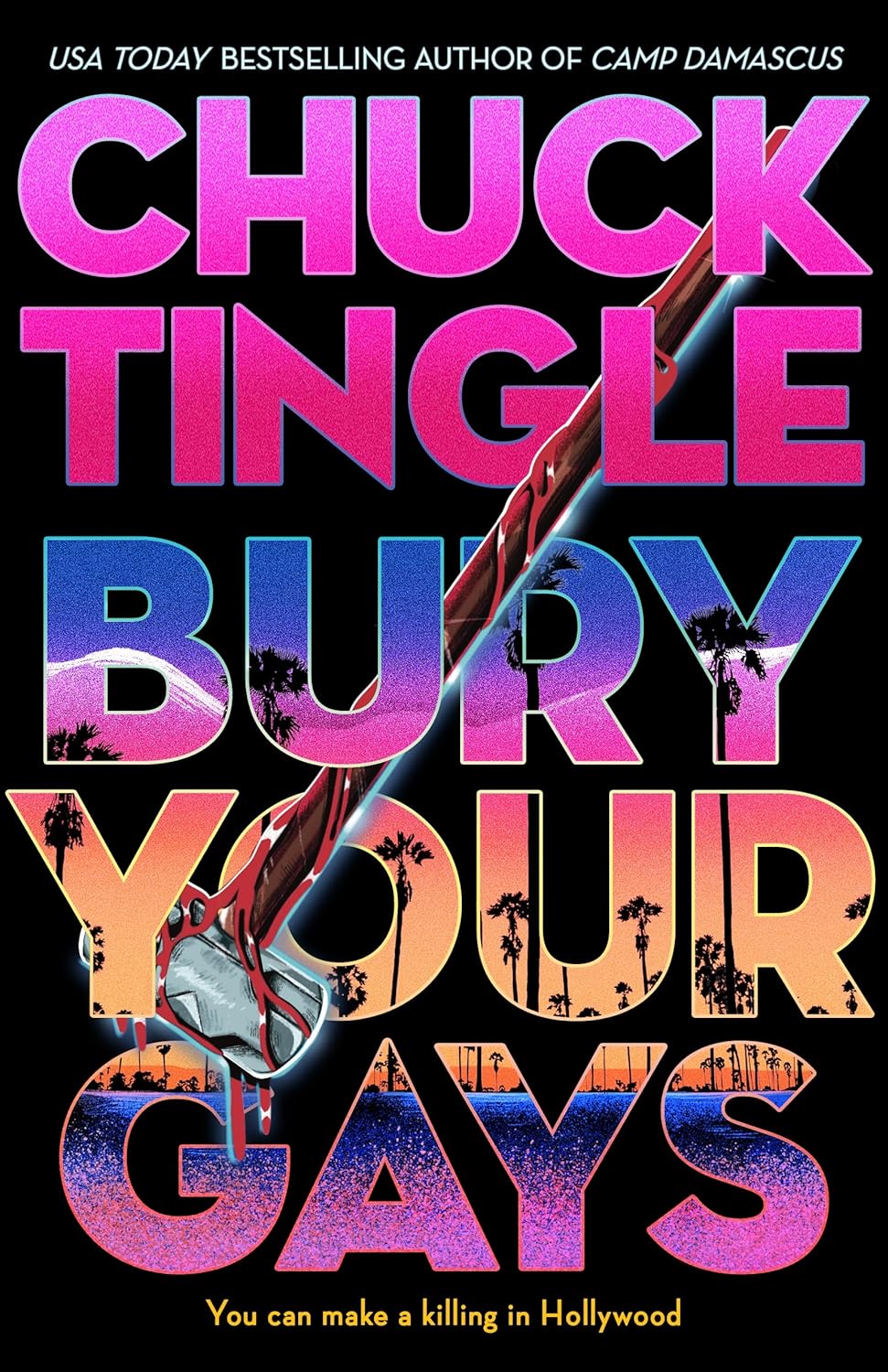
The instant USA Today bestseller by Chuck Tingle about what it takes to succeed in a world that wants you dead.
“Brilliantly bloody, wildly fun, and extremely scary, Bury Your Gays brings a sledgehammer down on tired tropes and makes a masterpiece of their guts.”―Rachel Harrison, national bestselling author of Black Sheep
Misha knows that chasing success in Hollywood can be hell.
But finally, after years of trying to make it, his big moment is here: an Oscar nomination. And the executives at the studio for his long-running streaming series know just the thing to kick his career to the next level: kill off the gay characters, “for the algorithm,” in the upcoming season finale.
Misha refuses, but he soon realizes that he’s just put a target on his back. And what’s worse, monsters from his horror movie days are stalking him and his friends through the hills above Los Angeles.
Haunted by his past, Misha must risk his entire future―before the horrors from the silver screen find a way to bury him for good.
One of the Best Horror Books of 2024 by Esquire!
One of the Best Books of Summer 2024 by Paste, HuffPost, Esquire, and Publishers Weekly!
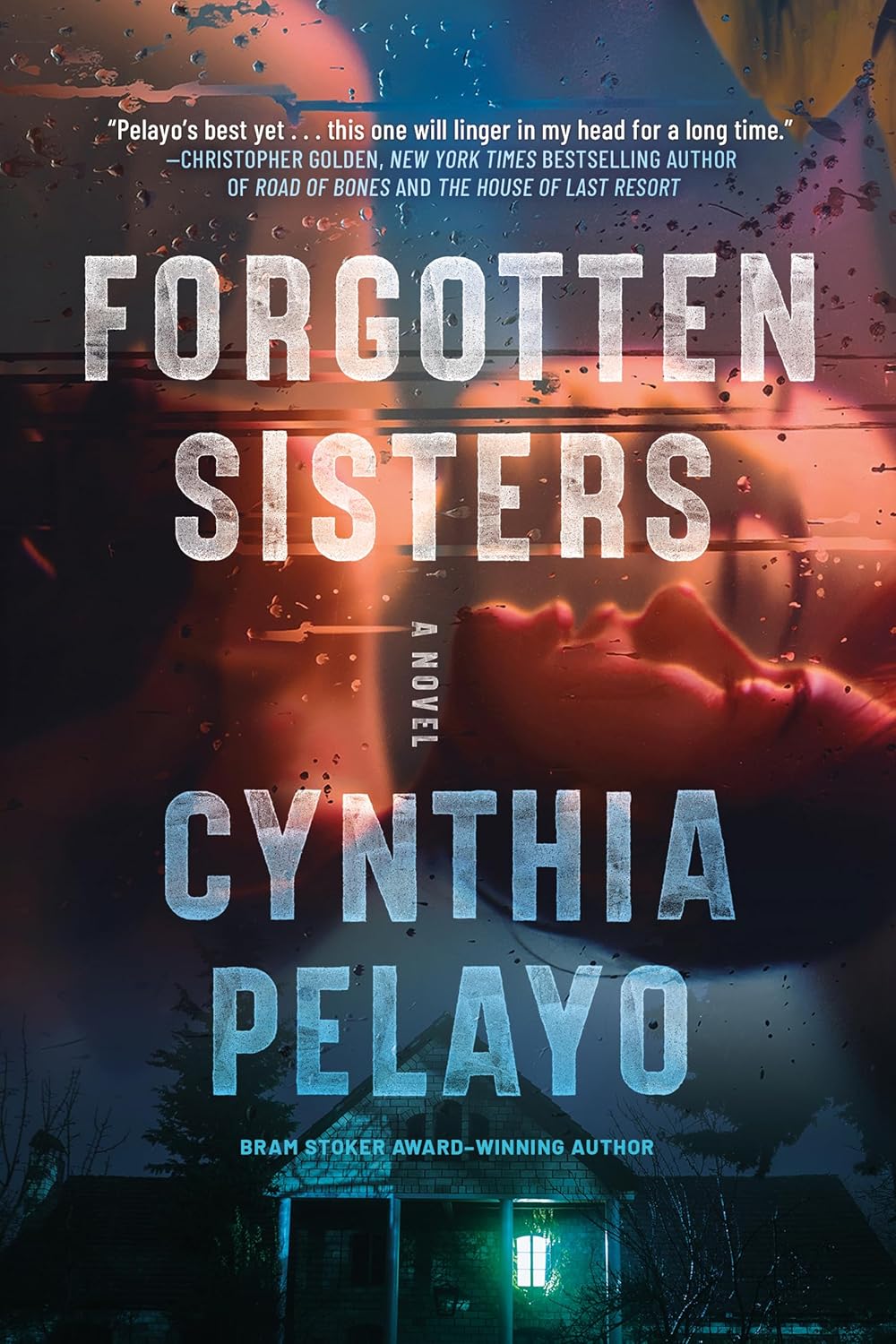
Forgotten Sisters
Forgotten Sisters
Cynthia Pelayo (Thomas & Mercer)
A city’s haunted history and fairy-tale horrors converge for two women in an addictive novel of psychological suspense by a multiple Bram Stoker Award–nominated author.
Sisters Anna and Jennie live in a historic bungalow on the Chicago River. They’re tethered to a disquieting past, and with nowhere else to go, nothing can part them from their family home. Not the maddening creaks and disembodied voices that rattle the old walls. Not the inexplicable drownings in the area, or the increasing number of bodies that float by Anna’s window.
To stave off loneliness, Anna has a podcast, spinning ghostly tales of Chicago’s tragic history. But when Anna captures the attention of an ardent male listener, she awakens to the possibilities of a world outside.
As their relationship grows, so do Jennie’s fears. More and more people are going missing in the river. And then two detectives come calling.
They’re looking for a link between the mysteries of the river and what’s housed on the bank. Even Anna and Jennie don’t understand how dreadful it is―and still can be―when the truth about their unsettled lives begins to surface.
The instant USA Today bestseller from CJ Leede, author of Maeve Fly―a scorching and sweeping new novel about the end of the world as we know it.
One of Esquire and Vulture’s Best Horror Books of 2024 • A GoodReads and Publishers Weekly Editors’ Pick • An Indie Next Pick!
“A blistering, feverish ride through a uniquely American apocalypse.”―Chuck Wendig, New York Times bestselling author
A virus is spreading across America, transforming the infected and making them feral with lust.
Sophie, a good Catholic girl, must traverse the hellscape of the midwest to try to find her family while the world around her burns. Along the way she discovers there are far worse fates than dying a virgin…
“I’ve loved Maggie Thrash’s work for years, and Rainbow Black is going to set so many new hearts aflame—murder, intrigue, queer love, dark humor AND satanic panic? Welcome to the Maggie Thrash Fan Club, world!”—Emma Straub, New York Times bestselling author of This Time Tomorrow
For readers of Donna Tartt and Ottessa Moshfegh comes a brilliant, deliriously entertaining novel from the acclaimed author of Honor Girl. Rainbow Black is part murder mystery, part gay international fugitive love story—set against the ’90s Satanic Panic and spanning 20 years in the life of a young woman pulled into its undertow.
Lacey Bond is a 13-year-old girl in New Hampshire growing up in the tranquility of her hippie parents’ rural daycare center.
Then the Satanic Panic hits. It’s the summer of 1990 when Lacey ’s parents are handcuffed, flung into the county jail, and faced with a torrent of jaw-dropping accusations as part of a mass hysteria sweeping the nation. When a horrific murder brings Lacey to the breaking point, she makes a ruthless choice that will haunt her for decades.
As an adult, Lacey mimes a normal life as the law clerk of an illustrious judge. She has a beautiful girlfriend, a measure of security, and the world has mostly forgotten about her. But after a tiny misstep spirals into an uncontrolled legal disaster, the hysteria threatens to begin all over again.
Rainbow Black is an addictive, searing, high-octane triumph, an imaginative tour de force about one woman’s tireless desire to be free.
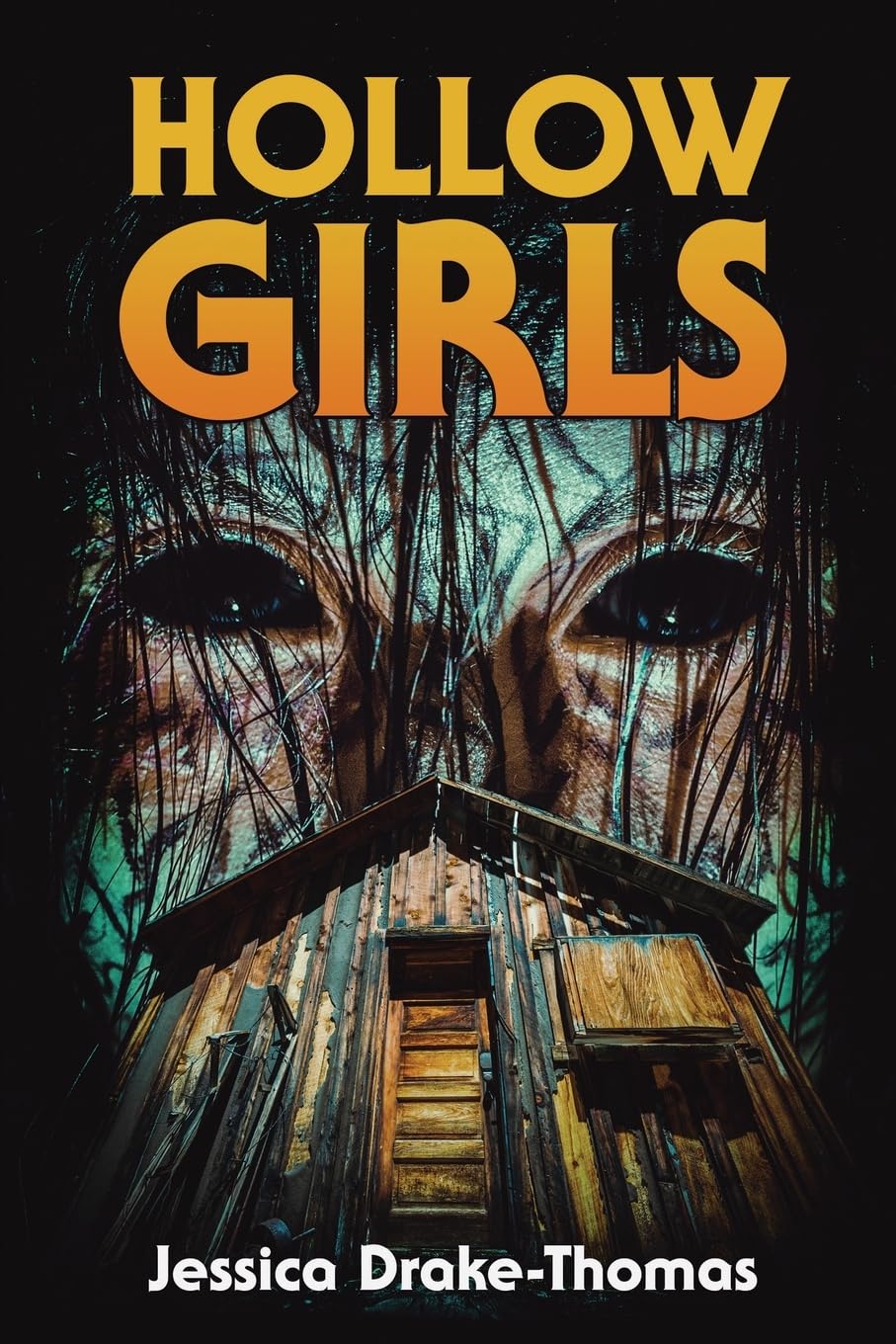
Twenty four years ago, Olive and Stacia went into the woods. Only Olive returned, with no memory of what happened. Now, Olive’s father has vanished, leaving behind research which indicates that he has found out what lives in the woods.
It wakes up every twelve years, taking only children. It has been doing so for at least two hundred years. And it is waking again.
Forced to return to her hometown, Olive finds her memories returning.
What she remembers from the days leading up to Stacia’s disappearance is magical, almost impossible to believe, but she knows that she must return to the woods–to face what lurks there, to save her father, and to find out what happened to Stacia.
“Beautiful, poetic, and gutting. Hollow Girls is a captivating novel that will lure you deep into the woods where magic and darkness entwine. There is so much heart to this story of friendship and blood where oaths and secrets continue to unravel until the very last page. Bring an offering to the Fae, and come along on this memorable journey.”
–Sara Tantlinger, Bram Stoker Award-winning author of The Devil’s Dreamland.
Winnie Campbell is sixteen and a burgeoning serial killer. Her father blames her for her mother’s death, dotes on her little sister, and executes increasingly cruel punishments meant to humiliate Winnie. As the punishments morph into torture, she begins fantasizing about regaining some semblance of power, eventually working through her rage by killing small animals.
When her violent games escalate and she accidentally kills an infant while babysitting, Winnie gets a taste of a power she doesn’t want to let go of. Her obsession with killing grows, and so does her fascination for Leigh, a girl that reminds her of her younger self.
Winnie wants to kill. She wants to die. She wants to be someone other than herself. And killing Leigh, a symbolic suicide, could be the key to her metamorphosis.
“A shocking and utterly harrowing examination of the creation of a murderer. Although Crushing Snails excels in many areas, this novel is perhaps most skillful at effectively illustrating the very human compulsion for violence and depravity. Murray’s excellent novel showcases the very human possibility of carnage—the horrifying prospect of brutality—when curiosity is sated and when we finally surrender to our most feral desires.”—Eric LaRocca, author of Things Have Gotten Worse Since We Last Spoke
“Masterfully executed and chilling to the core, Crushing Snails is a terrifying look into the darkest depths of the human mind and the ways in which monsters are formed. With the intensity level set to high, Murray draws you into complicity as you witness one girl’s spiral into obsession and depravity, culminating in a horrifying conclusion you’ll never forget.”—Kelsea Yu, Shirley Jackson Award-nominated author of Bound Feet
“A nightmare of power and control, or perhaps even something more wayward. Crushing Snails is provocative and demanding, spiraling and unapologetic. Emma Murray is an exciting emerging voice in horror challenging what is normal and what is safe.”—Cynthia Pelayo, Bram Stoker Award-winning author of Crime Scene
“Sick, twisted, and compulsively readable—Emma E. Murray’s Crushing Snails is a coming-of-age story that goes to dark and darker places, leaving me constantly hanging between two modes of thought: one-more-chapter and holy-fucking-shit.”—Carson Winter, author of The Psychographist
A woman checks herself into an insane asylum to solve the mystery of her sister’s murder, only to lose her memory and maybe her mind.
From the subversive voice behind The Phlebotomist comes a story that combines the uncanny atmosphere of Don’t Worry Darling with the narrative twists of The Last House on Needless Street
What would guilt make you do?
Hadleigh Keene died on the road leading away from Hollyhock Asylum. The reasons are unknown. Her sister Morgan blames herself. A year later with the case still unsolved, Morgan creates a false identity, that of a troubled housewife named Charlotte Turner, and goes inside.
Morgan quickly discovers that Hollyhock is… not right. She is shaken by the hospital’s peculiar routines and is soon beset by strange episodes. All the while, the persona of Charlotte takes on a life of its own, becoming stronger with each passing day. As her identity begins unraveling, Morgan finds herself tracing Hadleigh’s footsteps and peering into the places they lead.
The terrifying reality of The Redemption of Morgan Bright unfolds over the course of chapters told from the points of view of both Charlotte and Morgan, police interviews, and text messages.
Once there were four Lasco siblings banded together against a world that failed to protect them. But on a hellish night that marked the end of their childhood, eldest brother Shawn died violently after being dragged behind closed doors. Though the official finding was accidental death, Nathan Lasco knows better, and has never forgiven their mother, Stella.
Now two decades later, Stella promises to finally reveal the truth of what happened on The Day of the Door. Accompanied by a paranormal investigative team, the Lasco family comes together one final time, but no one is prepared for the revelations waiting for them on the third floor.
The final installment in the most lauded trilogy in the history of horror novels picks up four years after Don’t Fear the Reaper as Jade returns to Proofrock, Idaho, to build a life after the years of sacrifice—only to find the Lake Witch is waiting for her in New York Times bestselling author Stephen Graham Jones’s finale.
It’s been four years in prison since Jade Daniels last saw her hometown of Proofrock, Idaho, the day she took the fall, protecting her friend Letha and her family from incrimination. Since then, her reputation, and the town, have changed dramatically. There’s a lot of unfinished business in Proofrock, from serial killer cultists to the rich trying to buy Western authenticity. But there’s one aspect of Proofrock no one wants to confront…until Jade comes back to town. The curse of the Lake Witch is waiting, and now is the time for the final stand.
New York Times bestselling author Stephen Graham Jones has crafted an epic horror trilogy of generational trauma from the Indigenous to the townies rooted in the mountains of Idaho. It is a story of the American west written in blood.
“Simply put—and I do not say this lightly—Incidents Around the House is the most purely effective horror novel I have ever read.”—Neil McRobert, Esquire (Best Horror Books of 2024, So Far)
A chilling horror novel about a haunting, told from the perspective of a young girl whose troubled family is targeted by an entity she calls “Other Mommy,” from the New York Times bestselling author of Bird Box
“This book isthe monster that lives inside your closet.”—Grady Hendrix, New York Times bestselling author of How to Sell a Haunted House
To eight-year-old Bela, her family is her world. There’s Mommy, Daddo, and Grandma Ruth. But there is also Other Mommy, a malevolent entity who asks her every day: “Can I go inside your heart?”
When horrifying incidents around the house signal that Other Mommy is growing tired of asking Bela the question over and over, Bela understands that unless she says yes, her family will soon pay.
Other Mommy is getting restless, stronger, bolder. Only the bonds of family can keep Bela safe, but other incidents show cracks in her parents’ marriage. The safety Bela relies on is about to unravel.
But Other Mommy needs an answer.
Incidents Around the House is a chilling, wholly unique tale of true horror about a family as haunted as their home.
A chilling twist on the “cursed film” genre from the bestselling author of The Pallbearers Club and The Cabin at the End of the World.
In June 1993, a group of young guerilla filmmakers spent four weeks making Horror Movie, a notorious, disturbing, art-house horror flick.
The weird part? Only three of the film’s scenes were ever released to the public, but Horror Movie has nevertheless grown a rabid fanbase. Three decades later, Hollywood is pushing for a big budget reboot.
The man who played “The Thin Kid” is the only surviving cast member. He remembers all too well the secrets buried within the original screenplay, the bizarre events of the filming, and the dangerous crossed lines on set that resulted in tragedy. As memories flood back in, the boundaries between reality and film, past and present start to blur. But he’s going to help remake the film, even if it means navigating a world of cynical producers, egomaniacal directors, and surreal fan conventions—demons of the past be damned.
But at what cost?
Horror Movie is an obsessive, psychologically chilling, and suspenseful feat of storytelling genius that builds inexorably to an unforgettable, mind-bending conclusion.
A visceral and heartbreaking work of gothic horror about small town mysteries, local folklore and the things we leave behind when we’re gone, from the Bram Stoker Award winning author of Queen of Teeth.
What really happened to Cabrina Brite?
Ivory’s life changes irrevocably when she discovers the body of Cabrina Brite on the sands of Cape Morning, along with a mysterious poem. How did she die, and why does it seem she was trying to swim to Ghost Cat Island, the center of so many local mysteries?
Desperate to uncover the answers surrounding Cabrina’s death, and haunted by her discovery, Ivory begins to see the pale ghost of Cabrina, only to shake it off as a mere hallucination. But Ivory is not alone. Cabrina’s closest friends have also seen a similar apparition, and as they toy with occult possibilities, they begin to unravel the truth behind Cabrina’s death.
Because Cape Morning isn’t a ghost town, but a town filled with ghosts, and Ivory is about to discover just what happens when you let one in.
From New York Times bestselling and Hugo Award-winning author T. Kingfisher comes A Sorceress Comes to Call―a dark reimagining of the Brothers Grimm’s “The Goose Girl,” rife with secrets, murder, and forbidden magic.
*The hardcover edition features a foil stamp on the casing and custom endpapers illustrated by the author.*
Cordelia knows her mother is . . . unusual. Their house doesn’t have any doors between rooms―there are no secrets in this house―and her mother doesn’t allow Cordelia to have a single friend. Unless you count Falada, her mother’s beautiful white horse. The only time Cordelia feels truly free is on her daily rides with him.
But more than simple eccentricity sets her mother apart. Other mothers don’t force their daughters to be silent and motionless for hours, sometimes days, on end. Other mothers aren’t evil sorcerers.
When her mother unexpectedly moves them into the manor home of a wealthy older Squire and his kind but keen-eyed sister, Hester, Cordelia knows this welcoming pair are to be her mother’s next victims. But Cordelia feels at home for the very first time among these people, and as her mother’s plans darken, she must decide how to face the woman who raised her to save the people who have become like family.
Embark on a darkly humorous journey of reality TV meets the macabre. On the set of The Groom, a group of women must compete for the heart of Midwestern bachelor Tristan by spending a week in a haunted house. Divorcee Linda, resigned to her role as the show’s underdog, finds her resolve cracking when she begins to fall for fellow castmate Charity. Meanwhile, Sabrina, groomed by her witchy mother to deliver their family from poverty by marrying a rich man, sees winning the competition as her predestined path.
But after a shocking demise, the game takes a sinister turn. As the remaining contestants grapple with their desires for love and survival, they uncover dark secrets within and without the house’s walls. Trapped in a twisted new competition, they must confront their own demons or face elimination.
Sixty-three-year-old Los Angeles stoner, Hank Wallace, is just trying to get by and get high when he takes a gig distributing ads for a local company. But the job quickly turns into more than it seems. Hank begins hearing voices and experiencing strange visions while passing out the ads. Before he knows it, he’s fallen prey to his employer, a demon from another world.
Possessed by the demon, Hank absorbs nightmares from others living in his corner of LA. He becomes a conduit that feeds anxiety and dread to the demon. The nightmares pour in, but they aren’t enough. The demon requires more sustenance than the nightmares provide.
And the demon is in luck. Hank learns that his estranged sister, Carla, his only living relative, is terminally ill with cancer. He has steered clear of close relationships with family for decades, but he cannot avoid it any longer. The demon insists. Carla and her family’s grief is a siren’s call.
Hank drives to Sacramento bearing an invisible gift. The demon can erase their grief, but at what cost? Unless Hank can get his head together and snap out of it, the demon will consume every last one of them.
From New York Times bestselling horror writer Stephen Graham Jones comes a classic slasher story with a twist—perfect for fans of Adam Cesareand Grady Hendrix.
1989, Lamesa, Texas. A small west Texas town driven by oil and cotton—and a place where everyone knows everyone else’s business. So it goes for Tolly Driver, a good kid with more potential than application, seventeen, and about to be cursed to kill for revenge. Here Stephen Graham Jones explores the Texas he grew up in, and shared sense of unfairness of being on the outside through the slasher horror Jones loves, but from the perspective of the killer, Tolly, writing his own autobiography. Find yourself rooting for a killer in this summer teen movie of a novel gone full blood-curdling tragic.
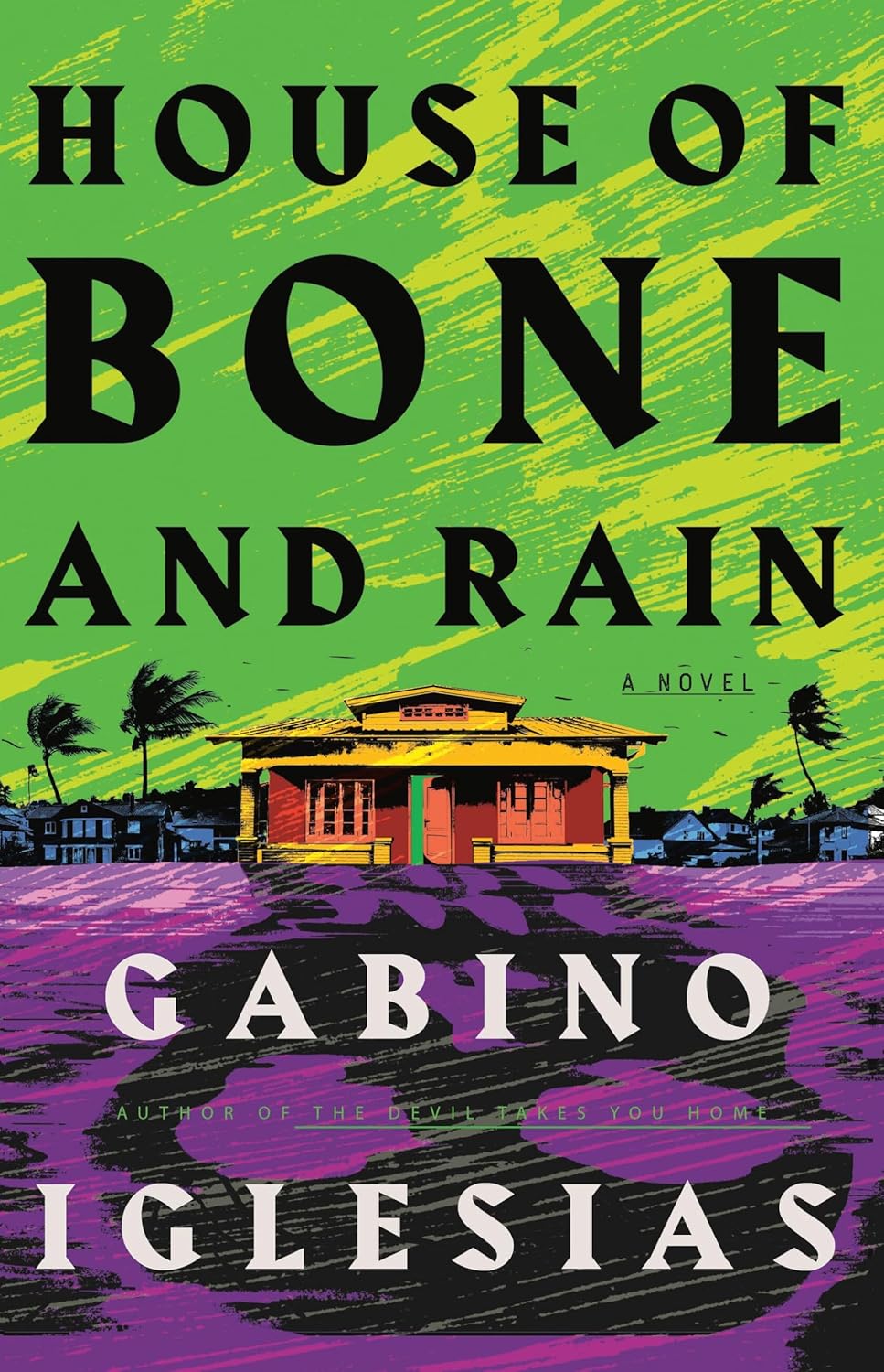
In this “stunningly visceral” (New York Times Book Review) novel, a group of young men seek vengeance after one of their mothers is murdered in a Puerto Rican slum; STAND BY ME with a haunted, obsidian-dark heart.
One of B&N’s Best Horror Books of the Year
For childhood friends Gabe, Xavier, Tavo, Paul, and Bimbo, death has always been close. Hurricanes. Car accidents. Gang violence. Suicide. Estamos rodeados de fantasmas was Gabe’s grandmother’s refrain. We are surrounded by ghosts. But this time is different. Bimbo’s mom has been shot dead. We’re gonna kill the guys who killed her Bimbo swears. And they all agree.
Feral with grief, Bimbo has become unrecognizable, taking no prisoners in his search for names. Soon, they learn Maria was gunned down by guys working for the drug kingpin of Puerto Rico. No one has ever gone up against him and survived. As the boys strategize, a storm gathers far from the coast. Hurricanes are known to carry evil spirits in their currents and bring them ashore, spirits which impose their own order.
Blurring the boundaries between myth, mysticism, and the grim realities of our world, House of Bone and Rain is a harrowing coming of age story; a doomed tale of devotion, the afterlife of violence, and what rolls in on the tide.
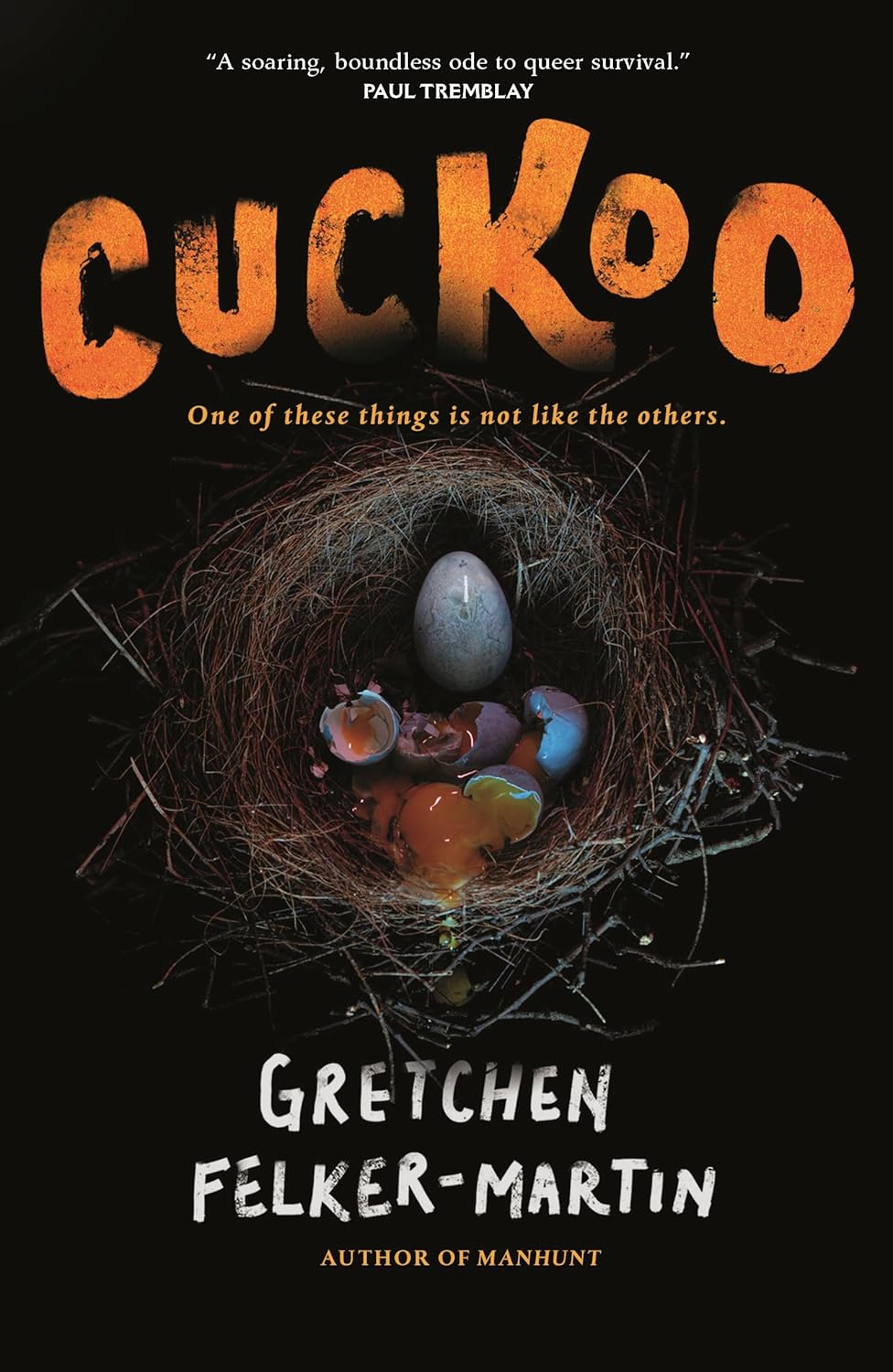
From Gretchen Felker-Martin, the acclaimed author of Manhunt, comes a vicious new novel about a group of teens who must stay true to themselves while in a conversion camp from hell.
“A soaring, boundless ode to queer survival. It’s flat-out mesmerizing.”―Paul Tremblay, author of The Pallbearers Club
Something evil is buried deep in the desert. It wants your body. It wears your skin.
In the summer of 1995, seven queer kids abandoned by their parents at a remote conversion camp came face to face with it. They survived―but at Camp Resolution, everybody leaves a different person.
Sixteen years later, only the scarred and broken survivors of that terrible summer can put an end to the horror before it’s too late.
The fate of the world depends on it.
“Tense and frighteningly visceral, Cuckoo is a masterwork of body horror thrumming with high octane viciousness.” ―Eric LaRocca, author of Things Have Gotten Worse Since We Last Spoke
A woman builds her lover from carefully scavenged pieces and parts. A young girl is groomed for madness by one who loves her most. A neurodivergent boy organizes his life, and loss, by the ticking of a clock. And love can be the most splendid and destructive force in the entire world.
Love is a Crematorium and Other Tales is a collection of seventeen stories that are both bleak and beautiful, devastating and sweet. Enter the crematorium to experience grief, starlit nights, and gorgeous tragedy that make our souls burn from the inside out.
One of Paste Magazine’s “Most Anticipated Horror Books of 2024”
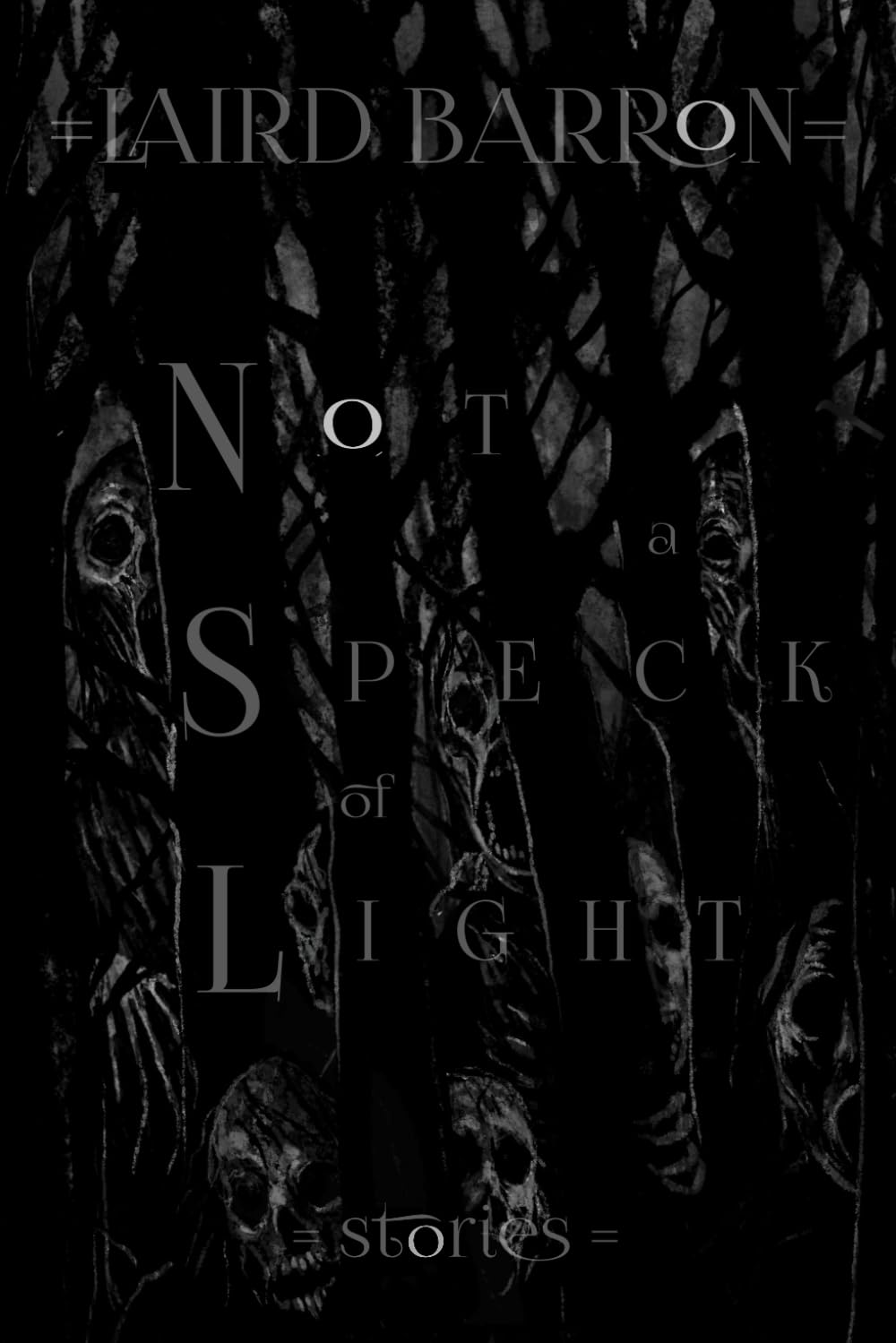
It’s about to get very dark.
Bram Stoker Award-winning author Laird Barron returns to the dark and dreadful with his fifth horror collection, which weaves sixteen weird tales into a mosaic of the bloody and the macabre.
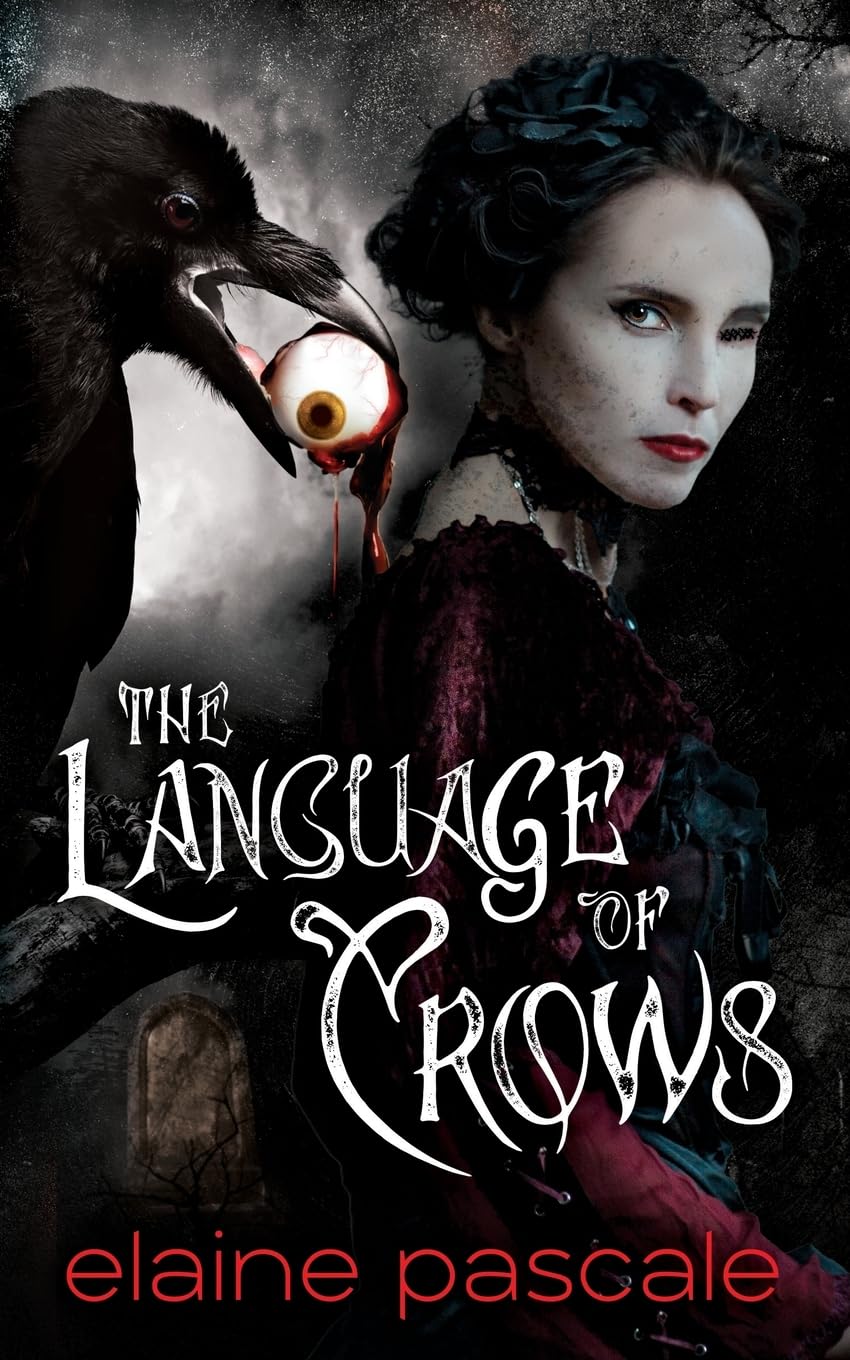
It is in the darkest moments, during the loss of hope, that the language of crows is most clearly heard. The words are as menacing as piercing beaks, the events as perilous as a sea of black feathers. The corvid tongue spreads diabolical thoughts and devious visions.
Legend has it that crows prophesize offenses of the worst kind, their harsh tones are harbingers of horror. Collectively, crows are a murder, and they call out orders about their own name. The Language of Crows and other stories contains dark fairy tales, historical horror, and psychological horror in voices of the violent and the violated. It is a collection of witches’ spells, monsters’ murmurs, and voices within one’s head.
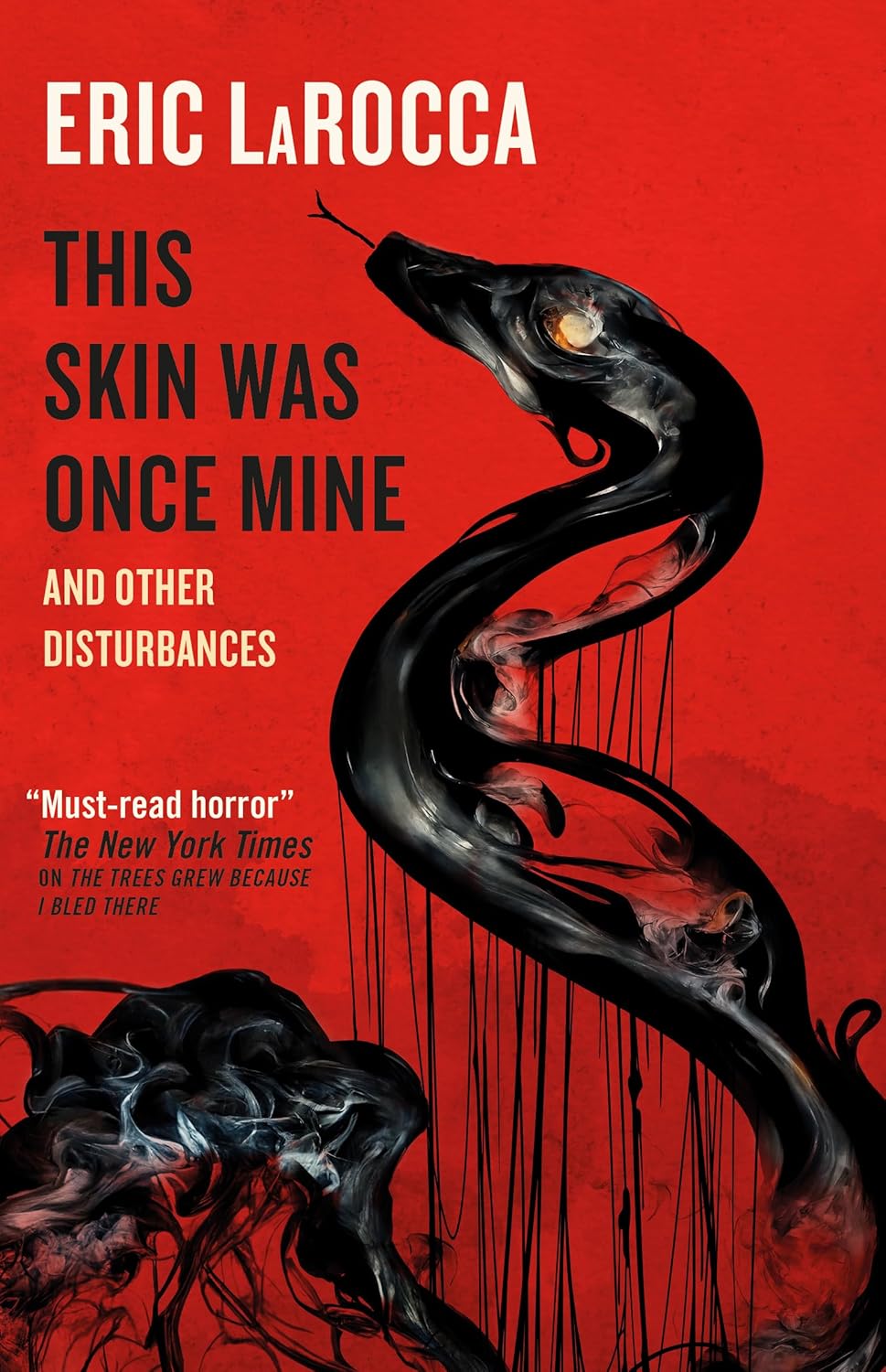
A brand-new collection of four intense, claustrophobic and terrifying horror tales from the Bram Stoker Award®-nominated and Splatterpunk Award-winning author of Things Have Gotten Worse Since We Last Spoke.
THIS SKIN WAS ONCE MINE
When her father dies under mysterious circumstances, Jillian Finch finds herself grieving the man she idolized while struggling to feel comfortable in the childhood home she was sent away from nearly twenty years ago. Then Jillian discovers a dark secret that will threaten to undo everything she has ever known about her father.
SEEDLING
A young man’s father calls him early in the morning to say that his mother has passed away. He arrives home to find his mother’s body still in the house. Struggling to process what has happened he notices a small black wound appear on his wrist. Then he discovers his father is cursed with the same affliction.
ALL THE PARTS OF YOU THAT WON’T EASILY BURN
Enoch Leadbetter goes to buy a knife for his husband to use at a forthcoming dinner party. He encounters a strange shopkeeper who draws him into an intoxicating new obsession and sets him on a path towards mutilation and destruction…
PRICKLE
Two old men revive a cruel game with devastating consequences…
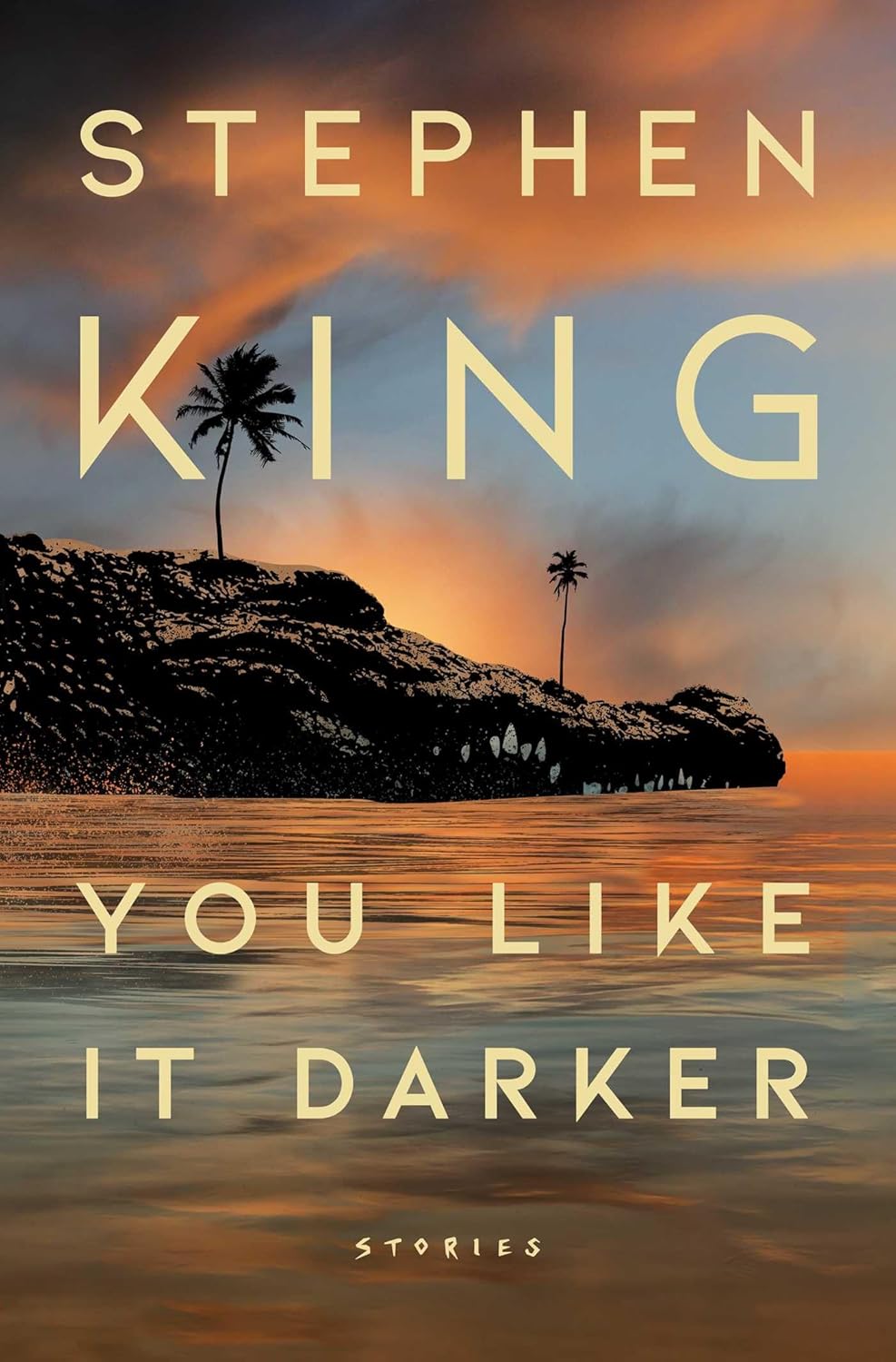
From legendary storyteller and master of short fiction Stephen King comes an extraordinary new collection of twelve short stories, many never-before-published, and some of his best EVER.
“You like it darker? Fine, so do I,” writes Stephen King in the afterword to this magnificent new collection of twelve stories that delve into the darker part of life—both metaphorical and literal. King has, for half a century, been a master of the form, and these stories, about fate, mortality, luck, and the folds in reality where anything can happen, are as rich and riveting as his novels, both weighty in theme and a huge pleasure to read. King writes to feel “the exhilaration of leaving ordinary day-to-day life behind,” and in You Like It Darker, readers will feel that exhilaration too, again and again.
“Two Talented Bastids” explores the long-hidden secret of how the eponymous gentlemen got their skills. In “Danny Coughlin’s Bad Dream,” a brief and unprecedented psychic flash upends dozens of lives, Danny’s most catastrophically. In “Rattlesnakes,” a sequel to Cujo, a grieving widower travels to Florida for respite and instead receives an unexpected inheritance—with major strings attached. In “The Dreamers,” a taciturn Vietnam vet answers a job ad and learns that there are some corners of the universe best left unexplored. “The Answer Man” asks if prescience is good luck or bad and reminds us that a life marked by unbearable tragedy can still be meaningful.
King’s ability to surprise, amaze, and bring us both terror and solace remains unsurpassed. Each of these stories holds its own thrills, joys, and mysteries; each feels iconic. You like it darker? You got it.
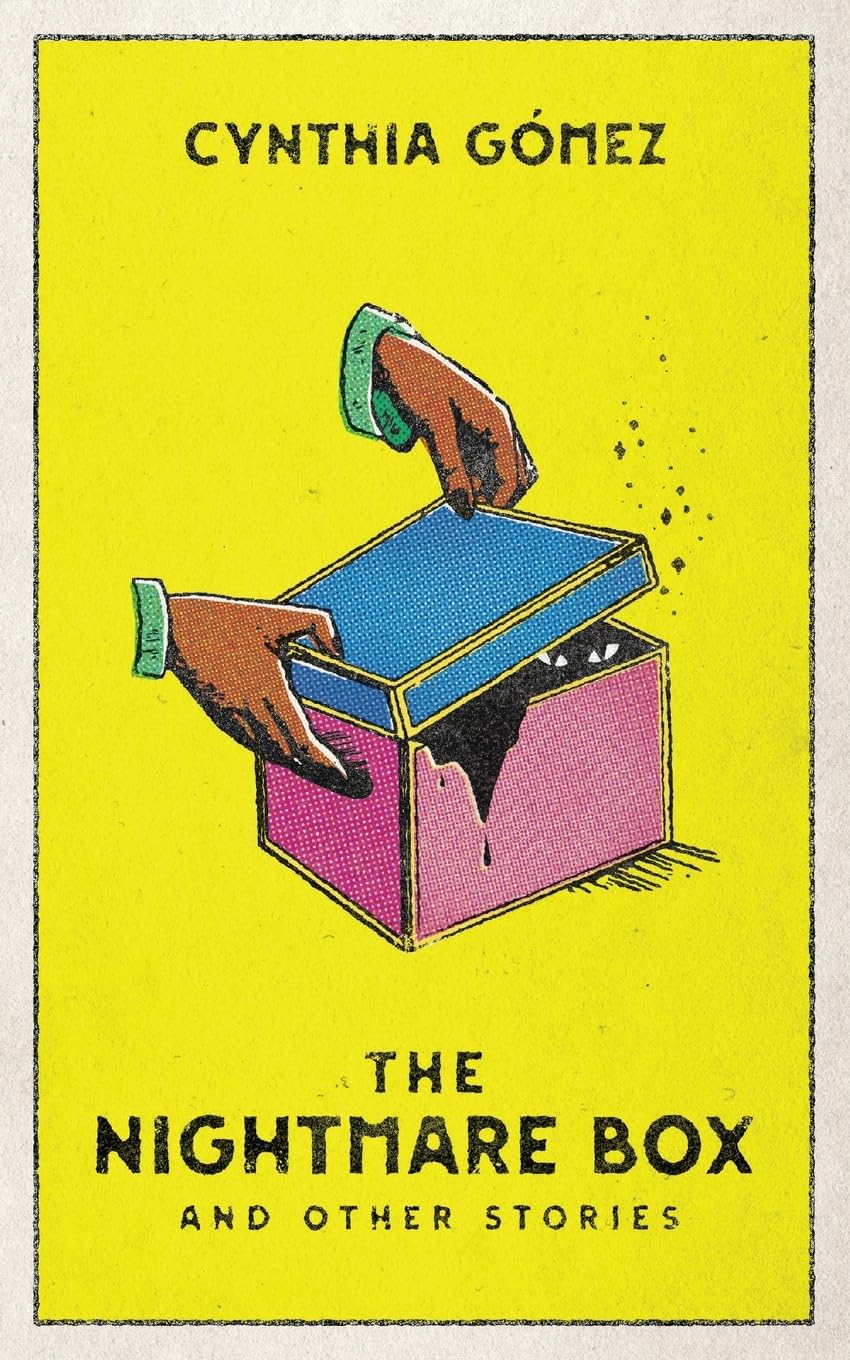
A young queer man finds love at a magical clothing shop-and the courage to stand up to the homophobic cops. A witch who makes custom nightmares wonders why all her victims are connected to the Black Panthers-and who she’s really working for. A soon-to-be father encounters a mysterious hitchhiker who tries pulling him back to the days of his violent past. A brand-new vampire, freshly hired at the blood bank, delights in her heightened sexual desire and superhuman strength.
Cynthia Gómez’s debut collection is a magic-soaked love letter to Oakland, brimming with feminist rage. Its twelve stories center ordinary people-Latine, queer, working class-as they wield supernatural powers against oppression, loneliness, and dread.
Christi Nogle has established herself as a modern Ray Bradbury, this collection adds fantasy, slipstream, and fabulism to her canon.
One Eye Opened in That Other Place collects Christi Nogle’s best weird and fantastical stories. The collection focuses on liminal spaces and the borders between places and states of mind. Though you might not find a traditional portal fantasy here, you will travel across thresholds and arrive at other places and times that are by turns disquieting, terrifying, and wonderful. Get up close with the local flora and fauna, peruse the weird art exhibits and special shows, and consider taking a dip in the mossy, snail-filled tank of water. Make sure to bring your special glasses
This new collection will appeal to readers of Jeff VanderMeer, Charles Wilkinson, Steve Rasnic Tem, M. Rickert, Lynda E. Rucker and Stephen King’s novel Lisey’s Story.
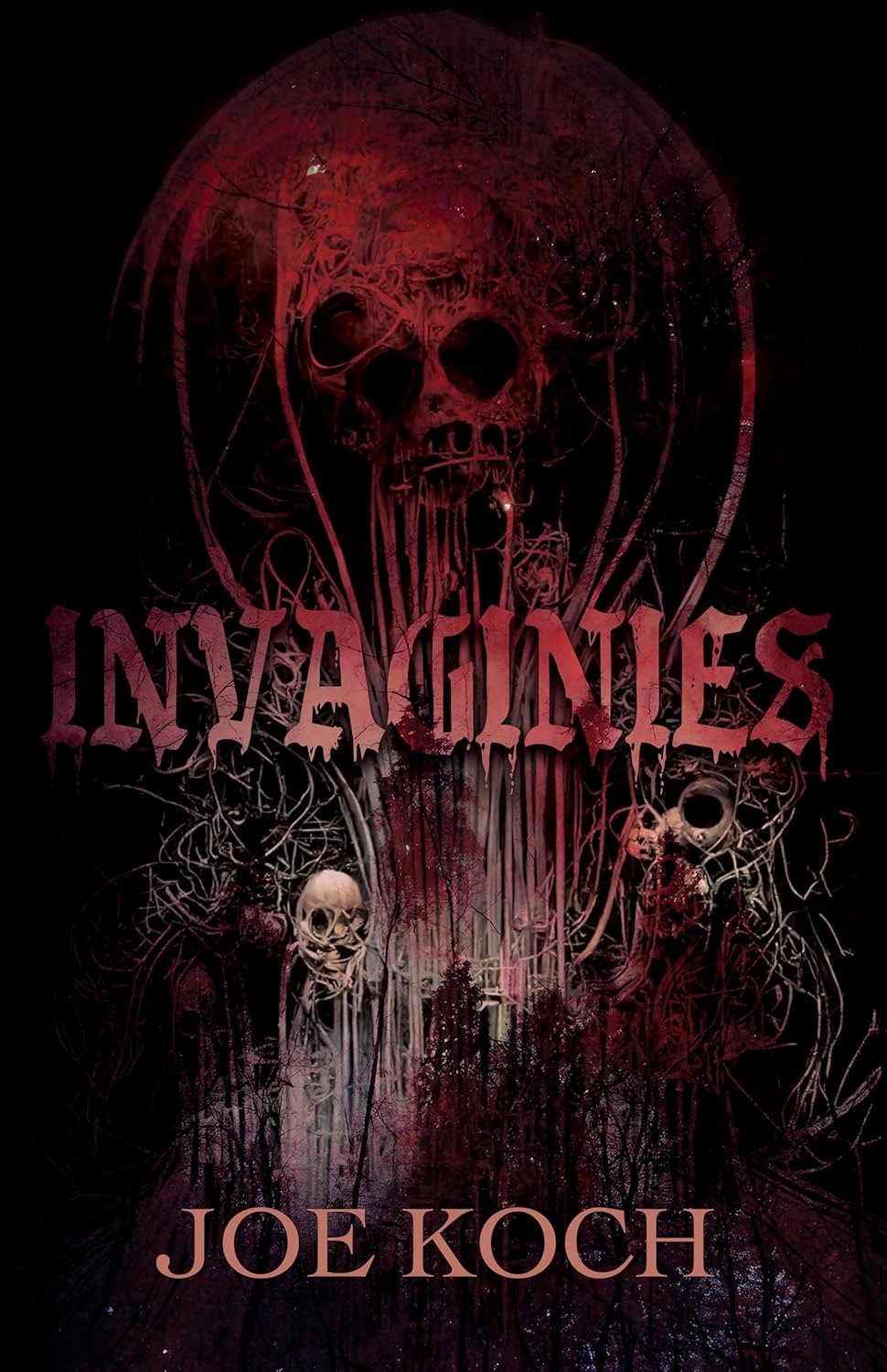
The Shirley Jackson Award-nominated author returns with a new collection of literary horror and weird fiction that glitters with startling prose and tortured souls.
Invaginies is an invasion, it is a perception that is bodily and transcendent creating holes, paths, or pockets of alternate truth-and not always voluntary–enlightenment.
Every line sings and strikes like grotesque poetry of the possessed. With 17 disturbing tales exploring plagues, possessions, gender & corruption, set in apocalyptic eras not much unlike our own, Joe Koch brings the terrors of a postmodern world into vivid focus.
Haunting and beautiful, Koch takes their place among the great names of the weird like Brian Evenson, exploring the queer perspective in horror as Billy Martin and Clive Barker, and contemporary rising voice, Eric LaRocca.
Literary prose meets the grotesque in this collection of stories to galvanize lovers of horror and weird fiction. With a growing cult audience, this collection is sure to shoot to the top of readers’ tbr piles.
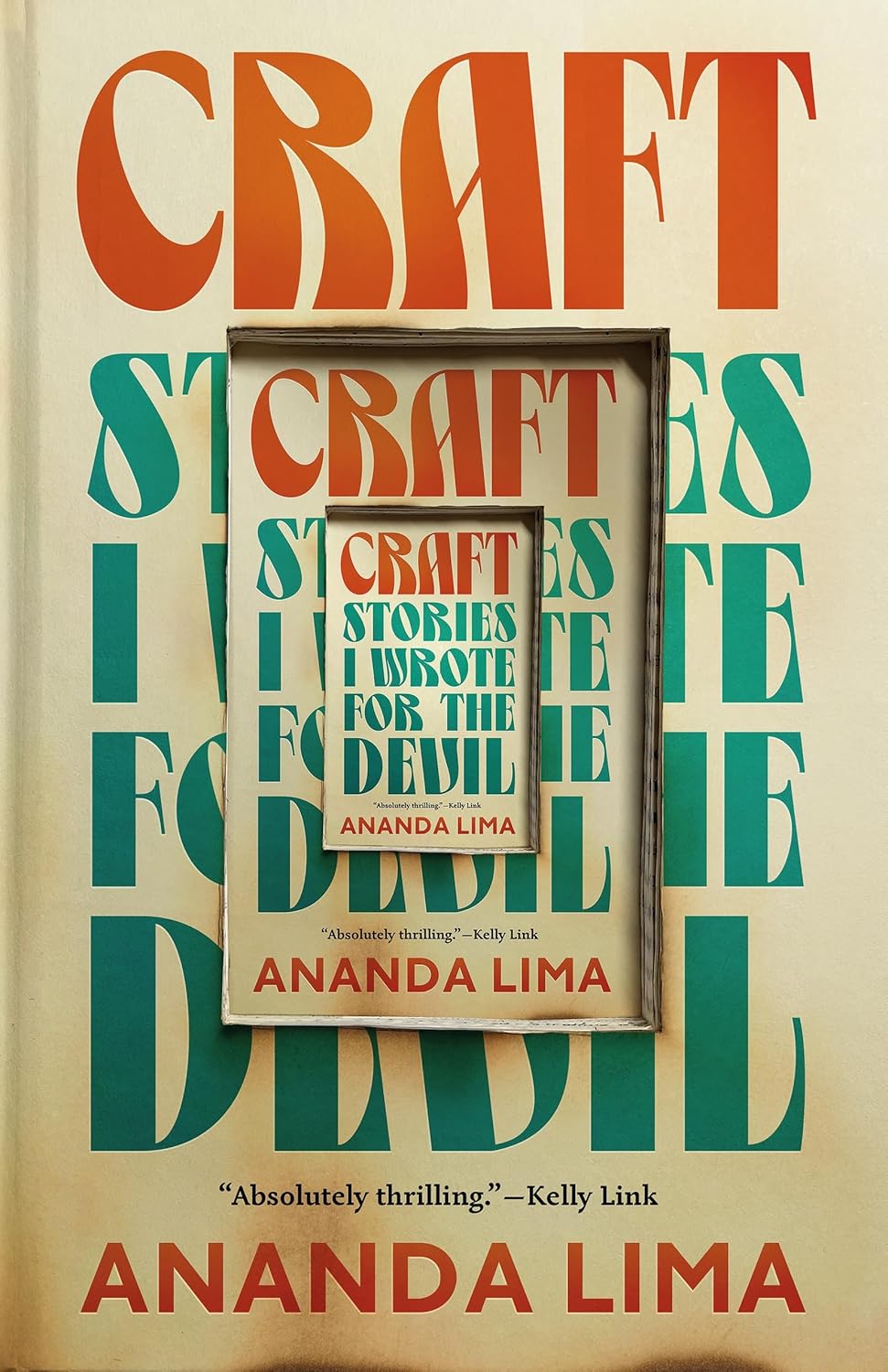
At a Halloween party in 1999, a writer slept with the devil. She sees him again and again throughout her life and she writes stories for him about things that are both impossible and true.
Lima lures readers into surreal pockets of the United States and Brazil where they’ll find bite-size Americans in vending machines and the ghosts of people who are not dead. Once there, she speaks to modern Brazilian-American immigrant experiences–of ambition, fear, longing, and belonging―and reveals the porousness of storytelling and of the places we call home.
With humor, an exquisite imagination, and a voice praised as “singular and wise and fresh” (Cathy Park Hong), Lima joins the literary lineage of Bulgakov and Lispector and the company of writers today like Ted Chiang, Carmen Maria Machado, and Nana Kwame Adjei-Brenyah.
Craft: Stories I Wrote for the Devil includes: “Rapture,” “Ghost Story,” “Tropicália,” “Antropógaga,” “Idle Hands,” “Rent,” “Porcelain,” “Heaven, Hell, and Purgatory,” and “Hasselblad.”
A great next read for fans of Carmen Maria Machado’s Her Body and Other Parties and V. E. Schwab’s The Invisible Life of Addie LaRue.
Recommended reading by Chicago Review of Books, Electric Literature, The Kenyon Review, and more!
Zip up your human suit and set sail, imbibing every perspective you can
in order to perfect the persona.
Push to the outer edges. Document your travels, and forget to return.
There will be a test.
Learn what it means to be human.
Forget what it means to be human.
Learn what it means to be human.
Forget what it means to be human.
Do not panic.
BRAVE NEW WEIRD: The Best New Weird Horror, Volume Two encompasses the finest Weird speculative fiction published in (roughly) 2023. Edited by Alex Woodroe.
Table of contents:
Nelly Geraldine García-Rosas – Lullaby for the Unseen
Thomas Ha – In That Crumbling Home
Hussani Abdulrahim – The Library Virus
Patrick Malka – Show Me
Eirik Gumeny – A Balanced Breakfast
David Simmons – Food is Poison
Premee Mohamed – Quietus
Perfect Kiss Strickoll – punctum (o baked alaska for you i am a former american)
LC von Hessen – Transmasc of the Red Death
Simone le Roux – The Man Outside
KS Walker – River Bargain Baby
M.M. Olivas – The Prince of Oakland
Amitha Jagannath Knight – My Mother, The Exoskeleton
Rachael K. Jones – The Sound of Children Screaming
Judith Shadford – Endless Yearning
Daniel DeRock – Guest Opinion: We must take action regarding the [REDACTED] High School janitor
Geneve Flynn – A Box of Hair and Nail
Anemone Moss – Everything You Dump Here Ends Up in the Ocean
Karlo Yeager Rodríguez – Up In the Hills, She Dreams of Her Daughter Deep In the Ground
If books have no power, why are they trying so hard to keep them from people?
4,240 unique book titles were targeted for censorship or banning in 2023 alone.
Shadows in the Stacks was published to raise funds for the Books Unbanned Initiative through the Library Foundation SD. All proceeds from sales go to the Library Foundation SD.
This collection of terrifying tales was edited by Vincent V. Cava, James Sabata, and Jared Sage, with a foreword by Laurel Hightower, and features all-new stories from…
Kevin David AndersonZachary AshfordS.A. BradleyBridget D. BraveKel ByronVincent V. CavaClay McLeod ChapmanRebecca CuthbertAlexis DuBonJamie FlanaganDouglas FordEvelyn FreelingAi JiangLucy LeitnerJonathan MaberryJ.A.W. McCarthyTim McGregorJohn PalisanoJames SabataWilliam SterlingAlvaro Zinos-Amaro
Each limb tells a story. Every organ shares a secret.
A woman saves the leg of her dead child. A man leaps from soul to soul, trying to find a pure heart. Uteri wander, skin peels back, and human bodies liquify all over this world.
Slice into the anatomy of this collection to discover all the unseen horrors the human body can deliver.
Brand new stories from Alex Wolfgang, Ai Jiang, Mary Rajotte, Julie Sevens, Christopher O’Halloran, Sasha Brown, Bridget D. Brave, Taylor Ketterer, Demi-Louise Blackburn, Lindsey Ragsdale, Emma E. Murray, Johnathon Heart, P.L. McMillan, Rachel Searcey, Bryan Young, Kai Delmas, and David Worn, with a foreword from Paula D. Ashe.
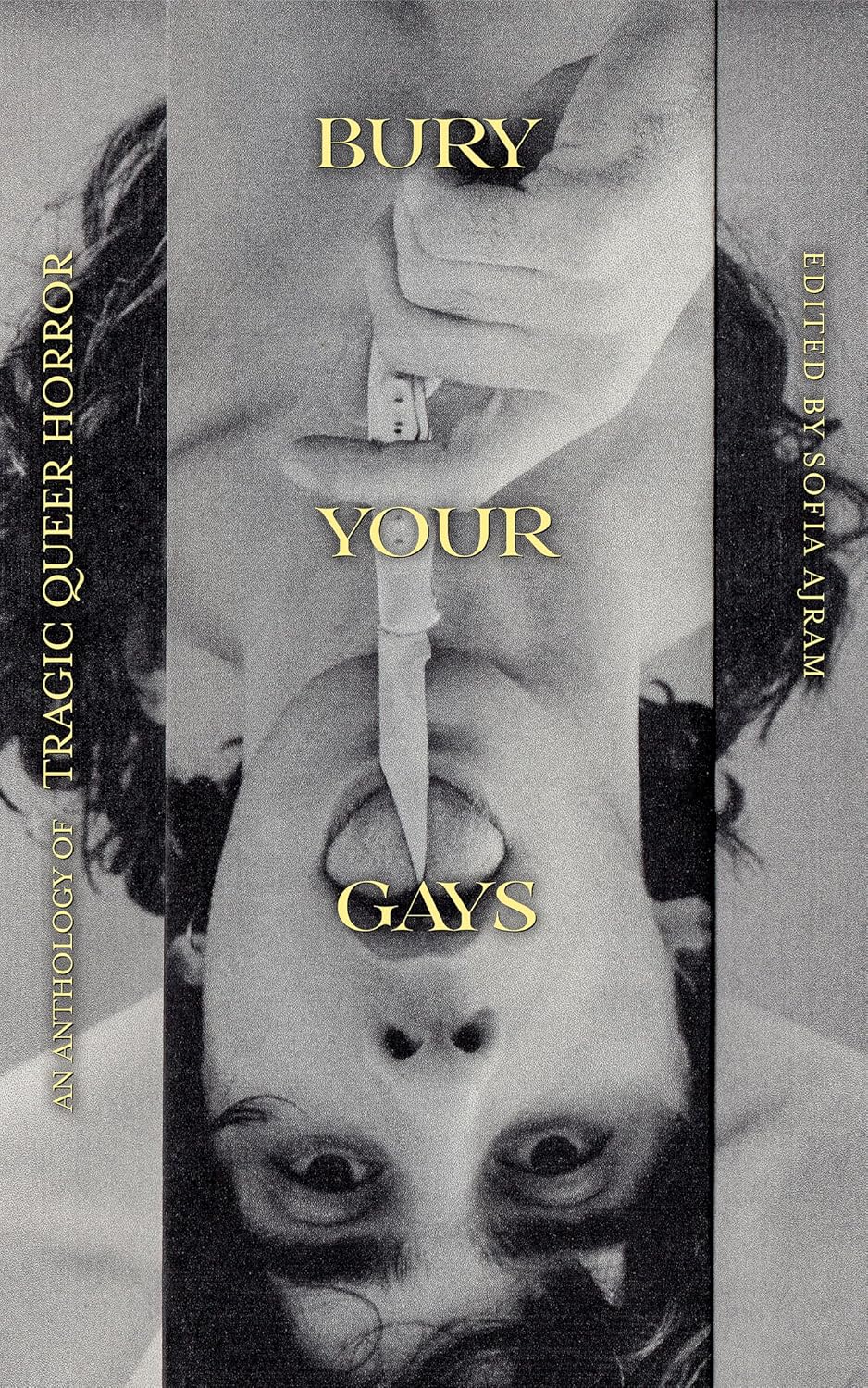
Bury Your Gays: An Anthology Of Tragic Queer Horror
Bury Your Gays: An Anthology Of Tragic Queer Horror
Ghoulish Books
A manifestation of ecstasy, heartache, horror and suffering rendered in feverish lyrical prose. Inside are sixteen new stories by some of the genre’s most visionary queer writers. Young lovers find themselves deliriously lost in an expanding garden labyrinth. The porter of a sentient hotel is haunted within a liminal time loop. A soldier and his abusive commanding officer escape a war in the trenches but discover themselves in an even greater nightmare. Parasites chase each other across time-space in hungry desperation to never be apart. A graduate student with violent tendencies falls into step with a seemingly walking corpse. Featuring stories from Cassandra Khaw, Joe Koch, Gretchen Felker-Martin, Robbie Banfitch, August Clarke, Son M., Jonathan Louis Duckworth, M.V. Pine, Ed Kurtz, LC Von Hessen, Matteo L. Cerilli, November Rush, Meredith Rose, Charlene Adhiambo, Violet, and Thomas Kearnes.
It’s the question asked of any story about a haunting: why didn’t you just leave? But if accounts of people who have stayed in haunted houses are any indication … it’s never that simple.
In this book, you’ll find twenty-two all-new stories about the reasons people don’t leave scary situations-parents who stay in haunted houses to protect their children, convicts who literally can’t leave their prison, retail workers who need a paycheck even if it’s from a haunted workplace, trauma survivors suffering from agoraphobia, and more.
Featuring Shauntae Ball, I.S. Belle, Die Booth, Max Booth III, Christa Carmen, Raquel Castro, Alberto Chimal, Gabe Converse, Lyndsey Croal, Victoria Dalpe, Alexis DuBon, Corey Farrenkopf, Cassandra Khaw, Joe Koch, E.M. Linden, Steve Loiaconi, R. Diego Martinez, J.A.W. McCarthy, Suzan Palumbo, Tonia Ransom, Rhiannon Rasmussen, and Eden Royce. With illustrations by Luke Spooner, Yves Tourigny, and Yornelys Zambrano.
We Mostly Come Out At Night: 15 Queer Tales of Monsters, Angels & Other Creatures
We Mostly Come Out At Night: 15 Queer Tales of Monsters, Angels & Other Creatures
Running Press Kids
An empowering cross-genre YA anthology that explores what it means to be a monster, exclusively highlighting trans and queer authors who offer new tales and perspectives on classic monster stories and tropes.
Be not afraid! These monsters, creatures, and beasties are not what they appear. We Mostly Come Out at Night is a YA anthology that reclaims the monstrous for the LGBTQA+ community while exploring how there is freedom and power in embracing the things that make you stand out. Each story centers on both original and familiar monsters and creatures—including Mothman, Carabosse, a girl with thirteen shadows, a living house, werebeasts, gorgons, sirens, angels, and many others—and their stories of love, self-acceptance, resilience, and empowerment. This collection is a bold, transformative celebration of queerness and the creatures that (mostly) go bump in the night.
Contributors include editor Rob Costello, Kalynn Bayron, David Bowles, Shae Carys, Rob Costello, H.E. Edgmon, Michael Thomas Ford, Val Howlett, Brittany Johnson, Naomi Kanakia, Claire Kann, Jonathan Lenore Kastin, Sarah Maxfield, Sam J. Miller, Alexandra Villasante, and Merc Fenn Wolfmoor.
The Black Girl Survives In This One: Horror Stories
The Black Girl Survives In This One: Horror Stories
Flatiron Books
Be warned, dear reader: The Black girls survive in this one.
Celebrating a new generation of bestselling and acclaimed Black writers, The Black Girl Survives in This One makes space for Black girls in horror. Fifteen chilling and thought-provoking stories place Black girls front and center as heroes and survivors who slay monsters, battle spirits, and face down death. Prepare to be terrified and left breathless by the pieces in this anthology.
The bestselling and acclaimed authors include Erin E. Adams, Monica Brashears, Charlotte Nicole Davis, Desiree S. Evans, Saraciea J. Fennell, Zakiya Dalila Harris, Daka Hermon, Justina Ireland, L.L. McKinney, Brittney Morris, Maika & Maritza Moulite, Eden Royce, and Vincent Tirado. The foreword is by Tananarive Due.
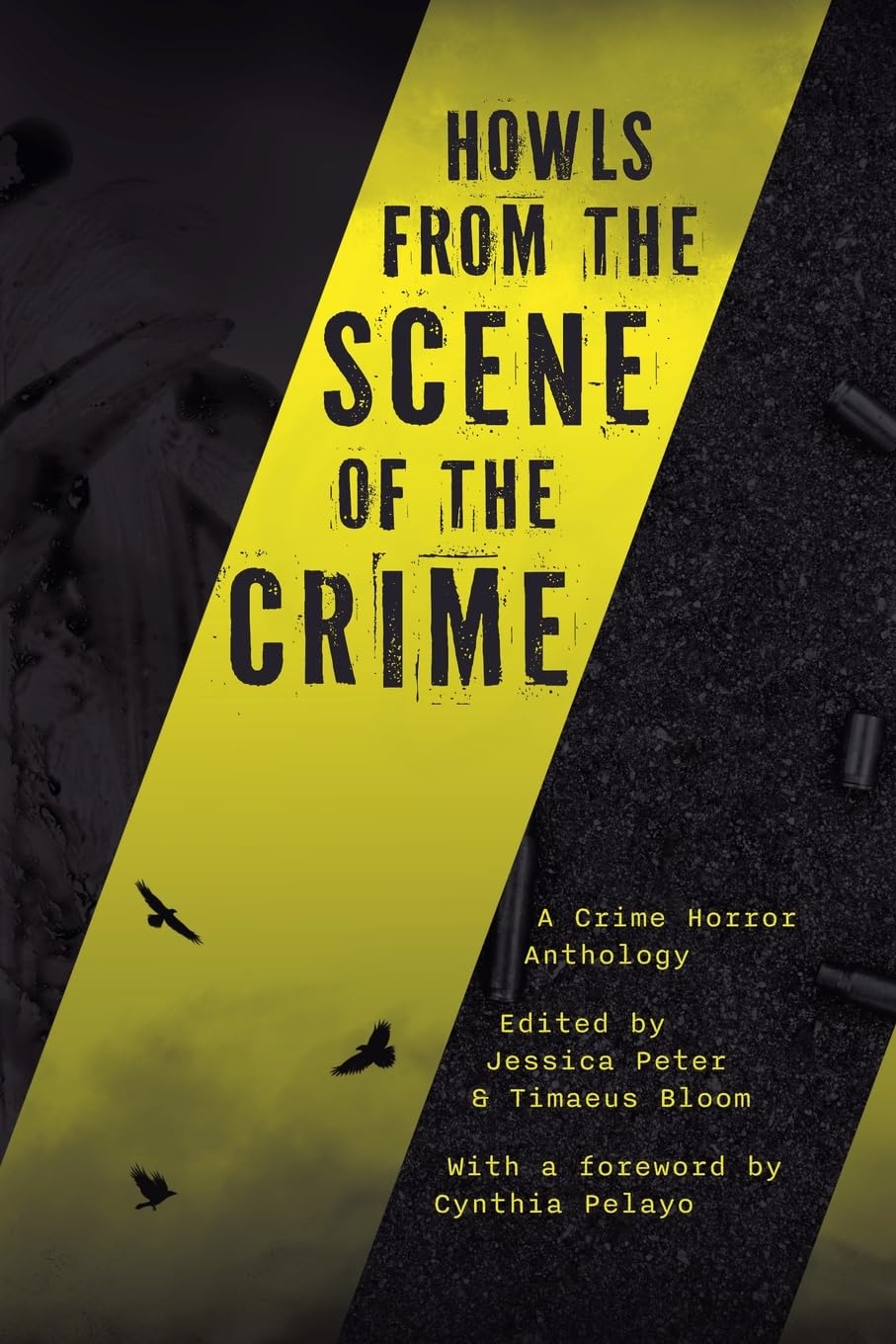
Howls From The Scene Of The Crime: A Crime Horror Anthology
Howls From The Scene Of The Crime: A Crime Horror Anthology
Howl Society Press
A death row cell that recounts the dark stories of its inmates. An informant who consumes shards of crystallized skulls to see the past. A world where to speak of the dead is a violation of an unjust society’s rules. Heists, drugs, cults, detectives, murder, monsters, revenge.
Commit yourself to Howls from the Scene of the Crime, an anthology of crime horror laced with blood, secrets, and occult compulsions from some of the best established and emerging horror authors writing today. Featuring a foreword by Bram Stoker Award(R) winning crime horror author, Cynthia Pelayo.
Beyond The Bounds Of Infinity: An Anthology of Diverse Horror
Raw Dog Screaming Press
Welcome to a world of horror viewed through a kaleidoscope lens. Embark on a journey to untangle the writhing tendrils of human terror in a dimension where the possible and impossible blend-an unstable realm where comfort can be found in the coldest pits, and dark gods feast upon the sweetest suffering-where infernal sounds birth silent letters that drift along midnight shores and the unexplained lurks beneath crumbling urban structures. Step over the edge of what you think you know, and find yourself…Beyond the Bounds of Infinity!
Featuring stories by L. Marie Wood, S.A. Cosby, Jessica McHugh, and Mary SanGiovanni-alongside newer voices like Cassius Kilroy, Jessica L. Sparrow, and Vicky Velvet-Beyond the Bounds of Infinity offers a collection of weird fiction and cosmic horror stories that are diverse down to the cellular level. From Taíno folk horror to the horror of identity in a world that just doesn’t understand, from cozy to apocalyptic, and everything in between, let these authors show you what fear really is, and what it means to them.